


Mar 09, 2026
.webp "Comprehensive Process Safety Assessment in Pharma Manufacturing")
In the pharmaceutical industry, maintaining safe and efficient manufacturing operations is paramount. Companies developing pharma APIs or biologics must ensure that every step of their operations — from lab research to full-scale production — minimizes risk to both patients and the planet. A comprehensive process safety assessment is an essential tool for achieving that.
Process safety goes beyond basic laboratory safety. While traditional safety protocols protect individual workers, process safety procedures address systemic risks within the manufacturing workflow. For CDMO pharma organizations, effective process safety practices ensure that complex reactions, scale-up procedures, and biologics production are executed without unexpected hazards, contamination, or process failures.

A comprehensive process safety assessment evaluates all aspects of a pharmaceutical manufacturing process to identify and mitigate potential risks. It examines chemical reactivity, thermal hazards, reaction kinetics, and containment requirements for both small molecule APIs and biologics CDMO operations.
Key components of a process safety assessment include:
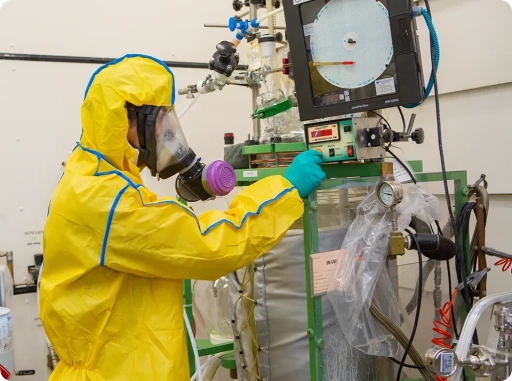
Unexpected incidents in pharmaceutical production can cause delays, financial losses, and safety incidents that affect both employees and patients. A robust process safety assessment allows drug design and development teams to identify and control hazards early.
When it comes to chemistry capabilities in particular, understanding the risks of energetic reactions, unstable intermediates, or high-potency APIs ensures that scale-up does not compromise safety or product quality. Companies that invest in proactive assessments also protect intellectual property, minimize waste, and enhance overall operational efficiency.
Process safety assessments are most effective when performed early and revisited throughout the lifecycle of a project:
1. During preformulation studies (before scaling reactions from milligram to kilogram scale)
2. Before transferring a process to commercial manufacturing
3. When modifying reaction conditions or introducing new chemical intermediates
4. Anytime regulatory inspections or risk audits require documented hazard analysis
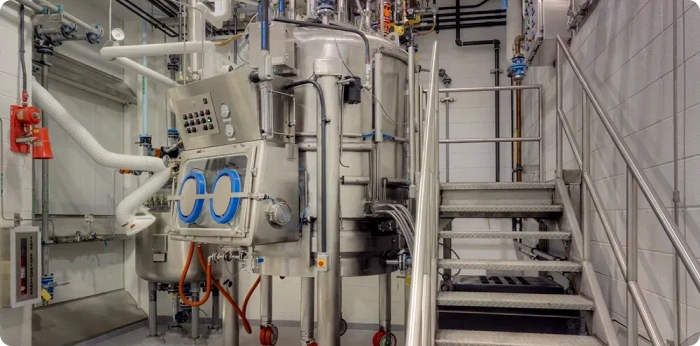
Implementing a proactive process safety strategy offers several advantages, including reduced risk, enhanced regulatory compliance, and optimized material usage and yield. By helping developers scale with consistency and confidence, this strategy also increases speed-to-market for critical drugs.
At Piramal Pharma Solutions, we integrate process safety into every stage of pharma API and biologics CDMO projects. Our teams combine advanced chemistry capabilities with regulatory know-how, supporting clients with scalable, safe, and efficient manufacturing processes. From initial preformulation studies to commercial production, our holistic approach ensures safety, quality, and continuity across the drug development lifecycle.

A process safety assessment evaluates chemical, physical, and operational hazards in pharmaceutical manufacturing to prevent accidents and ensure safe scale-up.
Companies should perform a process safety assessment during preformulation studies, during process transfer, and whenever chemical processes are modified.
We integrate comprehensive safety evaluations into all projects, leveraging our chemistry capabilities, biologics CDMO expertise, and experience in drug design and development to mitigate risks and ensure safe, scalable manufacturing.
All Piramal sites conduct process safety assessments.