


Feb 09, 2026
.webp "Digitally Connected CDMO and Biologics Manufacturing Facility")
Across the pharmaceutical industry, digital connectivity is reshaping how therapies are developed, manufactured, and delivered. As pipelines grow more complex and timelines compress, companies are increasingly relying on CDMO pharma partners that can integrate data, systems, and workflows across development and manufacturing. Digitally connected operations are no longer a future ambition they are becoming a prerequisite for efficient, resilient CDMO drug development.
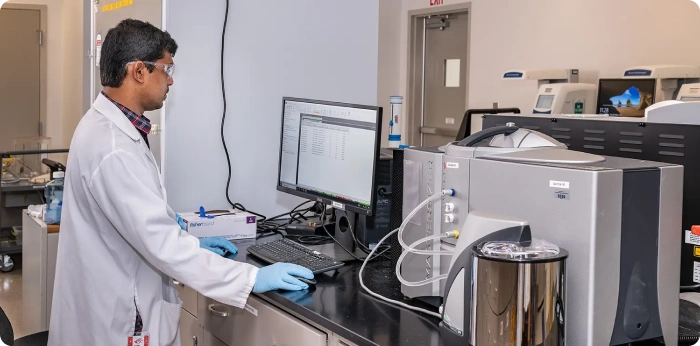
Digitally connected operations enable seamless information flow across development stages, sites, and functions. For CDMOs, this means unifying data, manufacturing, quality, and supply chain systems. Effective connectivity enables faster decision-making, better knowledge transfer, and consistent processes for pharma APIs and biologics.
Rather than operating in silos, connected systems allow teams to access real-time data across projects, reducing delays caused by manual handoffs or fragmented documentation.
Despite clear benefits, implementing digital transformation within CDMO pharma organizations is not without challenges. Legacy infrastructure, inconsistent data standards, and regulatory compliance requirements can slow adoption. Additionally, CDMOs must balance digital innovation with the flexibility required to support diverse client programs, from small-molecule pharma API development to advanced biologics.
Cybersecurity, data integrity, and interoperability between client and partner systems also remain critical considerations as operations become more connected.
Life science technology providers play a central role in enabling digitally connected CDMO drug development. Advanced platforms for data management, modeling, automation, and analytics help CDMOs standardize processes while preserving program-specific flexibility. These tools support better process understanding, faster tech transfer, and more predictable scale-up across development stages.
By embedding digital tools early, CDMOs can reduce rework, enhance traceability, and generate insights that support long-term manufacturing strategies.
Digital connectivity is particularly impactful for CDMO biologics services, where process complexity and sensitivity demand precise control. From cell line development to downstream processing, connected digital systems improve visibility into critical parameters and support robust lifecycle management.
For emerging modalities like antibody-drug conjugates, digitally enabled operations can also support ADC CDMO programs by coordinating data across highly specialized manufacturing steps.
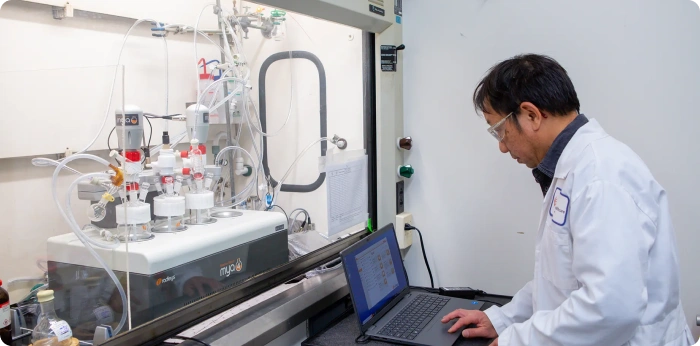
When evaluating technology partners, pharmaceutical companies and CDMOs should look beyond individual tools. Scalability, regulatory readiness, interoperability, and long-term support are essential. The right partner enables digital maturity to evolve alongside growing pipelines, supporting both innovation and operational excellence.

Digitally connected CDMO operations integrate data, systems, and workflows across development, manufacturing, quality, and supply chain functions to improve efficiency and decision-making.
Biologics manufacturing is highly complex, and digital systems improve process control, data visibility, and lifecycle management across development and commercial production.
Digital platforms streamline knowledge transfer, reduce manual processes, and enable faster, more informed decisions throughout the CDMO drug development process.