


Mar 27, 2026
.webp "Cryogenic Chemistry Capsule in Ice – Low Temperature Pharma Process")
Cryogenic chemistry plays a critical role in the synthesis of many active pharmaceutical ingredients (APIs). By operating at very low temperatures (typically between -20°C and -90°C), chemists can reduce impurities, improve selectivity, and enhance safety for highly reactive transformations. These advantages make cryogenic reactions a powerful enabler in drug development.
However, what works seamlessly in a laboratory flask does not always translate easily to pilot or commercial scale. Successfully scaling cryogenic chemistry requires specialized equipment, deep process expertise, and the ability to challenge assumptions about when low temperatures are truly necessary.
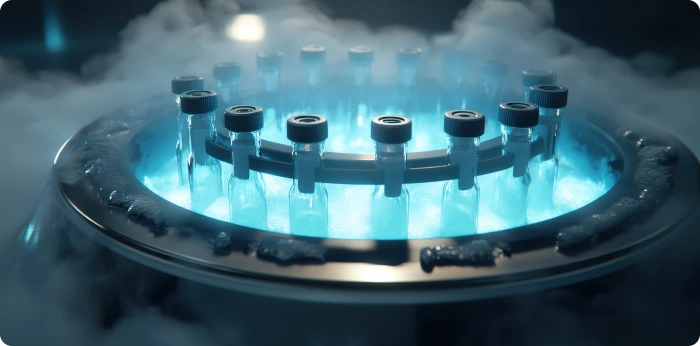
In pharmaceutical manufacturing, cryogenic reactions are often used with highly reactive organometallic reagents such as n-butyllithium (n-BuLi), lithium diisopropylamide (LDA), and Grignard reagents. Transformations, including lithium-halogen exchange, transmetalation, directed ortho-metalation, and certain aldol or Swern oxidations, benefit from low temperatures.
There are three primary advantages to working under cryogenic conditions:
Low temperatures can act as a heat sink, preventing thermal runaway and controlling volatility. In many cases, they enable reactions involving unstable intermediates that would decompose at higher temperatures.
Despite their benefits, cryogenic reactions introduce significant operational and environmental challenges at scale.
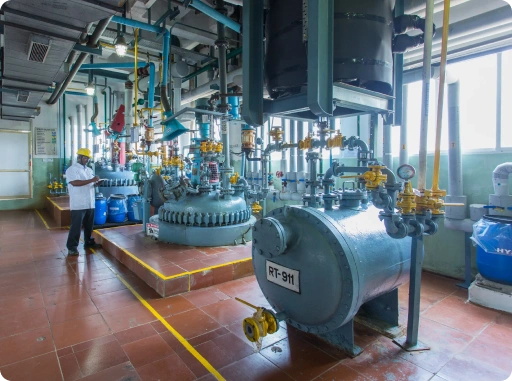
Maintaining temperatures, such as -40°C or -78°C in 50L, 100L, or larger reactors, requires substantial energy input and highly reliable cooling systems. Heat loss, insulation performance, and chiller capacity become critical variables. As scale increases, temperature control becomes more complex.
Process control can also be complicated. Sampling low-temperature reactions involving hazardous reagents can pose safety risks, sometimes limiting the feasibility of in-process testing.
Environmental considerations add further complexity. Solvents commonly used in cryogenic reactions, such as THF, carry a high carbon footprint and can complicate downstream workups due to water miscibility.
In some cases, raising the reaction temperature can significantly simplify scale-up without compromising selectivity.
Strategies to achieve this include:
Case studies demonstrate that questioning the assumed need for cryogenic temperatures can yield meaningful benefits. In one example, a reaction originally specified at -40°C to -45°C was successfully run at -25°C without increased impurity formation, enabling scale-up to the 10–20kg range using standard reactor cooling systems. In another case, a transformation achieved 87% yield at 100kg scale at -20°C, avoiding the operational complexity of deeper cryogenic conditions.
However, not all reactions allow this flexibility. When low temperatures are essential to the mechanism, maintaining true cryogenic conditions remains critical. For a deprotonation step requiring -40°C to -45°C, detailed process characterization and engineering controls enabled successful execution in a 795L reactor, delivering 22.3kg at yields consistent with R&D performance.
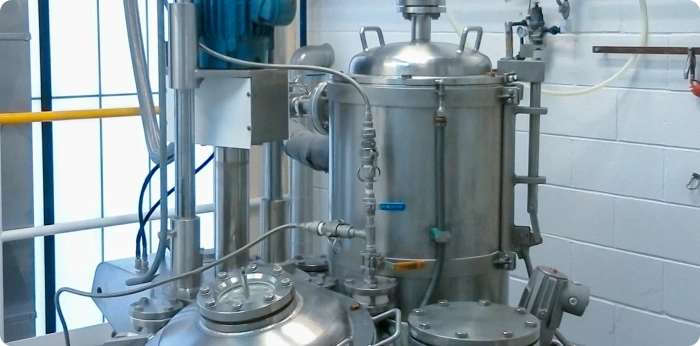
Scaling cryogenic chemistry demands both infrastructure and experience. Piramal Pharma Solutions supports projects from early-phase development through commercial production with global cryogenic capabilities.
At our Aurora, Canada site, development work is supported by 50L and 100L vessels rated for -40°C to -50°C, as well as pilot-scale reactors capable of handling 15–30kg batches. Larger-scale support is available in India, including reactors up to 3000L and systems equipped with dedicated liquid nitrogen skids capable of reaching temperatures as low as -90°C.
Beyond equipment, expertise is essential. Successful scale-up depends on understanding reaction kinetics, impurity formation pathways, temperature control strategies, and when to challenge the need for cryogenic operations.
Looking ahead, flow chemistry offers potential solutions to persistent challenges in cryogenic scale-up. With smaller reaction volumes and improved heat transfer, flow systems may enable more precise temperature control and, in some cases, operation at higher temperatures than traditional batch processes.

Cryogenic reactions are used to improve selectivity, reduce impurities, and enhance safety for highly reactive transformations, particularly those involving organometallic reagents.
Scaling cryogenic chemistry is difficult because it requires significant energy, specialized equipment, and careful process control, especially for exothermic or hazardous reactions.
Yes, cryogenic reactions can sometimes be run at higher temperatures. Through reagent substitution, process optimization, or route redesign, some reactions can be performed at -20°C to -30°C, simplifying scale-up and improving sustainability.
The following Piramal sites support cryogenic capabilities: