


Aug 14, 2026
.webp "Integrated Drug Development Strategy for Faster Time to Market")
Bringing a new therapy from discovery to commercialization is an intricate process that requires scientific expertise, careful planning, and precise coordination across multiple disciplines. For many pharmaceutical companies, one of the greatest challenges is managing the handoffs between research, development, manufacturing, and regulatory teams. An integrated approach can help overcome these complexities by connecting each stage of the drug development process under one unified strategy.
By combining Contract Research Organization (CRO) services and Contract Development and Manufacturing Organization (CDMO) services, sponsors can streamline development, reduce risk, and accelerate timelines without jeopardizing quality.
The drug development process starts with identifying promising drug candidates through discovery research, where scientists evaluate compounds for their potential safety and therapeutic activity. Once a lead molecule is selected, it advances through preclinical testing, clinical trials, regulatory review, and ultimately commercial manufacturing. Each phase generates critical data that informs the next stage, making continuity and collaboration essential throughout development.
Because every step builds on the one before it, challenges in areas such as analytical development, process optimization, or manufacturing readiness can create delays that affect timelines, increase costs, and introduce additional regulatory complexity. As drug candidates become more sophisticated, developers increasingly benefit from integrated development strategies that connect scientific expertise, manufacturing capabilities, and project management from early discovery through commercialization.
Even well-designed programs can encounter obstacles during development. Common drug development challenges include technology transfer between vendors, process scalability, evolving regulatory expectations, and coordinating multiple external partners.
Managing separate organizations for discovery, process development, analytical testing, clinical manufacturing, and commercial production adds complexity and creates risk for delays. Differences in quality systems, documentation, or communication make it more difficult to maintain momentum and can set programs off course.
An integrated development model brings multiple capabilities together under one organization, facilitating ongoing collaboration throughout a program';s life cycle.
Rather than viewing discovery, development, and manufacturing as separate activities, an integrated approach connects them using shared project management, standardized quality systems, and continuous knowledge transfer. Information generated during early development can be carried forward into later manufacturing stages, helping reduce duplication of effort and supporting more efficient decision-making.
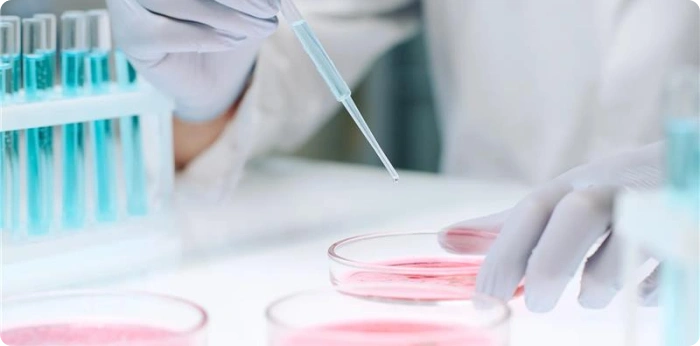
CRO services provide critical support during the earliest stages of drug discovery and drug development. These capabilities may include target validation, screening, medicinal chemistry, in vitro biology, pharmacology, toxicology, and other preclinical studies that help identify promising drug candidates.
Generating reliable scientific data early allows development teams to reach informed decisions before significant investments are made in manufacturing and clinical development. Early collaboration also helps identify potential challenges before they affect downstream activities.
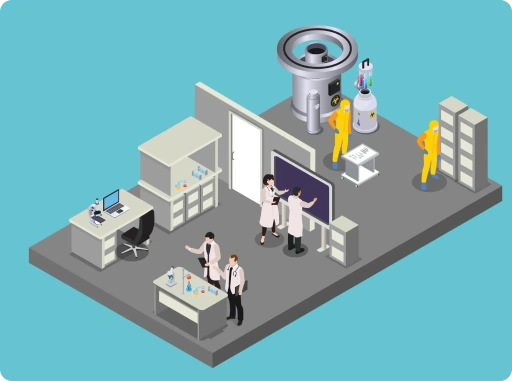
When CRO services and CDMO services are aligned, valuable scientific knowledge can move seamlessly from discovery into process development and manufacturing. Instead of repeating experiments or recreating documentation during technology transfer, integrated teams can build upon existing knowledge throughout development.
This continuity improves communication, reduces operational complexity, and supports more efficient project execution. It also enables earlier consideration of manufacturing strategies, scalability, and regulatory expectations while the program is still in development.
As programs advance toward clinical trials and commercialization, CDMO services support process development, analytical method development, drug substance manufacturing, formulation development, clinical supply, scale-up, and commercial production.
Working with an integrated CDMO like Piramal Pharma Solutions helps simplify project management by reducing the number of external partners involved. Standardized quality systems and coordinated technical teams can improve efficiency while supporting consistent product quality throughout development and manufacturing.
Selecting the right development partner involves more than evaluating manufacturing capacity. Sponsors should look for organizations with scientific expertise, regulatory experience, integrated project management, and comprehensive capabilities from early discovery through commercial supply.
A partner that combines discovery, development, and manufacturing services can help reduce risk, improve communication, and create a smoother path to market.
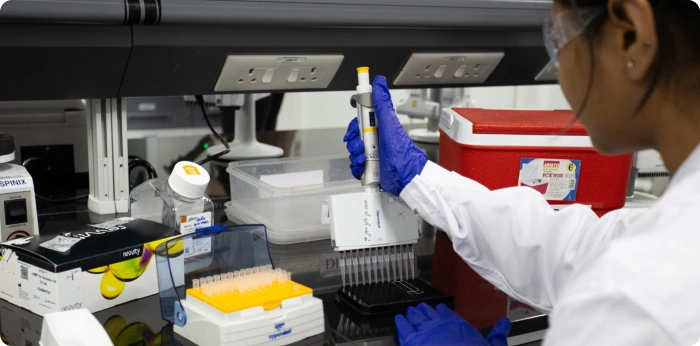
An integrated drug development strategy helps pharmaceutical companies manage increasingly complex development programs by connecting scientific expertise with manufacturing excellence. By bringing together CRO services, CDMO services, and coordinated project management, sponsors can streamline development, improve knowledge transfer, and accelerate the journey from discovery to patients.

An integrated drug development strategy connects discovery, development, manufacturing, and commercialization through coordinated teams and processes.
CRO services support discovery, early research, and preclinical development, while CDMO services provide process development, manufacturing, and commercial production. Together, they create a more seamless development pathway.
Pharmaceutical companies choose integrated development partners because they improve communication, reduce technology transfers, streamline project management, and help accelerate development timelines.
Piramal';s entire global network supports integrated drug development: