


Jul 01, 2026
-1.webp "ADC Pharma Services in Oncology Drug Development")
Antibody-drug conjugates (ADCs) combine antibody targeting with highly potent drug payloads, offering a revolutionary approach to cancer treatment.
As the number of ADC programs expands, the demand for specialized ADC pharma services grows in parallel. Successful ADC development depends on multidisciplinary expertise, spanning payload-linkers, monoclonal antibodies (mAbs), bioconjugation, and sterile manufacturing.
ADCs are designed to deliver potent drugs directly to cancer cells while sparing healthy tissue, but early efforts struggled with linker stability, toxicity, and manufacturing challenges.
Advances in payload chemistry, conjugation technologies, and analytical characterization have dramatically improved the performance of modern ADCs. These innovations have established ADCs as one of the leading and fastest-growing segments in oncology.
ADCs combine three primary components:
After binding, the ADC is internalized by the cancer cell and releases its payload, maximizing efficacy and reducing toxicity compared with traditional chemotherapy.
The rising number of ADC programs is fueling demand for specialized development and manufacturing support. Unlike conventional therapeutics, ADCs require both biological and chemical expertise, making integrated service models particularly valuable.
ADC pharma programs require expertise in payload-linker synthesis, antibody development, conjugation process development, analytical characterization, formulation, and commercial manufacturing.
As scientific complexity grows, companies increasingly require partners with end-to-end capabilities spanning the entire ADC lifecycle.
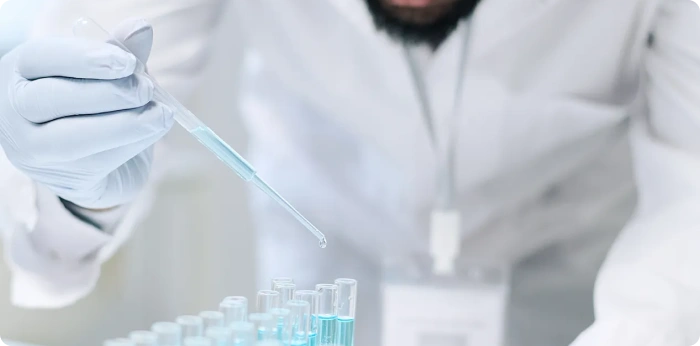
Bioconjugation services are fundamental to ADC manufacturing. The conjugation process precisely defines how the payload is attached to the antibody, directly impacting product stability, efficacy, and safety.
Modern bioconjugation strategies focus on improving consistency, optimizing drug-to-antibody ratios, and supporting scalable manufacturing processes. These capabilities have become essential for successful clinical and commercial ADC production.
ADCs are among the most analytically challenging pharmaceutical products. Comprehensive characterization is required to evaluate payload attachment, linker stability, impurity profiles, aggregation, and overall product quality.
Rigorous analytical development ensures consistency throughout all phases and provides crucial data required for regulatory submissions.
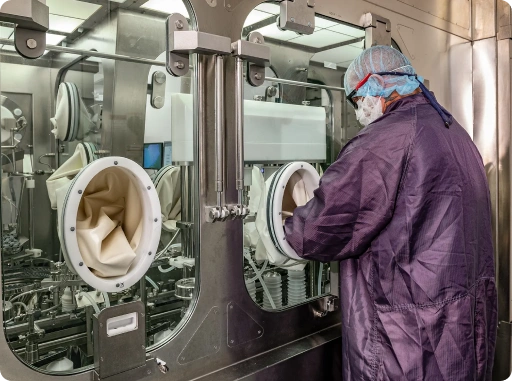
With more ADCs entering advanced development, commercial ADC manufacturing commands heightened focus. Effective commercialization necessitates scalable processes, uncompromising quality systems, and specialized containment solutions for potent payloads.
ADC fill/finish – the preparation of sterile drug products – is an equally critical phase for both clinical and commercial applications. Integrated development and manufacturing approaches significantly streamline these workflows and reduce the complexity of technology transfer.
Looking Ahead – ADCs continue to represent one of the most active areas of oncology innovation. As linker technologies, payload options, and conjugation approaches evolve, specialized ADC pharma services will remain essential to supporting the next generation of targeted cancer therapies.

An antibody-drug conjugate (ADC) is a targeted therapy that combines an antibody, a potent drug payload, and a linker to selectively attack cancer cells.
Bioconjugation services support the attachment of a drug payload to an antibody during ADC development and manufacturing.
ADC fill/finish ensures that sterile ADC drug products are safely prepared and packaged for clinical or commercial use.
The following Piramal sites support ADC development and manufacturing: