


Mar 24, 2026
.webp "Scientist Operating Bioreactor in Early-Stage Development Lab")
Early-stage drug development is fast-moving and rarely predictable. As evidence evolves and priorities shift, sponsors need partners that can adapt quickly without compromising quality or timelines. In a recent case study, we illustrated how integrated drug development and manufacturing operations can provide the flexibility required to keep early programs moving forward, even when unexpected challenges arise.
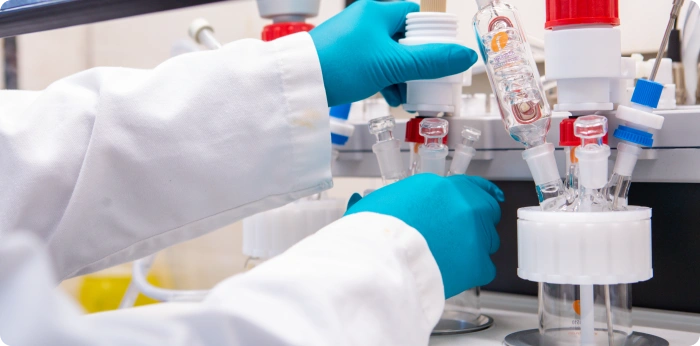
Bridging the gap between discovery and clinical supply is one of the most complex phases of drug development. Discovery routes are often designed for speed, prioritizing access to diverse compounds over scalability. Decisions about whether and when to convert those routes into scalable processes depend heavily on timelines, regulatory considerations, and evolving development strategies.
In the case study's central project, we supported a medicinal chemistry program that began in discovery and progressed rapidly toward clinical readiness. It began with the team at our discovery facility in Ahmedabad, India delivering more than 4,000 compounds at milligram scale and helping identify a lead candidate. Building on that work, the team produced gram-scale quantities of the lead compound, followed by a 1.5kg non-GMP toxicology batch using the medicinal chemistry route with minimal additional development.
The next phase introduced significant technical and logistical pressure. The client requested that we manufacture GMP material in North America without extending timelines or delaying first-in-human clinical trials. To meet this requirement, we needed to rapidly reproduce material equivalent to the Ahmedabad batches at our drug substance site in Aurora, Canada while maintaining speed, quality, and regulatory readiness.
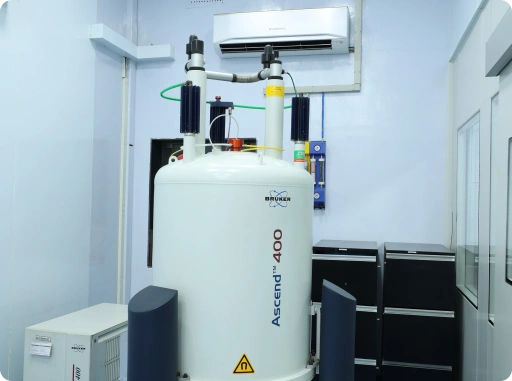
The solution relied on integrated drug development, bringing together teams across geographies to retain knowledge, accelerate timelines, and reduce risk. Our discovery team in Ahmedabad collaborated closely with colleagues in Aurora to execute a rapid internal tech transfer followed by precise GMP manufacturing.
Because our organization had supported the compound from early discovery onward, critical process knowledge transferred seamlessly. Insights from prior work allowed our teams to prioritize what was essential versus what could be deferred, enabling Aurora to begin GMP production quickly and confidently – even with complex chemistry and toxic reagents.
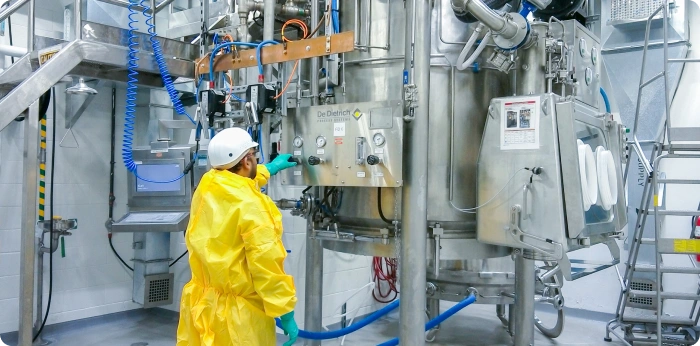
Midway through GMP manufacturing, an unexpected impurity emerged that could not be purged in the final step. Rather than derailing the program, integrated operations enabled teams in India and North America to respond immediately.
By coordinating across time zones, development work progressed nearly around the clock. Multiple remediation strategies were explored, including trituration, crystallization, and column purification. Ultimately, building on stability data and prior experience from Ahmedabad, the Aurora team successfully removed the impurity using a single silica purification step at the API stage without introducing new degradation risks.
The result: 1.2kg of GMP material delivered on time, allowing the client to initiate clinical studies as planned.
This outcome highlights the advantages of integrated drug development and manufacturing. Shared culture, continuous communication, and retained institutional knowledge allowed teams to move quickly and efficiently when challenges arose. Starting the GMP campaign early proved critical, creating enough schedule flexibility to investigate and resolve the impurity without impacting the clinical timeline.
Ultimately, this integrated approach benefited not only the sponsor but also patients waiting for new therapies to reach the clinic.

Under an integrated drug development model, drug discovery, development, and manufacturing teams work within a single, coordinated organization to improve knowledge transfer, speed, and adaptability.
Early-stage drug development is unpredictable. Integrated operations reduce delays caused by handovers and enable teams to respond more quickly to technical challenges.
By retaining process knowledge across sites and teams, integration enables faster tech transfer, quicker decision-making, and more efficient problem-solving during GMP production.