


Mar 05, 2026
.webp "Green Chemistry in Early-Stage Synthesis – Sustainable Drug Development")
In the modern pharmaceutical landscape, companies are expected to accelerate innovation while embracing environmentally responsible practices. Traditionally, sustainability considerations were addressed late in development, often resulting in costly redesigns and operational inefficiencies. But now, a more strategic approach is emerging: integrating green chemistry principles into hit-to-lead and lead optimization to proactively design sustainable synthetic routes.
Early-stage synthesis offers a critical opportunity to influence a molecule's environmental footprint. Decisions made during discovery — such as solvent selection and reaction simplification — directly impact scalability, waste generation, and long-term manufacturability.
By incorporating sustainability at the outset, chemists can avoid bottlenecks during scale-up and reduce the need for downstream reinvention. These early interventions streamline technology transfer and support smoother transitions from laboratory feasibility to pilot and commercial manufacturing.
“Greenness by design” reframes sustainability as a core design parameter rather than a competing priority. Speed, quality, and environmental responsibility are treated as interconnected elements of a robust development strategy.
Intentional, design-driven choices help ensure rapid progress without compromising product quality or regulatory alignment, especially in solvent planning and route simplification.
Several practical design principles illustrate how early-stage choices create measurable impact:
Solvent Selection
Solvent choice significantly affects carbon emissions, ozone depletion potential, and toxicity. For example:
Planning the use of Class 3 solvents during design and prioritizing safer alternatives, such as ethanol or water, can dramatically improve safety, reduce energy use, and simplify waste handling.
Route Simplification
Eliminating unnecessary steps and optimizing reaction conditions reduces waste and enhances scalability. These improvements are most impactful when addressed early in synthetic route design.
A project at Piramal Pharma Solutions focused on optimizing the first three steps of a multi-step drug substance synthesis during scale-up from laboratory to multi-kilogram production.
Key improvements included:
These selective redesigns delivered tangible environmental, economic, and safety benefits before the entire synthesis was fully optimized.
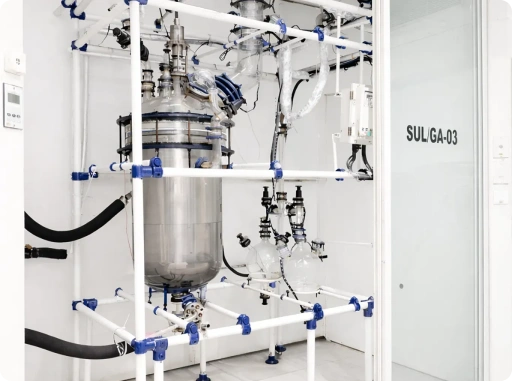
Rather than relying on solvent recovery as a corrective measure, this philosophy prioritizes strong design from the beginning.
At Piramal Pharma Solutions, “the Bridge” framework integrates process-development principles at clinical and pre-pilot scales, evaluating critical parameters and scale-dependent sensitivities earlier in development. Cross-functional collaboration between early-stage discovery and API teams ensures scalable, well-documented, and sustainable solutions across the product lifecycle.
Embedding sustainability at the design stage is both a scientific responsibility and a strategic advantage that enables CDMOs like Piramal to achieve faster timelines, reduced costs, and improved manufacturability.

Green chemistry involves designing chemical processes that reduce or eliminate hazardous substances, waste, and energy consumption while maintaining product quality.
Early-stage solvent selection is important because solvent choice affects safety, carbon emissions, toxicity, energy requirements, and waste management. Early decisions can prevent costly redesigns during scale-up.
“Greenness by design” refers to integrating sustainability principles into hit-to-lead and lead optimization, embedding environmental responsibility from the beginning rather than addressing it later.
All Piramal facilities apply green chemistry principles.