


Feb 06, 2026
.webp "Peptide API Molecular Structure for Scalable Drug Development")
Peptide-based therapeutics are increasingly critical in modern drug development. Positioned between small molecules and biologics, peptides offer strong target specificity, favorable safety profiles, and wide therapeutic potential. As more peptide candidates advance from discovery to clinical and commercial stages, the ability to develop and manufacture peptide APIs efficiently, at scale, and with consistent quality has become essential.
Meeting these demands requires specialized technologies, integrated development approaches, and experienced partners capable of navigating the unique challenges of peptide API manufacturing.
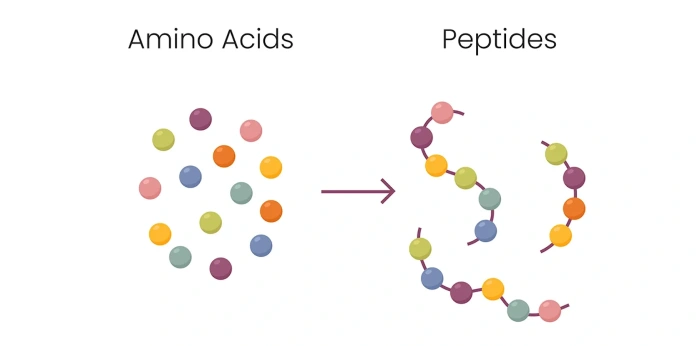
Peptides are short amino acid chains engineered to precisely modulate biological pathways. Their adaptability has fueled growth across oncology, metabolic disorders, and infectious diseases. Yet, peptide drug development presents distinct technical hurdles, including sensitivity to synthesis conditions, impurity control, and stability.
As peptide programs progress, development teams must balance innovation with manufacturability, ensuring that early design decisions support future scale-up and regulatory requirements.
Two primary technologies underpin peptide API manufacturing:
Selecting the appropriate synthesis technology depends on peptide length, complexity, purity targets, and intended scale.
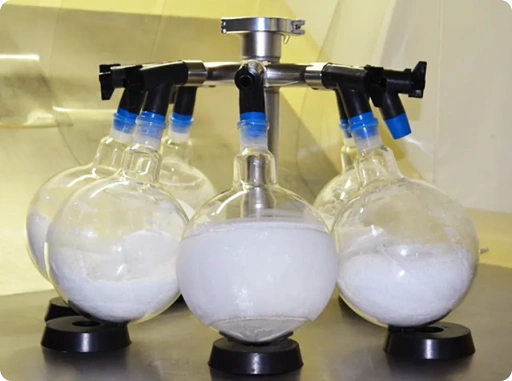
Custom peptide synthesis services offer the needed flexibility through each phase of development. These services enable teams to quickly adjust synthesis strategies, test multiple routes, and generate materials for toxicology, clinical trials, and commercialization.
When integrated with broader drug development solutions, custom peptide synthesis enables smoother transitions between phases, reducing the risk of delays caused by technology changes or process redesigns.
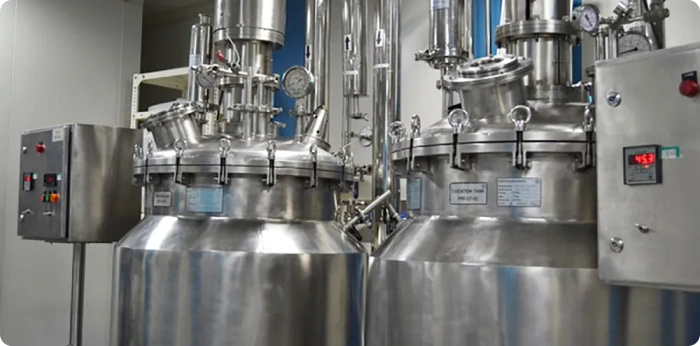
Scaling peptide API production brings challenges beyond increasing batch size. Process reliability, impurity management, and reproducibility become critical as quantities rise. Technologies must be optimized to maintain quality standards while meeting deadlines and cost targets.
Experienced manufacturers use data-driven process development and scalable purification strategies to deliver peptides at commercial scale that meet stringent regulatory and quality standards.
Pre-formulation studies play a critical role in peptide development by providing early insight into stability, solubility, and compatibility. These studies inform downstream formulation development and help mitigate risks associated with degradation or variability.
Integrating pre-formulation studies early in peptide API manufacturing supports more informed decision-making and aligns synthesis strategies with final dosage form requirements.
Peptides and small molecules represent complementary approaches within modern drug development. While small molecule API development often benefits from simpler manufacturing routes, peptides offer advantages in specificity and biological relevance.
An integrated development strategy that supports both modalities allows pharmaceutical companies to select the most appropriate therapeutic approach while leveraging shared infrastructure, analytical capabilities, and development expertise.
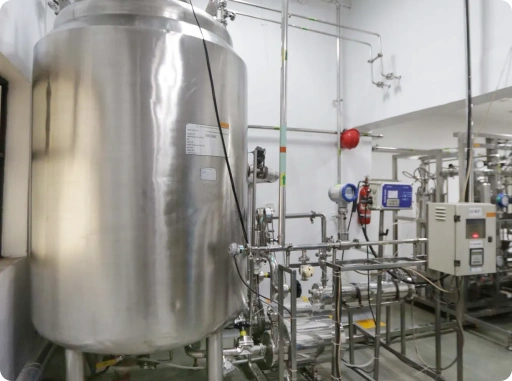
Selecting the right partner for peptide drug development requires evaluating technical capabilities, scalability, and integration across the development lifecycle. Organizations offering integrated drug discovery services, peptide synthesis expertise, and end-to-end drug development solutions are best positioned to efficiently and reliably support complex peptide programs.

Peptide API manufacturing demands exact control over amino acid sequences, impurity profiles, and purification steps. Compared with small-molecule API development, peptide work often involves more intricate synthesis and analytical workflows to ensure batch-to-batch consistency, quality, and scalability.
Custom peptide synthesis services provide flexibility across development stages, enabling rapid route optimization during discovery while supporting increasing material demands at clinical and commercial scales. This continuity helps reduce development risk and timelines.
An integrated approach that combines peptide synthesis, pre-formulation studies, and broader drug development solutions minimizes handoffs, improves knowledge retention, and supports faster, more reliable progression from discovery through commercialization.