Oct 29, 2026

A promising molecule is only the beginning of a drug development program. Before scientists can manufacture an API reliably at scale, they must determine how to make it efficiently, reproducibly, and with appropriate control over impurities and quality.
That';s the role of synthetic route development. By establishing and refining a practical chemical pathway early, pharmaceutical process development can help transform a discovery-stage molecule into something that can ultimately support drug manufacturing and commercial supply.
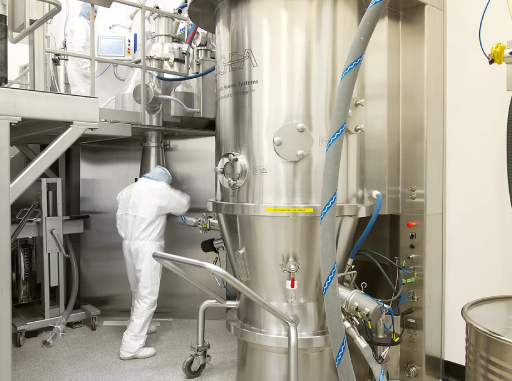
Synthetic route development involves identifying and evaluating the chemical pathway used to make a target molecule. During drug discovery, the priority may initially be obtaining enough material to evaluate a promising compound. As the program advances, however, the requirements change.
The route must become more efficient, reproducible, scalable, and suitable for the controls expected in pharmaceutical manufacturing. A route that works in a research laboratory may therefore need significant refinement before it is ready for larger-scale production.
Pharmaceutical process development typically involves evaluating potential synthetic routes, understanding reaction conditions, identifying impurities, and optimizing the sequence of steps. Scientists consider factors such as reaction efficiency, raw materials, purification, safety, and scalability. The objective is to develop a process that can consistently deliver the desired API while remaining practical as production requirements increase.
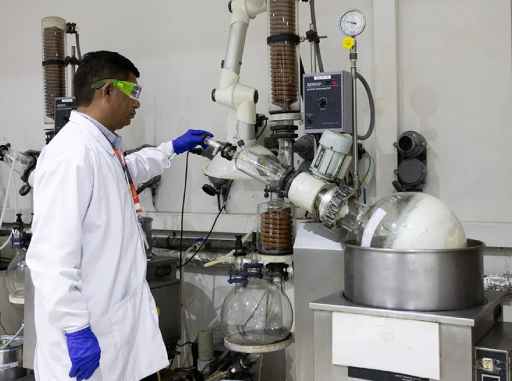
Route optimization is an iterative process. Teams may investigate alternative reagents, solvents, reaction conditions, purification strategies, or even different synthetic pathways.
The most attractive route is not necessarily the one with the fewest chemical steps. A slightly longer route is preferable if it offers better control, safer processing, improved yields, more readily available raw materials, or easier scale-up.
As a molecule advances through drug development, the process must transition from laboratory-scale experimentation to manufacturing. Scale-up can reveal new challenges because heat transfer, mixing, reaction kinetics, isolation, and equipment characteristics can behave differently at larger volumes.
Process development therefore continues as the route moves toward drug manufacturing, with engineers and chemists working together to establish robust operating conditions.
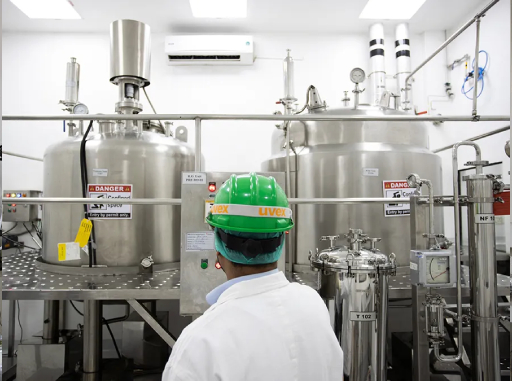
Cost is an important consideration, but efficient pharmaceutical manufacturing requires more than simply minimizing raw-material costs. Yield, cycle time, solvent usage, purification requirements, waste generation, equipment availability, safety, and supply security can all influence the overall process.
Early attention to these factors can reduce the need for major changes later in development.
A strong process development strategy connects the scientific needs of drug discovery with the practical requirements of manufacturing. Piramal's network supports discovery and route scouting through process development, clinical supply, and API manufacturing.
That continuity can help programs move from an initial synthetic concept toward a process designed for increasingly demanding development stages.
Synthetic route development is the bridge between making a molecule and manufacturing it successfully. By evaluating scalability, efficiency, quality, and practicality early, pharmaceutical teams can create processes better positioned to support development and eventual commercial production.

Synthetic route development is the process of designing and optimizing the chemical pathway used to make a target molecule.
Process development is important in drug development because it helps establish a chemical process that is efficient, reproducible, scalable, and suitable for manufacturing.
Route development supports pharmaceutical manufacturing by helping translate laboratory chemistry into a robust process that supports larger-scale production.
The following Piramal facilities support synthetic route development, process development, and API manufacturing: