


Aug 03, 2026
.webp "How Chromatography Works – Common Types Explained")
Chromatography is one of the most widely used analytical techniques in pharmaceutical development. From identifying impurities to establishing the identity and purity of compounds, chromatography helps scientists make informed decisions throughout the drug development process.
Although several chromatography techniques exist, they all rely on the same basic principle: separating components within a mixture based on how they interact with two different phases. Understanding how chromatography works and when to use each technique is essential for developing safe, high quality medicines.
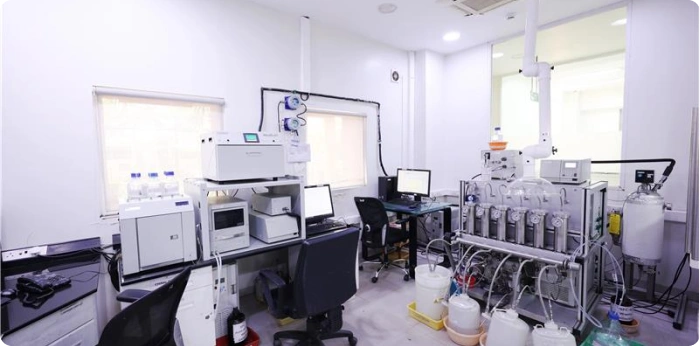
At its core, chromatography is a separation technique. A sample is carried through a stationary material by a moving liquid or gas. Different compounds interact differently with the stationary and mobile phases, causing them to travel at different rates and permitting scientists to separate, identify, and analyze individual components.
In pharmaceutical laboratories, chromatography supports everything from early research and method development to quality control and commercial manufacturing.
Every chromatography method relies on two key elements:
As compounds move through the stationary phase, differences in properties, like molecular size, charge, polarity, or chemical affinity, determine how quickly each component travels. The result is an effective separation that allows scientists to characterize complex mixtures with a high degree of accuracy.
The choice of chromatography technique depends on the nature of the sample and the analytical question being addressed.
Several types of chromatography are routinely used across pharmaceutical development.
Thin layer chromatography (TLC) is a simple, cost-effective technique commonly used for rapid qualitative analysis. It is often employed during research or reaction monitoring to confirm compound identity or assess reaction progress.
Paper chromatography operates on similar principles and is frequently used for educational purposes or simple laboratory separations involving small molecules.
Gas chromatography (GC) separates volatile compounds using an inert gas as the mobile phase. GC is commonly used to analyze residual solvents, volatile impurities, and other compounds that can be vaporized without decomposition.
Ion exchange chromatography separates molecules according to their electrical charge. It plays an important role in the purification and analysis of peptides, proteins, and other charged biomolecules.
Affinity chromatography offers highly selective purification by exploiting specific biological interactions, such as antibody-antigen or enzyme-substrate binding. This technique is widely used during biologics development and protein purification.
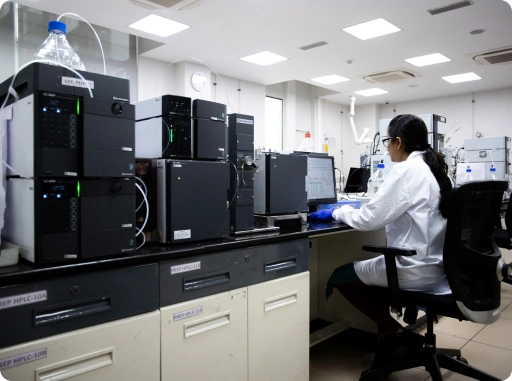
No single chromatography method is appropriate for every application. Scientists must consider a variety of factors when selecting an analytical approach, including molecular size, polarity, volatility, stability, and sample complexity.
In many pharmaceutical development programs, multiple chromatography techniques are used together to generate a complete understanding of an API or drug product.
Chromatography supports nearly every stage of pharmaceutical development. Common applications include:
These analytical capabilities help ensure that products consistently meet regulatory and quality requirements.
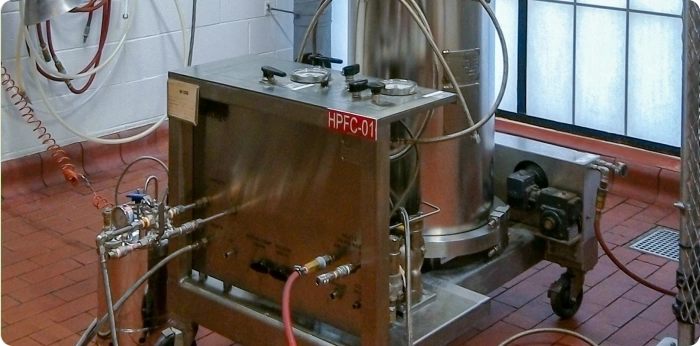
As pharmaceutical molecules become increasingly complex, analytical methods must provide greater sensitivity and precision. Chromatography allows scientists to detect trace impurities, monitor critical quality attributes, and support regulatory submissions with strong analytical data.
At Piramal Pharma Solutions, advanced analytical capabilities including chromatography support development programs from early-stage research through commercial manufacturing. These techniques help generate the data needed to develop safe, effective, and high quality medicines while supporting efficient process development and manufacturing.
Chromatography remains one of the most important analytical tools in pharmaceutical development. Whether using thin layer chromatography, gas chromatography, paper chromatography, ion exchange chromatography, or affinity chromatography, each technique delivers valuable insights into product quality and process performance. Selecting the appropriate method helps accelerate development while preserving consistent quality throughout a product's life cycle.

Chromatography is used to separate, identify, and analyze compounds during drug development, manufacturing, and quality control.
Gas chromatography is primarily used for volatile compounds, while thin layer chromatography is commonly used for rapid qualitative analysis and reaction monitoring.
Chromatography helps scientists evaluate purity, identify impurities, validate analytical methods, and ensure medicines meet regulatory quality standards.
The following sites provide chromatography services: