


Jun 03, 2026
.webp "Cost-Effective Complex Cyclic Peptide Synthesis Through Process Innovation")
Cyclic peptides are gaining serious attention in drug development thanks to their ability to combine small molecule-like stability with antibody-like specificity. They can bind targets with high affinity and, in some cases, even offer oral delivery potential. But while discovery tools have advanced rapidly, manufacturing is still catching up.
A key challenge for the industry is not finding cyclic peptide drug candidates, but producing them efficiently, consistently, and at scale. Without robust processes, there's a real risk of manufacturing bottlenecks slowing down patient access to promising therapies.
Historically, peptide therapeutics have evolved from natural sources, with early examples like gramicidin S paving the way. Today, modern screening technologies, such as phage display, enable researchers to explore vast peptide libraries and identify new candidates much more quickly.
However, as molecules become more complex — especially cyclic PEGylated peptides — manufacturing becomes increasingly difficult. Traditional solid phase peptide synthesis (SPPS) can struggle with issues like incomplete chain assembly, aggregation, sequence truncations, and impurity formation. These challenges can reduce crude purity and drive-up purification costs.
This is where process innovation in peptide synthesis becomes critical.

At Piramal Pharma Solutions Turbhe facility in India, teams focused on solving exactly these kinds of problems through advanced peptide manufacturing and process development expertise. Working across both solid phase peptide synthesis (SPPS) and liquid phase peptide synthesis (LPPS), they developed a more efficient hybrid strategy for a complex cyclic peptide program.
The original synthesis route relied entirely on SPPS using orthogonally protected amino acids. While effective in the early stages, one fragment proved particularly difficult due to steric hindrance and aggregation, resulting in low coupling efficiency and poor crude quality.
To address this, the team redesigned the process using a hybrid SPPS-LPPS synthesis strategy. The main peptide chain was assembled using SPPS, while a problematic dipeptide fragment was synthesized separately in solution using LPPS. This allowed for better control of reaction conditions and significantly improved intermediate quality.
The dipeptide was then converted to an active ester prior to coupling, there by reducing side reactions and improving overall efficiency.
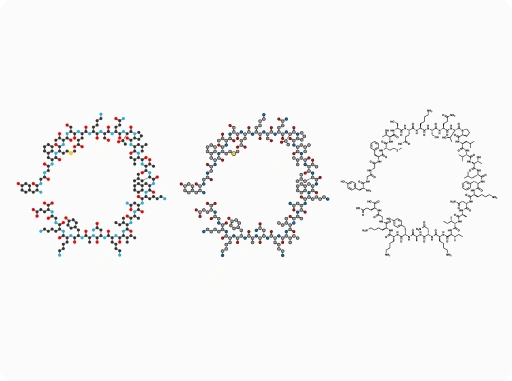
Once the linear sequence was assembled, the cyclization of cyclic peptides was carefully optimized. Reaction conditions, including solvent, concentration, and base selection, were fine-tuned to promote intramolecular cyclization while minimizing unwanted oligomer formation.
Following this, selective hydrogenation and final deprotection steps were optimized to reduce side products and shorten reaction times. A key improvement was performing final modifications on the fully assembled structure, eliminating unnecessary protection and deprotection steps.
A simplified purification strategy was then used to achieve high purity suitable for scale-up and lyophilization.
The impact of this cost-effective peptide synthesis approach was significant. The hybrid strategy improved crude quality, doubled overall yield, and reduced production costs by 50–60%. Raw material costs dropped from approximately $3,200 per gram to $800 per gram, and the process was successfully scaled to produce over 180 grams of high-purity peptide
Beyond the immediate project success, the work strengthened understanding of impurity pathways, solvent effects, and resin-switching behavior, creating a reusable framework for future programs.
As cyclic peptides continue to emerge as an important therapeutic modality, scalable and reliable manufacturing approaches will be essential. Through process innovation in peptide synthesis, Piramal Pharma Solutions is helping reduce barriers between discovery and commercial production, ensuring promising molecules can move more efficiently toward patients.

Cyclic peptides are ring-shaped molecules that offer high stability and strong target binding, making them attractive for drug development.
Hybrid peptide synthesis combines solid phase peptide synthesis (SPPS) and liquid phase peptide synthesis (LPPS) to improve efficiency and overcome complex manufacturing challenges.
Peptide manufacturing costs can be reduced by optimizing synthesis routes, improving crude purity, minimizing side reactions, and using hybrid or process-optimized manufacturing strategies.
The following Piramal facility supports peptide development and manufacturing: