


Sep 15, 2026
.png "Cell Line Development for Biologics")
Many modern biologic medicines begin with something remarkably small: a living cell. That cell ultimately becomes the biological “factory” used to produce a therapeutic protein, antibody, vaccine component, or other biologic.
In biopharmaceutical development, scientists can select and cultivate cells to establish a cell line a population of cells that can be maintained in culture and used to produce a desired biological product. The characteristics of that cell line can affect productivity, product quality, stability, and the ability to scale manufacturing.
For that reason, cell line development is an important step in moving a biologic from early research toward reliable production. The objective is not simply to identify cells that produce the desired molecule, but to establish a well-characterized cell system that can support consistent manufacturing as development progresses.
Selecting the right production cell line is an important early decision in biopharmaceutical development. The cells ultimately used for manufacturing need to produce the desired molecule at an appropriate level while maintaining characteristics that support product quality and process consistency.
Cell line development brings together cell selection, genetic modification, screening, characterization, and optimization to identify a suitable production cell line. As the program advances, the selected cells must also perform reliably under the conditions required for larger-scale production.
This is particularly important for biologics because they are produced using living systems. Changes in the cells or their environment can affect how the product is made and, in turn, influence characteristics of the resulting biologic.
Although the exact approach varies by molecule and expression system, cell line development generally progresses from an initial host cell population to a defined production cell line.
The process may include:
These stages generate information that teams can then carry forward into upstream process development, analytical development, and ultimately manufacturing.
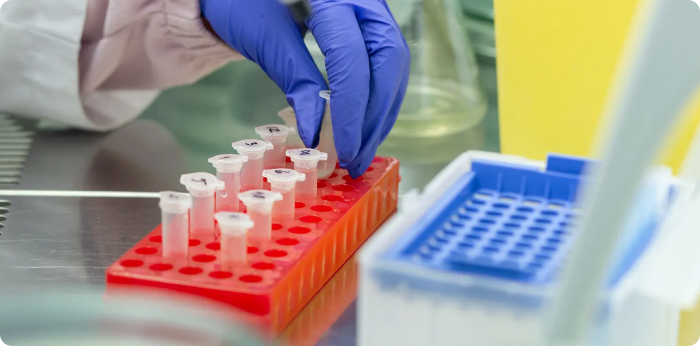
Not every cell will perform equally well as a host. Depending on the biologic and expression system, developers may consider growth characteristics, productivity, product quality, and stability when evaluating candidate cells.
Screening helps identify the strongest candidates from the broader cell population. Rather than focusing solely on how much product a cell produces, developers need to consider whether that productivity is accompanied by the characteristics required for a viable manufacturing process.
The result is a progressively narrower pool of candidates for more detailed characterization and evaluation.
Identifying a promising cell is only part of the process. Developers also need to understand how the selected cell line behaves and whether its characteristics remain suitable as development progresses.
Optimization may involve improving productivity or other performance characteristics, while characterization provides a more detailed picture of the selected cell line and the product it generates. Evaluations can help establish consistency and identify characteristics that may need monitoring during subsequent process development.
Together, these activities provide the information needed to select a production cell line with a stronger foundation for scale-up and manufacturing.
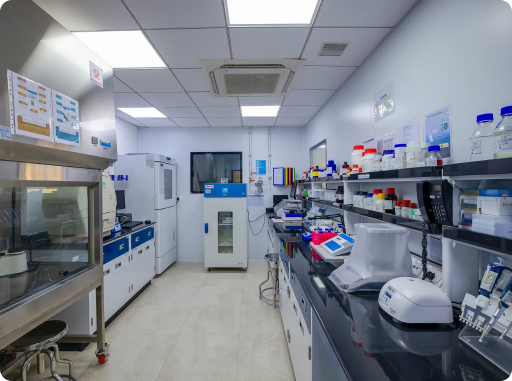
Laboratory-scale performance does not automatically translate to a manufacturing environment. As cultures move into larger bioreactors, changes in operating conditions and the production environment can affect cell growth, productivity, and product quality.
Cell line development and process development therefore need to work together during scale-up. Process development evaluates how the selected cells perform under increasingly representative production conditions and helps establish an approach for maintaining consistent output as the process grows.
Piramal Pharma Solutions' Hyderabad biologics facility describes capabilities spanning cell line development, process optimization, and scale-up, with a focus on supporting high product titer, stability, and consistent manufacturing output.
For biologics programs, cell line development does not happen in isolation. The characteristics identified during cell line development can influence upstream processing, downstream purification, analytical requirements, formulation, and manufacturing strategy.
An integrated development approach can connect cell line development services with upstream and downstream process development, analytical development, formulation, stability studies, and manufacturing. This lets information generated at one stage inform decisions at subsequent stages, rather than requiring each activity to be developed independently.
For sponsors progressing a biologic toward clinical or commercial production, this integration can help create a more coordinated development pathway from the initial cell system through scalable manufacturing.
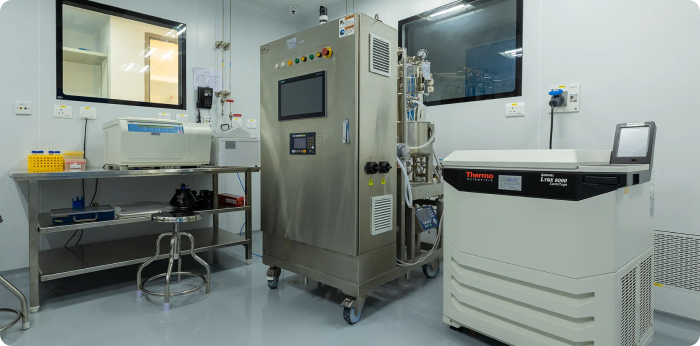
The cells used to produce a biologic can have implications far beyond the earliest stages of development. Selecting, screening, characterizing, and optimizing an appropriate production cell line establishes an important foundation for subsequent process development and manufacturing.
As biologics programs progress toward larger-scale production, a well-understood, well-developed cell line can support consistent productivity and product quality. Integrating cell line development with broader biologics development activities can further connect early cell selection with the requirements of clinical and commercial manufacturing.

Cell line development is the process of identifying and developing a cell line that can produce a desired biologic with the productivity, quality, stability, and scalability needed for further development and manufacturing.
Cell line development is important for biologics because a production cell line's characteristic can affect productivity, product quality, stability, and manufacturing consistency, making it a key foundation for scalable production.
Cell line development services can include host cell selection, genetic modification, cell screening, optimization, characterization, production cell line selection, and cell banking, depending on the biologics program's needs.
The following Piramal facility provides cell line development services: