

Developing formulations for pediatric patients poses unique challenges. The specific needs of children, which vary by age, mean the task goes well beyond just scaling down the dose of the formulation used in adults. Strength, dosage form, and choice of excipients need consideration in light of the target population's requirements and preferences to ensure the product is safe, effective and usable, meaning developers need a specific skill set that is distinct from the capabilities required to create treatments for adults.
The complexity stems from the fact that children are not just small adults when it comes to how they react to drug products. A dosage form that is acceptable to adults may be rejected by children, and even rejected by young children and accepted by older children. Equally, children can respond differently to medicines than adults, resulting in unexpected pharmacokinetics and changes in clinical efficacy.
In children, the organs, body systems and enzymes that dictate how the body reacts to active substances and excipients develop at different rates. Developmental changes, notably in the gastrointestinal tract and skin, can significantly alter the bioavailability of a medicine. Gut motility, for example, matures in early infancy and how far a child is through that process will shape how they respond to a treatment. Drug developers need to factor in such considerations to create patient-centric pediatric formulations.
Successful development of pediatric formulations starts with a solid understanding of the physical and biochemical differences between children and adults. When trying to develop a pediatric product, formulators need to assess how differences in the physiology and anatomy of children can affect the absorption, distribution, metabolism and elimination of drugs. As such, knowledge of both the formulation and how it will interact with the site of absorption is needed.
That is only part of the challenge, though. Drug developers also need to ensure their formulations are acceptable to children, who may struggle to swallow solid oral dosage forms or dislike how they taste, and factor their cognitive and motor skills and reliance on caregivers into design decisions. Expertise in a wide range of dosage forms such as oral solids, oral liquids, suspensions, injectables, and creams is needed to ensure the right patient-centric formulation is available for all pediatric patients.
The task of developing formulations that are accepted by the target population is complicated by barriers to the direct study of taste masking in children. It is often impossible to run clinical trials in children, forcing drug developers to rely on taste evaluations performed during bioavailability studies in adults to understand if a product is likely to be usable in pediatric populations. The lack of direct feedback from children means developers need to try to adapt the taste for pediatric populations based on the views of adults.
As with other bodily functions, taste changes over time as children mature1 . Taste is also intertwined with other factors, with research showing children will identify a brown, strawberry-flavored formulation as tasting of chocolate because of a strong association between color and flavor. Similarly, social factors affect preferences, creating regional variations in the tastes that are acceptable to children. For example, children in the US may prefer a more intense sweetness than their counterparts in Japan. Developers need to understand such nuances and be able to adapt formulations to them to cater to all children.
-(15).jpg "What to Consider")
When developing medicines for older children, companies should consider the potential for abuse and potentially take steps to mitigate the risk. Opioid abuse in children is a public health concern, typically in individuals treated with opiods for pain, as is the misuse and diversion of stimulants prescribed to address attention deficit hyperactivity disorder (ADHD).
Regulations limit the range of excipients drug developers can use to create formulations tailored to the needs of pediatric populations. While excipients are theoretically pharmacologically inactive, they can cause adverse effects, particularly in young children whose physiology differs significantly from the adults in whom the ingredients have been shown to be safe.
A European Medicines Agency reflection paper on pediatric drug development features a lengthy, but still nonexhaustive, list of excipients that may cause issues when given to children. Sweeteners such as sucrose, fructose and aspartame should be avoided in some subpopulations of children, while the use of ethanol in oral liquid preparations is associated with acute and chronic concerns such as accidental overdose. Concerns extend to some coating materials, which have been linked to fibrosing colonopathy.
Multi-factor problem solving and a wide range of technologies are needed to address the multitude of considerations raised by pediatric drug development. Piramal Pharma Solutions' facility in Sellersville, PA, which performs process development, clinical supply, and commercial manufacturing and packaging, is a rare example of a site that has the full package of expertise and capabilities needed to develop pediatric formulations.
The site is equipped to develop age-appropriate formulations for children in various age groups using its range of technologies including oral liquids, suspensions, seal-coated pellets with Wurster technology, and chewable tablets. Minitablets suitable for sprinkling in baby food is another technology that will be added in the future.
Sellersville demonstrated its ability to deploy the technologies to meet the specific needs of a targeted pediatric population in an antiinflammatory drug development project. The team formulated the active ingredient into mintablets measuring 2 mm in diameter to support patient compliance, enable a flexible dose and keep manufacturing simple.
Process optimization in high shear wet granulation resulted in high drug loading and satisfactory content uniformity. The team used high density starting materials and a suitable screen size of mill to deliver a blend with satisfactory density, particle size distribution and flow. A disintegration time of around five minutes was facilitated by selection of a suitable disintegrant, while sticking was mitigated through the optimization of the lubricant level.
-(16).jpg "A Complete Pediatric Toolkit")
This example illustrates the breadth of expertise and technology needed to develop each of the dosage forms handled at Sellersville. A similar breadth of capabilities is needed for taste masking. At Sellersville, Piramal is equipped to mask taste through complexation with cyclodextrins or ion-exchange resins and a systematic approach to screen for suitable flavors.
Sellersville's ability to deploy those capabilities to mask taste is illustrated by a case study, in which the site masked the taste of a high-dose orally disintegrating tablet (ODT). ODTs pose particular challenges because they disintegrate and dissolve in the mouth, exposing the patient's taste buds to the active ingredient. At the required dose of 150 mg, the active ingredient had an unpleasant taste, potentially limiting the compliance of children with the treatment.
Sellersville looked at compositions with varying levels of flavors and sweeteners, leading to the selection of aspartame as the sweetener and orange as the flavor. Such combinations of sweeteners and flavors are the simplest way to mask taste and can be easily incorporated into production processes without the use of sophisticated equipment.
While sweetener-flavor combinations are simpler than some other approaches to taste masking, they still require deep expertise to get right. The team at Sellersville optimized details such as the quantity of lubricant and created a design space to achieve the required palatability of the drug product, before scaling up and transferring the process to a production site for commercial trials.
The pediatric formulation considerations listed in this paper provide a snapshot of everything that drug developers should take into account when working on medicines for children. Faced with the wide range of considerations, many of which are unique to pediatric formulations, even teams with deep experience of working on adult medicines can struggle to deliver the patient-centric products that children need.
Help is available, though. By partnering to access the Sellersville site's expertise, biopharma companies can develop formulations that are adapted to the age, health status, and other characteristics and needs of each group of children. Such formulations extend the patient-centricity agenda to children to ensure everyone receives a dosage form that supports compliance, safety and effectiveness, whatever their age.
-(17).jpg)
-(18).jpg)
The mix of creativity and mastery of technology needed to develop pediatric formulations is exemplified in the development of a treatment for ADHD in children. Children typically take two doses of ADHD therapies, one in the morning and another in the afternoon. However, compliance with the second dose, which is taken during school hours, is suboptimal. Children may be embarrassed about the therapy or feel stigmatized. Either way, when away from parental supervision, children sometimes skip the second dose.
A pediatric formulation with a delayed release formulation featuring controlled-release bead technology was developed which enabled once-daily dosing for children. Piramal Pharma Solutions has capabilities for developing such formulations for our client partners.
About Piramal Pharma Solutions:
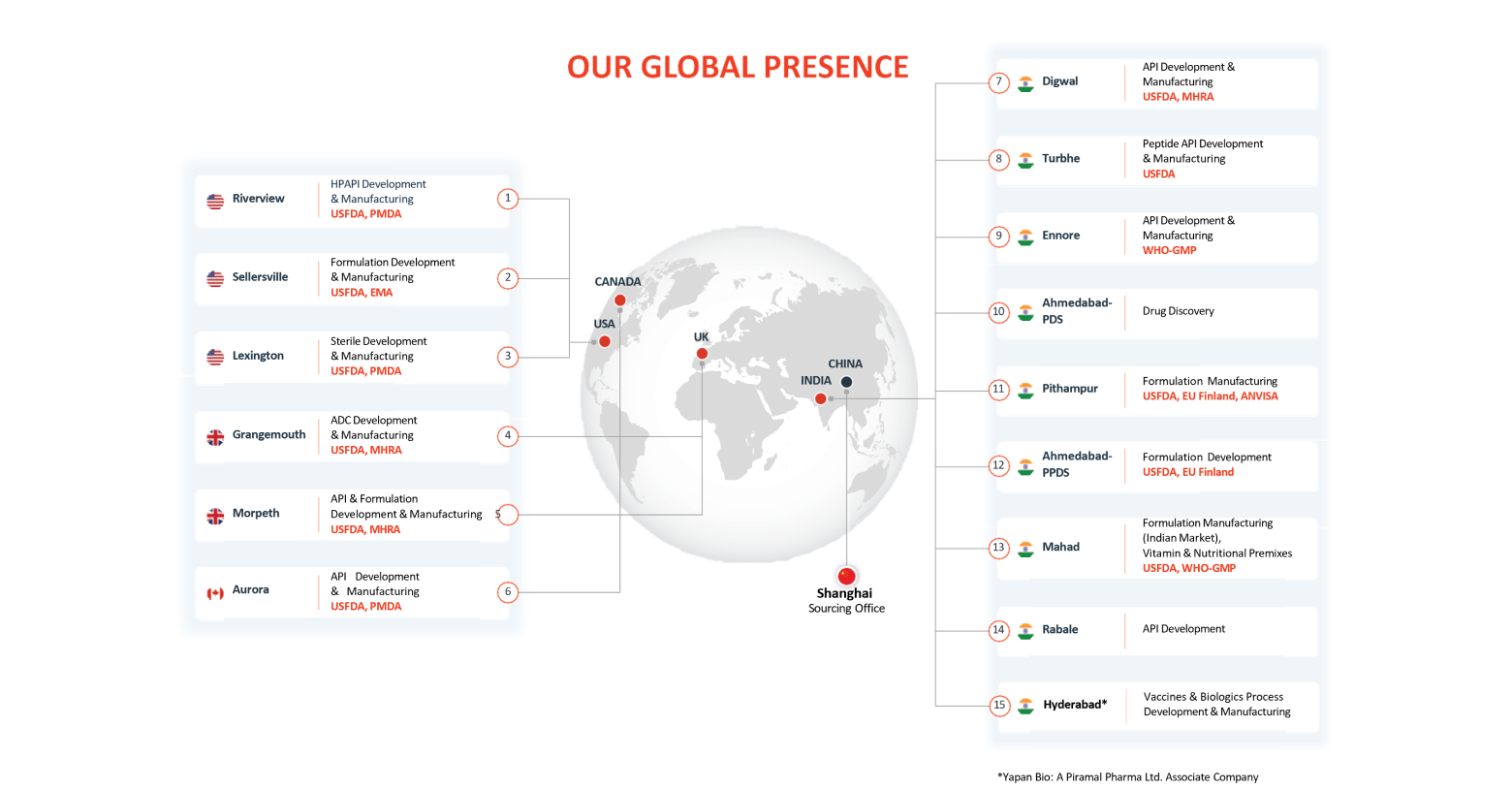
Piramal Pharma Solutions (PPS) is a Contract Development and Manufacturing Organization (CDMO), offering end-to-end development and manufacturing solutions across the drug life cycle. We serve our customers through a globally integrated network of facilities in North America, Europe, and Asia. This enables us to offer a comprehensive range of services including drug discovery solutions, process & pharmaceutical development services, clinical trial supplies, commercial supply of APIs and finished dosage forms. We also offer specialized services such as the development and manufacture of highly potent APIs, and antibody-drug conjugation, sterile fill/finish, and potent solid oral drug product. We have enhanced our abilities to provide Peptide API products and custom peptide synthesis to our drug development and manufacturing capabilities. Our capability as a globally integrated service provider and robust experience with various technologies makes us a partner of choice for innovator and generic companies worldwide.