

Oxidation reactions are a cornerstone of chemical synthesis. Medicinal chemists frequently use the method to functionalize molecules in lower oxidation states while protecting them from unintended transformations, such as potential side reactions. Yet, attempts to harness the reaction';s efficiency and precision at larger scales are complicated by safety risks associated with the oxidants. Due to hazards associated with oxidants, chemists often prefer other types of reactions at the process manufacturing scale. However, there are times when oxidation reactions are unavoidable and must be executed at scale. In some situations, the reactions even present immediate synthetic advantages and achieve desired short-term benefits such as material generation.
When an oxidation reaction is needed, chemists can choose from a wide range of methods, such as peroxides, photochemical oxidations or metal mediated oxidations like KMnO4, CrO2Cl2, OsO4 and periodate chemistry.
The reactions achieve similar transformations, but ozonolysis remains highly attractive because of its atom efficiency and clean reaction profile.
Ozonolysis is a versatile and widely used oxidation reaction in organic chemistry because of the diversity of oxidized product obtained directly or with a tandem reaction. The reaction undergoes oxidative cleavage of carbon-carbon double or triple bonds with ozone, resulting in the formation of aldehydes, ketones, carboxylic acids, and alcohols. The reaction has a well-studied, widely discussed mechanism of action. The most accepted mechanism uses a Criegee intermediate, which can be quenched with different reagents to yield corresponding products.
The reaction can be considered a green chemistry process because it uses ozone, a naturally occurring and relatively benign oxidizing agent, and can help reduce waste compared to some traditional oxidation methods. Ozone is a powerful oxidant that cleaves double bonds in organic molecules, forming carbonyl compounds and other products.
Unlike other oxidation methods, ozonolysis minimizes formation of unwanted by-products, reducing purification challenges. The absence of metals and improved economic efficiency provide further advantages over other methods. The gaseous nature of ozone eliminates the need for excessive solvent use, thereby reducing operational costs.
Other advantages include the reaction';s precise cleavageof alkenes and alkynes, leading to different products with minimal side reactions, and ability to be carried out under relatively mild conditions to reduce the thermal degradation of sensitive compounds.
Alternative methods suffer with the stoichiometric use of heavy metals and lower generality of the reaction.Also, the reaction quenching and work-up generate a lot of metallic waste. The waste causes problems including sludge formation and metal contamination in the API in large-scale reactions.

Ozonolysis has its own scale-up challenges, primarily due to the intrinsic instability of intermediates formed during the process. Under standard conditions, ozonolysis generates low-molecular-weight ozonides and peroxides, which are unstable and potentially explosive, posing significant safety concerns.
Ozone is a highly reactive and toxic gas and the reaction can be highly exothermic. Other concerns include gas liquid mass transfer, flammable organic solvents, and high solvent volume. Chemists need to predict the reaction';s endpoint and further process intermediates to ensure safe handling and desired product formation.
Despite these risks, ozonolysis has been successfully implemented on a multi-kilogram scale in the API industry. With proper control measures, the reaction can be effectively scaled-up for manufacturing applications.
Companies need to establish systems to detect and safely quench peroxide intermediates and to carefully assess the energetics of the reaction.
Stringent safety measures and specialized equipment for controlled application mitigate the risks posed by ozone. Careful temperature control and process safety assessments prevent runaway reactions, which can occur
during highly exothermic processes.
While proper process safety controls and optimization support effective scale-up, the use of ozone in the pharmaceutical industry is limited. Companies rarely scale ozonolysis from the laboratory to industrial production.
Lab chemists are experienced at running the reaction at medicinal chemistry scales but most facilities lack large scale equipment or safety processes.
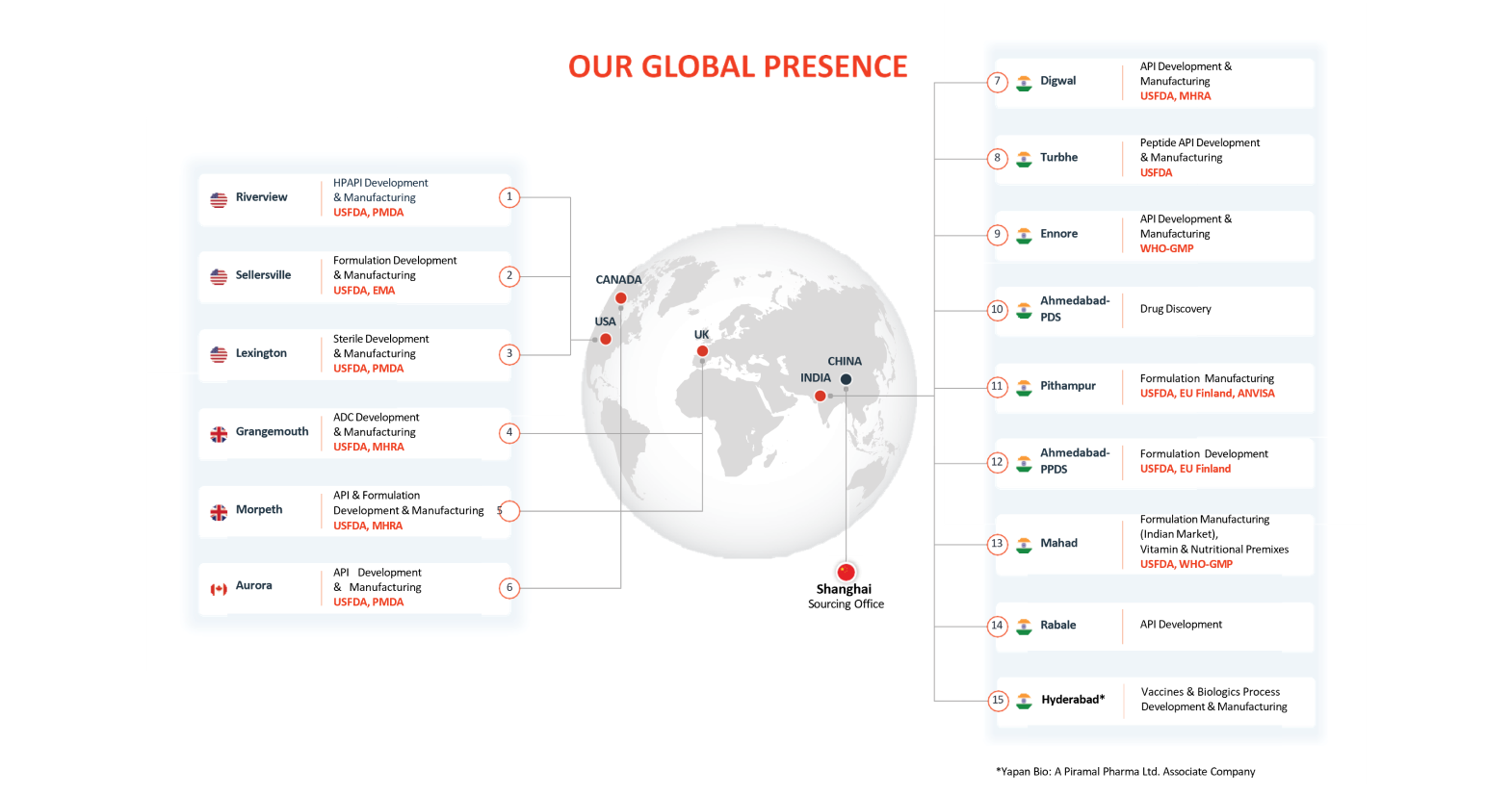
Piramal Pharma Solution's facility in Ennore, India is a rare example of a facility that has the vast experience and well developed protocols to perform ozonolysis at scale. The team at Ennore uses reaction calorimetry, DC analysis, its experience of handling peroxide chemistry on large scales, and other specific methods to monitor reactions and ensure the safe execution of ozonolysis.
The Ennore facility has been performing ozonolysis reactions at scale historically for more than a decade to use for the manufacturing of several niche intermediates and supplying to many of the top pharma companies continuously.
The site is equipped with a large-scale ozonator to support commercial production of up to 30kg and a tabletop ozonator in the lab for generating up to 20g of ozone per hour to support the new R&D work. This perfect combination enables Piramal to explore novel ozonolysis reactions at laboratory scale and then to leverage seamless transition to commercial productions. A few selected case studies have been presented below to showcase expertise and industrial leadership on commercial ozonolyisis.
The synthesis of one of a molecule requires conversion of a compound into aldehyde that would be very difficult to implement in a single step using other methods.
Piramal uses its ozonolysis expertise to run an in situ reduction. The team at Ennore has scaled the reaction up to 24kg to support commercial production. Ozonation is performed for 25kg to 30kg at -15°C to -10°C. Unstable ozonide is quickly proceeded for ring opening and reduction using sodium borohydride in pyridine.


Piramal used its lab-scale ozonolysis equipment for one step of a five-step synthetic sequence which is designed to convert an olefin into an aldehyde. The team established proof of concept for the reaction at 10g to 15g scale using the tabletop ozonator successfully at Piramal Ennore R&D. The maximum ozone production capacity of the equipment is 20g/h with 2A current supply, which is ideal and handy to carry out such small-scale exploratory chemistry that requires ozonolysis.


Ozonolysis is an efficient, scalable, and precise reaction that has been held back by safety concerns. Today, ongoing improvements in process safety and optimization are supporting more widespread use of the reaction in
API production. However, significant barriers to adoption remain, as facilities must establish a range of precautions to ensure the reaction's safe use. Piramal';s Ennore facility is known for its expertise in the field of ozonolysis and its capacity to support small-scale to large-scale reactions that requires this technology.
Piramal has also successfully validated the scale-up ozonolysis operating procedures in line with guidelines and regulations for industrial safety and handling of hazardous reagents at lab and commercial scales. Pharma companies can tap into Ennore';s expertise and experience to quickly unlock the advantages of the reaction and accelerate the progress of life-changing medicine.
Piramal Pharma Solutions (PPS) is a Contract Development and Manufacturing Organization (CDMO) offering end-to-end development and manufacturing solutions across the drug life cycle. We serve our customers through a globally integrated network of facilities in North America, Europe, and Asia. This enables us to offer a comprehensive range of services including drug discovery solutions, process and pharmaceutical development services, clinical trial supplies, commercial supply of APIs, and finished dosage forms. We also offer specialized services such as the development and manufacture of highly potent APIs, antibody-drug conjugations, sterile fill/finish, peptide products and services, and potent solid oral drug products. PPS also offers development and manufacturing services for biologics including vaccines and gene therapies, made possible through Piramal Pharma Limited's associate company, Yapan Bio Private Limited.