

-1.png "Blue Spherical Microorganisms Under Microscope")
Accelerating the design-make-test-analyze (DMTA) cycle that underpins all drug discovery programs gives companies a competitive advantage. By reducing the length and number of cycles, drug developers can reach the clinic and the market before their rivals while minimizing costs. Yet with competition for drug targets intensifying, being first is rarely sufficient to ensure commercial success. Increasingly, companies need to consider how to differentiate their molecules from the start of the product life cycle. Adopting a mechanism-oriented framework for cellular assessment supports speed and differentiation. However, most discovery programs still rely heavily on cytotoxicity as an early decision-making tool, even though viability captures only the final stage of cellular stress. Subtle but consequential mechanistic disturbances especially mitochondrial and metabolic dysfunction frequently remain invisible in standard viability assays, creating blind spots that propagate through multiple DMTA cycles.
Differentiation starts in the DMTA cycle, the iterative process through which compounds are designed, synthesized, tested in biological assays, and analyzed to inform the next round of designs.1 Many cycles can be needed to identify a clinical candidate, accounting for up to 30% of spending on drug discovery programs.2 For example, improved communication through the tight integration of chemistry and biology teams facilitates faster, more efficient progress toward the identification of best-in-class candidates.
The importance of quickly discovering differentiated molecules has increased in recent years. McKinsey found that in 2023 only 25% of assets engaged unique targets, down from 28% in 2021.3 It is increasingly common for five or more molecules to be in development for each opportunity, with the proportion of such highly crowded targets increasing from 36% in 2021 to 41% in 2023.
Clustering intensified at the fastest rate among the top 14 biopharma companies. By 2023, there were five or more candidates in development at those leading companies for 39% of targets, up from 32% in 2021. Among the companies, only 23% of targets were engaged by a single asset by 2023. The recent clustering is part of a long-term trend. From 2000 to 2022, the number of candidates per target increased 2.5-fold, driven by a 5.4-fold jump in oncology.
Facing intensifying competition, drug developers need partners that can accelerate the DMTA cycle and offer assay designs that empower them to discover differentiated molecules. Piramal Pharma Solutions meets these needs by housing chemistry and biology teams in the same building and offering a custom, mechanism-oriented approach to cellular assessment. By integrating mechanistic cellular insights earlier in DMTA, teams reduce false confidence from viability-only screens and identify biological liabilities before they become costly late-stage failures.

Companies seeking cellular biology support face a choice between two distinct models. Some providers rely on predefined assay panels built around high-throughput viability or ATP endpoints. Others offer a custom workflow, designing assays that reflect each program's mechanism, target biology, and translational context.
Piramal Pharma Solutions follows a custom model. Instead of placing compounds into a fixed viability panel, Piramal builds cellular assessments that capture mechanistic events upstream of cell death. The resulting assays measure not only whether cells survive but what biology unfolds before survival is lost a critical distinction when decisions in the DMTA cycle depend on early, nuanced signals rather than terminal outcomes.
The distinction between panel-based and custom biology has become increasingly important as discovery programs cluster around mechanisms where energetic resilience, redox balance, and stress adaptation shape translational success. Relying solely on cytotoxicity risks missing early mechanistic liabilities, enabling latent toxicity to propagate through multiple design cycles. A clear example emerges from efforts to modulate Mitochondrial Complex I (NADH:ubiquinone oxidoreductase) across oncology, metabolic disorders, and neurodegeneration.
Complex I sits at the convergence of NADH oxidation, mitochondrial membrane potential generation, and ROS signaling, making it central to cellular fitness. Early discovery programs often relied on simple viability assays performed in glucose-rich media, where cells compensate for mitochondrial perturbation through glycolysis. These screens often produced deceptively clean viability profiles, suggesting favorable safety margins even as compounds were perturbing core bioenergetic processes.
However, evaluating Complex I modulators under more physiologically relevant conditions galactose media, prolonged exposure, or metabolically constrained cell types revealed deep mechanistic liabilities. Loss of mitochondrial membrane potential, disrupted NADH/NAD⁺ balance, elevated ROS, ATP collapse, and time-dependent injury emerged well before viability declined. This illustrates the fundamental limitation of viability-only assessment: cytotoxicity registers failure only after adaptive capacity is exhausted, obscuring the mechanistic sequence that determines translational risk. Compounds can appear “clean” in early screens yet harbor liabilities that surface only after weeks of medicinal chemistry effort or, worse, during in vivo studies.
Rotenone, a classical Complex I inhibitor, demonstrates this pattern clearly: it causes rapid mitochondrial depolarization and impaired NADH oxidation long before any drop in viability is observed.5 Only when bioenergetic reserves are exhausted does cytotoxicity become measurable, making rotenone a textbook example of delayed, mechanism-driven injury masked by viability-only assays.
A similar challenge contributed to the failure of Troglitazone, an antidiabetic thiazolidinedione originally launched for the treatment of type 2 diabetes. Although it passed early viability screens, the compound later revealed mitochondrial and metabolic liabilities detectable only through mechanistic cell-health assays. These mechanistic failures ultimately manifested as severe clinical liver injury, leading to the drug's market withdrawal.
Reading cytotoxicity in isolation therefore creates multiple points of failure:
• False negatives — Compounds that induce mitochondrial or redox stress appear inactive because they have not yet triggered death.
• False positives — Agents that transiently deplete ATP or alter metabolism are misclassified as toxic despite reversible, non-terminal effects.
• Misleading SAR — Small structural changes may shift upstream biology without affecting viability, obscuring structure-mechanism relationships.
• Late discovery risk — Foundational liabilities are uncovered only during animal studies or chronic dosing, increasing attrition and cost.
Incorporating mechanistic endpoints mitochondrial membrane potential, ROS and redox state, ATP under metabolic challenge, and activation of stress-response pathways would have revealed these biological inflection points earlier and guided more informed DMTA decisions. Mechanism-oriented assays reveal upstream distinctions in cellular behavior that terminal viability panels inherently miss, enabling more differentiated SAR and stronger translational confidence especially in crowded target spaces.
Custom assay design also allows programs to evolve. As SAR matures and mechanistic hypotheses shift, Piramal adjusts metabolic conditions, readout depth, or cell models without being constrained by a fixed panel. Co-location of biology and chemistry teams accelerates iteration, enabling real-time interpretation of mechanistic signals, rapid troubleshooting, and integrated analysis of outliers that shorten the DMTA cycle and ensure that design decisions are anchored in early biology rather than late-stage viability decline.
Mechanism precedes mortality understanding that mechanism earlier is where differentiation truly begins.

Overlaps between service providers assay technologies mean companies are differentiated by the depth of their chemistry and biology expertise and the working relationship between the two functions. The difference between an average and top-tier service provider is less about what technology they have and more about how they use it.
Recognizing that, Piramal built a biology capability that complements its established medicinal chemistry platform by investing in talent and an integrated workflow. This investment has equipped Piramal to run assays for a wide range of cell health and disease parameters and quickly deliver the data customers need to make decisions.
Assays that empower researchers to move beyond cytotoxicity prove the power of Piramal's approach. Cell viability remains the most widely used cellular screening endpoint because it is simple, scalable, and well established across discovery and safety programs. Yet there are limitations to what companies can learn from the assays.
Viability assays primarily reflect terminal or near-terminal cellular states, including ATP collapse, irreversible membrane damage, or loss of metabolic competence. While well suited for defining lethal exposure thresholds, such assays provide limited insight into earlier cellular events, including functional impairment, adaptive stress responses, or pathway-level engagement.
As such, viability-only interpretation can mask sub-lethal but biologically meaningful effects, obscuring temporal relationships between stress and outcome, and limit mechanistic understanding of observed phenotypes. These limitations are especially relevant for compounds with mitochondrial, metabolic, or redox-related liabilities, where dysfunction may precede cell death by hours or days.
The limitations affect the likelihood of R&D success. A cross-company analysis of attrition data from four major drugmakers identified safety and toxicology as a leading cause of the failure of R&D programs. Other analyses have attributed approximately 30% of clinical drug development failures to toxicity. Earlier mechanistic resolution of cellular liabilities can improve R&D success rates.

Piramal adopted the ethos “when viability falls short, dig deeper” to ensure its teams generate the data that customers need to more reliably predict clinical outcomes. The ethos informed the development of a mechanism-oriented assessment framework that evaluates different aspects of biology in parallel or selectively, depending on the study's objectives. The intent is not to replace viability screening but to contextualize it, allowing viability outcomes to be interpreted within a broader biological narrative.
Multiparametric approaches measuring endpoints such as mitochondrial membrane potential, reactive oxygen species (ROS), glutathione status, nuclear morphology, and ATP outperform models that rely on any one endpoint. This approach reduces false negatives, where compounds that perturb upstream biology appear inactive, and false positives, where metabolic perturbation is miscalled as cell death.
Piramal assesses cell health across multiple mechanistic domains. With deep expertise informing its custom approach, the company applies the following assays independently or in combination to answer the specific questions posed by a drug discovery program.
Structural Integrity and Membrane Health
Structural integrity reflects the cell's ability to maintain an intact plasma membrane. Assessment of membrane permeability provides a clear indicator of irreversible injury and late-stage cellular damage.
In a mechanism-oriented framework, membrane integrity serves as a boundary marker between sub-lethal stress and terminal outcomes. Preserved membrane health alongside other cellular perturbations indicates reversible or adaptive responses, whereas early membrane compromise signals progression toward irreversible injury.
Energy and Mitochondrial Health
Mitochondrial function underpins cellular energy production and stress signaling. ATP levels and mitochondrial stress parameters provide early insight into bioenergetic stability, often detecting dysfunction well before viability is affected. Alterations in mitochondrial function frequently occur in the absence of immediate viability loss. Inclusion of this domain enables detection of early dysfunction that may predict delayed toxicity, functional impairment, or compromised cellular resilience.
Cell Death Pathways
Loss of viability can arise through mechanistically distinct routes. The Nomenclature Committee on Cell Death now recognizes more than ten regulated cell death modalities, including intrinsic and extrinsic apoptosis, necroptosis, pyroptosis, and ferroptosis.
For most small molecule programs, the practical distinction is between regulated, pathway-driven death and accidental death from severe non-specific damage. Identifying the death modality adds context to cytotoxicity data. Apoptosis is typically immunologically silent, whereas necrotic and necroptotic death releases damage-associated molecular patterns that drive inflammation.18 Understanding which pathway is active informs the interpretation of biological relevance, selectivity, and downstream consequences.
Adaptive Mechanisms and Protein-Level Responses
Cells activate compensatory mechanisms to maintain homeostasis under stress. The integrated stress response, which occurs in response to stimuli including amino acid deprivation and oxidative damage, is a well-characterized example of such mechanisms.At low or transient stress levels, the responses support survival but intense or sustained stress can drive cell death.
Characterizing adaptive mechanisms can explain why cell viability may be preserved despite measurable perturbation and indicate whether responses are likely to resolve, persist, or progress under continued exposure.
Stress Responses and Redox Balance
At low levels, ROS modulate the activity of kinases, phosphatases, and transcription factors.21,22 At higher levels, ROS cause irreversible oxidative damage to lipids, proteins, and DNA. Measuring oxidative stress and ROS provides insight into stress signaling versus damaging oxidative burden and supports mechanistic linkage between upstream mitochondrial perturbation and downstream cellular outcomes.
Metabolic Fitness
Metabolic fitness reflects the efficiency and flexibility with which cells meet energetic demands. Changes in glucose consumption and lactate production indicate shifts in bioenergetic strategy. Altered metabolic profiles often precede loss of cell viability and highlight compromised cellular performance even when survival is maintained.
Functional Performance
Cells may retain viability while exhibiting impaired biological function. Functional performance is assessed using cell-type-relevant readouts of signaling, activity, or physiological behavior. Including functional endpoints ensures detection of biologically meaningful effects that cytotoxicity alone cannot capture.
Cell Cycle and Proliferation
Cell cycle dynamics and proliferative capacity are sensitive indicators of cellular stress and checkpoint engagement. Disruption of division without loss of viability reflects cytostatic or growth-limiting effects rather than overt toxicity. Evaluation of this domain distinguishes proliferation control from cell death and improves interpretation of long-term cellular behavior.
Deployed within a co-localized workflow, the mechanism-oriented framework enhances the information medicinal chemists receive through the DMTA cycle. Rather than just receiving a viability curve, teams learn which cellular processes are perturbed, at what concentrations, in what sequence, and through which pathways.
These insights reduce false negatives, clarify discordant results, and provide mechanistic context for observed effects. Integrated into the DMTA cycle, the insights can translate into more confident compound prioritization, enhanced hypothesis generation, and more efficient design of follow-up studies, without displacing established high-throughput workflows.
Those benefits provide additional complexity. Interpretation of multiparametric assessments is cell-type- and context-dependent, reinforcing the importance of aligning assay depth with study objectives rather than applying comprehensive profiling indiscriminately. Piramal's custom service, which tailors assay panels to the question being asked, keeps the approach focused and interpretable.
The benefits of adopting a mechanism-oriented framework for cellular assessment within a co-localized workflow extend across the R&D life cycle. Once a compound is chosen, Piramal finds a scalable chemical route and makes the molecule for in vivo studies and clinical trials. Working with a single partner on biology, route scouting, and scale-up eliminates delays that accompany transitions between providers.

Cytotoxicity remains an important endpoint, but it represents only the terminal outcome of cellular perturbation. By evaluating mechanistic domains alongside viability, researchers can interpret cellular responses with greater clarity and biological relevance. Clarity and relevance drive earlier detection of dysfunction, improved mechanistic understanding, and better-informed experimental decisions.
Understanding your cells completely is a competitive advantage. Amid rising target clustering, companies that differentiate their biology differentiate their chemistry. Piramal's co-localized, custom model drives those benefits, equipping companies to make faster, better-informed decisions on the path to bringing life-changing medicines to patients.
For more information contact:
Sharad Singh
Principal Scientist
A review for cell-based screening methods in drug discovery
Predicting and interpreting cell-type-specific drug responses in the small-data regime using inductive priors
The Impact of Cellular Environment on In Vitro Drug Screening
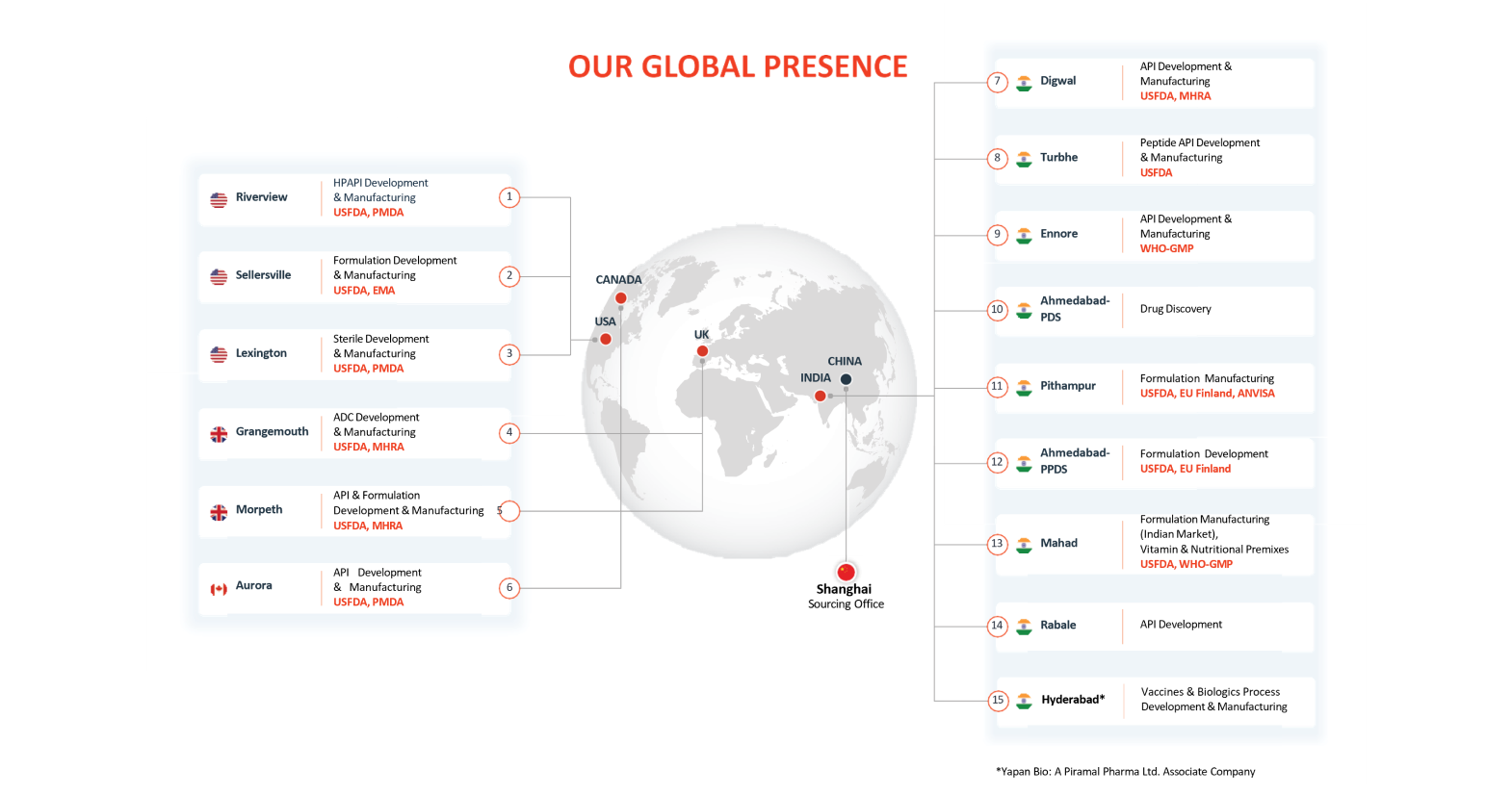
Piramal Pharma Solutions (PPS) is a Contract Development and Manufacturing Organization (CDMO) offering end-to-end development and manufacturing solutions across the drug life cycle. We serve our customers through a globally integrated network of facilities in North America, Europe, and Asia. This enables us to offer a comprehensive range of services including drug discovery solutions, process and pharmaceutical development services, clinical trial supplies, commercial supply of APIs, and finished dosage forms. We also offer specialized services such as the development and manufacture of highly potent APIs, antibody-drug conjugations, sterile fill/ finish, peptide products and services, and potent solid oral drug products. PPS also offers development and manufacturing services for biologics including vaccines and gene therapies, made possible through Piramal Pharma Limited's associate company, Yapan Bio Private Limited.