


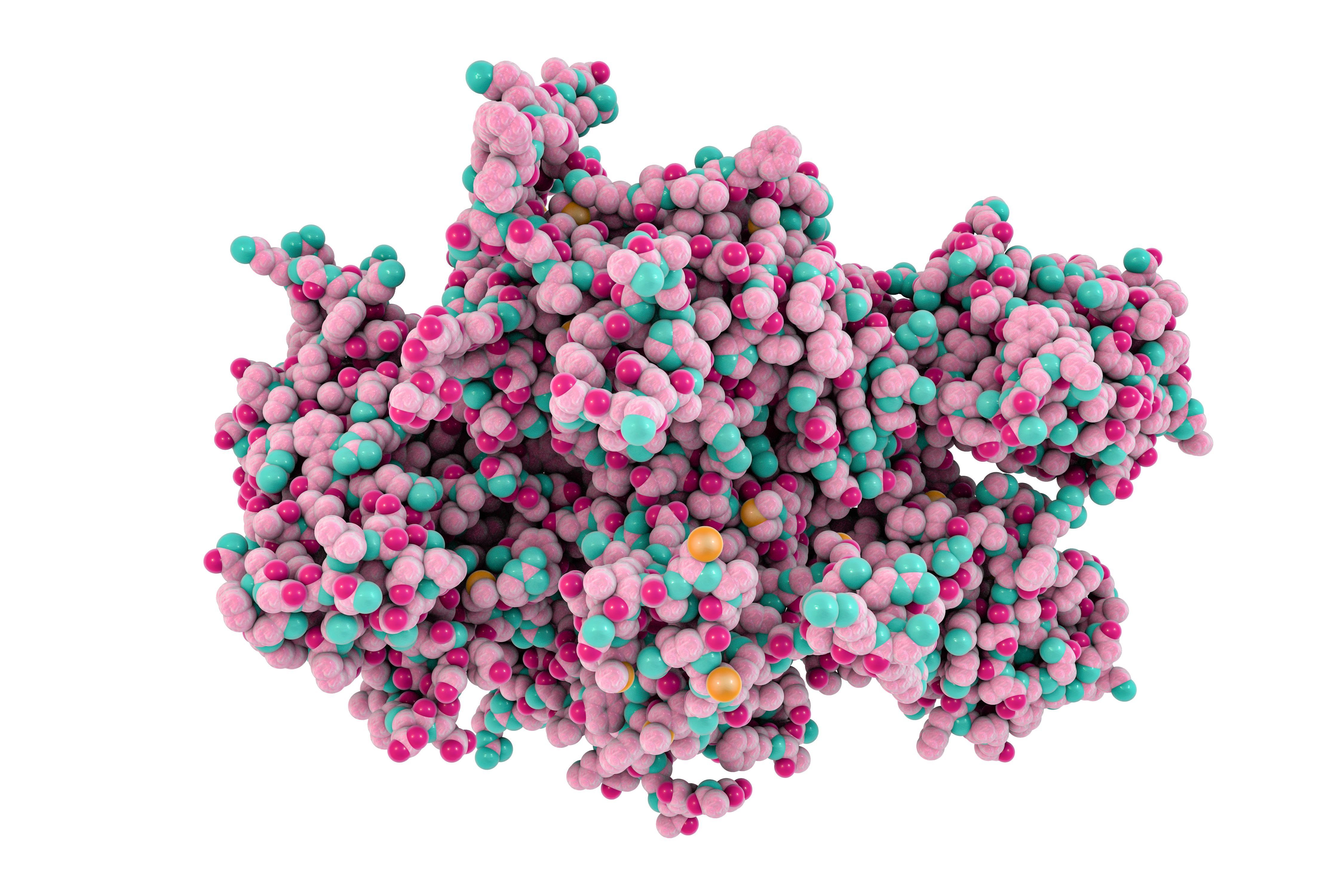

Atropisomerism plays a crucial role in drug development. Molecules with this feature have become more prevalent in the R&D pipeline in recent years, creating both challenges and opportunities for innovator companies and CDMOs alike. The situation is driving demand for companies with mastery of the synthesis and purification capabilities needed to produce safe and effective atropisomers.
The term atropisomerism refers to small molecules with a flexible type of axial chirality characterized by hindered rotation about a bond. As bond rotation happens, atropisomers can spontaneously convert into mirror-image forms, with the level of hindrance determining how freely the molecules convert.
It is now possible to modulate different functional groups in highly interconvertible atropisomers at the drug design stage and synthesize them as stable atropisomers with acceptable biological activities. Yet, these atropisomers often pose challenges, first at the synthesis step because of functionalization at the sterically hindered position, and later at the purification and analysis stages.
Atropisomerism is rarely discussed, but the fact that converted molecules can cause drastically different biological effects from their mirror images means it is a technical challenge that chemists face routinely in drug synthesis. In highly interconvertible atropisomers, half of the molecules are expected to have the desired drug effect while the other half may either be less active, inactive, or actively harmful, in the case of molecules that have off-target effects.
In recent years, the need to find ways to mitigate the risks of chirality and maximize the efficacy of atropisomers has intensified as small molecules with hindered rotation about a bond have become more prevalent in drug development pipelines. An analysis found 30% of the small molecules approved by the US FDA between 2010 and 2018 had at least one quickly converting atropisomeric axis.1 Overall, 15% of the approximately 1,900 small molecules in the US FDA Drug Bank have at least one atropisomeric axis.2
The US FDA is to the risks posed by mirror-image molecules, which were clearly shown decades ago by thalidomide, and researchers have called atropisomers "a lurking menace" because of the potential for the lack of stereochemical stability to cause regulatory-based complications.3 As such, the US FDA and other regulatory agencies prefer chiral drugs as single enantiomers to improve safety and efficacy.
The safety problems associated with thalidomide stemmed from restricted rotation about a C-C bond that created an enantiomer that had adverse biological effects. Atropisomerism arises due to differential substitutions about a C-C bond that leads to restriction of bond rotation. Racemization, conversion that creates a 1:1 molar ratio of enantiomers, occurs if the rotation around the C-C bond is rapid even without breaking and making any bonds. Common drug discovery scaffolds that exhibit atropisomerism include biaryls, diaryl ethers, diaryl amines, benzamides, and anilides.
The earlier "industry standard" largely circumvented stable atropisomers at the drug design stage and considered rapidly converting isomers as achiral. However, practices changed after the observation that each of the achiral atropisomers has differential preferences in binding to the target proteins and, hence, different drug properties and target profiling.
Atropisomerism can contain distinct geometrical isomers, diastereoisomers, or enantiomers, and there may be thermal equilibrium between them. The thermal equilibrium between different atropisomers has led chemists to follow two different strategies

If high rotational energy is required for atropisomerization, the development of a single, pure, and stereochemically stable isomer is preferred. However If there is a low energy barrier or rapidly rotating bonds, the preference is for the development of a drug as a consistent and reproducible interconverting mixture.
Telenzepine, a selective M1 antimuscarinic molecule used in the treatment of peptic ulcers, is an example of a drug that requires high rotational energy for atropisomerization. The drug has a stereogenic C-N bond and a half-life for racemization of around 1,000 years if kept at 20°C in a neutral aqueous solution. One form of the molecule is inactive and has a lower selectivity. The other atropisomer displays a 500-fold increase in activity at muscarinic receptors in the cerebral cortex of rats.
Administered as a racemate, telenzepine is one of four atropisomers with a half-life for racemization of 4.5 years or longer — the slowest converting class of the isomers — that has received US FDA approval. The other three approved molecules are colchicine, lesinurad, and sotorasib. Colchicine also has a point chiral center and exists primarily as a single diastereoisomer. Lesinurad was removed from the market in 2019 for business reasons.4 The product label had a black box warning because of the risk of acute renal failure.5
The nature of molecules that rotate more readily about a bond is exemplified by Sch 40120, an inhibitor of the enzyme 5-lipoxygenase with anti-inflammatory effects.6 Sch 40120 is a mixture of interconverting atropisomers about a stereogenic C-N bond. The molecule has a half-life of 1.6 minutes at 37°C on a chiral stationary phase of high-performance liquid chromatography (HPLC).
Researchers were able to separate the isomers at ambient temperatures, and below, but the very short half-life prevented separation in vivo, leading to the development of a racemic mixture, as opposed to an atropisomerically pure drug.
The examples illustrate the importance of considering atropisomers seriously at the early stage of drug designing and taking advantage of biologically active atropisomers. Drug design teams can optimize the molecules by introducing additional chemical substitutions and locking the structural conformation. The modifications result in stable atropisomers with increased in vivo half-lives.
In a few cases, chemical substitutions made at the drug design stage have even eliminated the existing atropisomerism while retaining the desired biological properties. For example, a monocarboxylate transporter (MCT1) blocker with a racemization half-life of less than 15 minutes was modified to create a compound that interconverted rapidly and no longer exhibited atropisomerism. The compound still had an acceptable level of activity against MCT1.
Chemists created the new compound by replacing the pyrrolidine group with an isoxazolidine unit and the naphthalene group with a pyrazole unit1. Other molecules would require different modifications to eliminate atropisomerism but the example of the MCT1 shows what is possible.
Other groups have tried to achieve the selective synthesis of single atropisomers using various transition metal mediated catalysts. Most of the publications focused on existing non-detachable functional group directed enantiomeric enrichment at laboratory scales.7,8 The pharma industry typically depends on chiral reverse phase HPLC or supercritical fluid chromatography (SFC) to separate different atropisomers.