

Liposomes can realize the full potential of drug molecules. By protecting the drug substance and changing its release profile, the lipid-based vesicles can enhance efficacy, minimize toxicity and overall improve the profile of the drug product. Yet, only a few companies are equipped to manage the complexities of working with liposomes, making it critical for new drug developers to know what to look for when choosing the right manufacturing partner (CDMO).
CDMOs with the ability to develop liposome-based formulations and their large scale manufacturing are few despite the technology emerging as a key R&D enabler. Doxil, a formulation of the anticancer agent doxorubicin, validated the technology in the 1990s by showing how the phospholipid bilayer-enclosed spheres can improve therapeutic profiles by shielding the drug until it reached its target to reduce the risk of cardiomyopathy.
Since the approval of Doxil in 1995, a series of companies have developed cancer drugs, pain therapies, antimicrobials, vaccines and many other products based on liposomes. The breadth of uses reflects the versatility of the delivery vehicles and their ability to overcome issues related to water solubility, stability and other properties that would otherwise make a molecule unattractive.
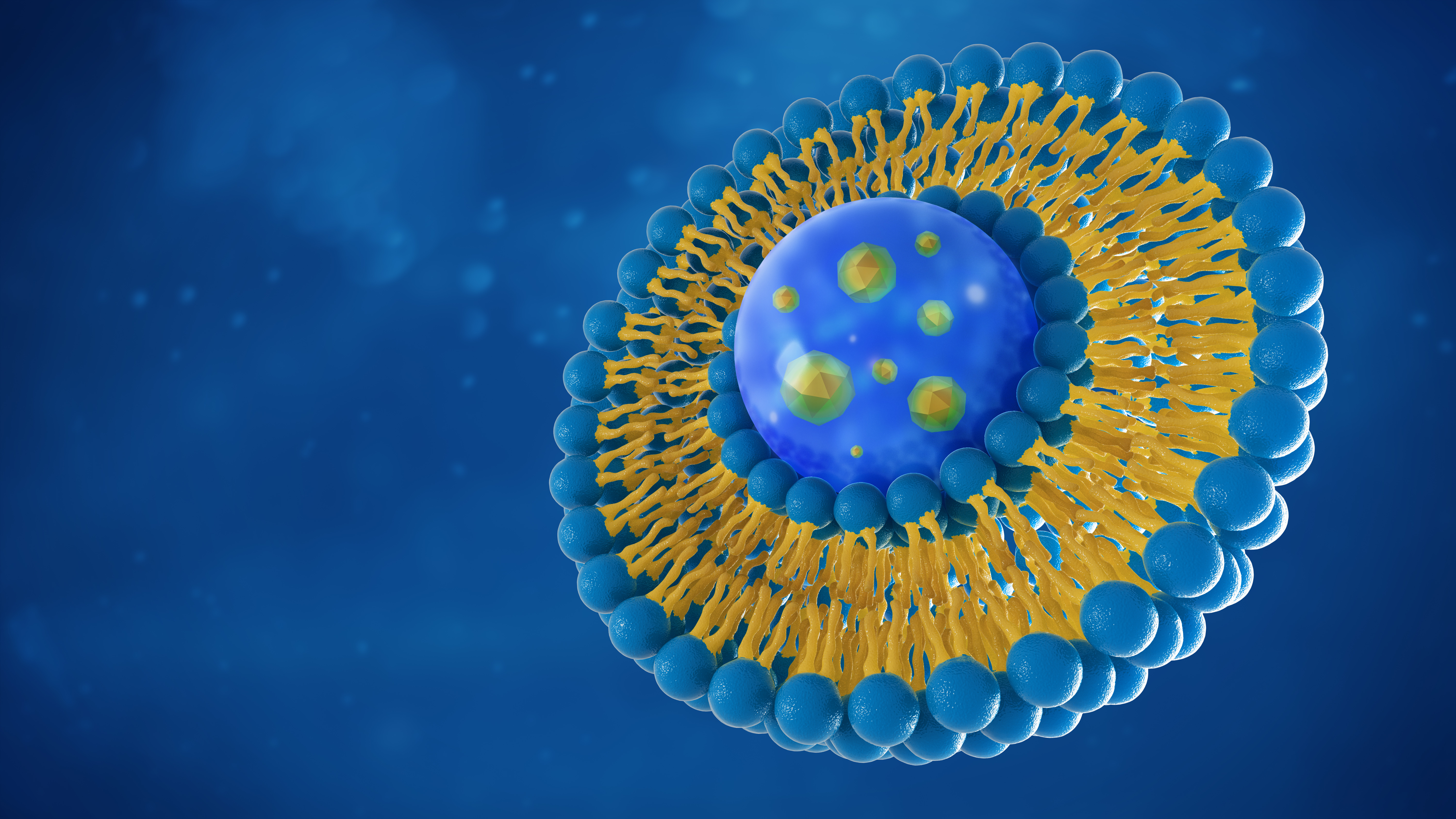
The versatility of liposomes stems from their structure, which allows them to house hydrophilic molecules in the core and hydrophobic molecules in the lipid bilayer. It is even possible to deliver both hydrophilic and hydrophobic drugs in the same liposome to create combination therapies.
It is clear why many drug developers want to use a liposomal approach. What is unclear is how drug developers can ensure they find the right partner for their projects. The development of liposome-based therapies is complex and fraught with pitfalls. Here, we discuss some of the questions companies need to ask to learn if a potential partner understands the challenges and is equipped to overcome them.
What technologies do you use to achieve the optimal particle size?
Particle size is critical to achieve the right release profile and can be achieved by extrusion or by microfluidization. Extrusion has a slight advantage over microfluidization. When working with particles created through extrusion, one can control the particle size using the correct pore size of the extrusion filter discs. If the particles are too large or too small, the formulation will lack the desired release profile and fail to perform as hoped. Formulations with suboptimal particle size may release the drug too quickly. That means patients do not benefit from the sustained release of the drug and it can also cause toxicity issues due to a sudden spike in drug concentration.
What is your site';s core competency in operating complex process equipment?
The operation and maintenance of the specialized equipment used in liposomal drug product manufacturing is critical to ensuring consistent quality product at the desired yields. Ensure that your CDMO has adequate prior experience with similar process equipment, a robust training program to ensure operator proficiency, and maintenance and engineering teams that are familiar with that specific technology. Microfluidization and extrusion equipment can fail when operated incorrectly or when not adequately maintained by trained personnel, so be sure that your CDMO is not learning this technology at the cost of your product. They must have the experience required to operate and maintain this unique equipment safely, effectively, and within GMP protocols. Failure to verify this can result in unnecessary delays, product loss, and compromised quality.

How do you control bioburden and reduce endotoxin levels at every stage?
Liposome production is a complex, multi-day process. The duration of the process creates the risk that the bioburden will grow over the course of production. Manufacturers need to know how to control the bioburden and reduce the endotoxin level at every stage. Those actions are essential if the product is to meet the in-process microbiological requirements.

Manufacturers need to start thinking about the bioburden and endotoxin levels from the selection of raw material onward. The lipids need to be low-endotoxin grade and the raw materials must be vetted based on bioburden risks. If the raw materials have a large bioburden, the manufacturer will need to run multiple filtration steps to create a product that meets the standards for sterile parenteral medicines.
What factors determine your choice of filter?
Choosing the right filter to assure the low bioburden and sterility of the final drug product is critical. The choice of filter is based on the manufacturing step in which it is employed and the particle size of the bulk formulation. Most liposomes fall in the particle range of 80 to 120 nanometers but when producing large batch sizes (300 to 500 liters), particle size distribution may not be uniform and may require multiple extrusion or microfluidization pass. That variation in particle size distribution makes filtration challenging.
The goal is to ensure that filtration takes a reasonable amount of time. If a manufacturer fails to choose the correct bioburden reduction and sterilizing grade filter and optimize the filtration process, they will end up using several filter trains for large scale batch manufacturing. An experienced liposome manufacturer will avoid that situation and develop an efficient filtration process.
How do you handle analytical testing?
The multi-day processes used to make liposomes mean manufacturers need in-house analytical testing capabilities. In-process, real-time measurement testing is required to monitor liposome batches. It is not practical to send materials to third-party labs for analysis. The liposome manufacturer needs the daily data to move on to the next step.
Any delay in the in-process analytical test results will increase the manufacturing time and can affect the physical stability of the liposomes. Also, outsourcing the analytical testing introduces the risk of delays and thereby threatens the ability of biopharma companies to provide drug products to their client on time.
It is important to check if your liposome partner has the required analytical testing capabilities. The work requires a far broader set of analytical capabilities, including lipid quantitation and impurity testing, than many other aspects of drug production. Companies without the full suite will encounter problems.
Do you optimize the manufacturing process for large-scale production?
Optimization is essential. Many processes are viable when working at scales of 1 liter to 5 liters in the lab but are poorly suited to larger-scale production. As such, liposome developers need to think about how a process will be adapted to large-scale manufacturing from the initial stage of process development.
Expertise and experience are needed to understand what will work at larger scales. At Piramal Pharma Solutions, early process development happens in the R&D lab and a bridging tech transfer group works on how to scale up the approach for large scale manufacturing.
Do you have the capacity to produce liposomes at clinical and commercial scale?
Even optimized processes pose challenges when working at large scales. For example, because lipids are hydrophobic, a powerful organic solvent such as ethanol, dichloromethane or chloroform is needed to solubilize them. In the R&D lab, the quantity of these organic solvents needed is less.At large scale manufacturing, the same process will require several hundred liters of these solvents.
Manufacturers need facilities that can handle such high volumes of these organic solvents and have the right controls that ensure safety. Manufacturing sites need controls in place to minimize risk during storage, production and every other step. Failure to adopt such controls creates a risk of fires that can force facilities to close.

What lipids and excipients are right for my project?
The choice of lipid depends on the drug molecule and the particle size. Specific excipients and a suitable buffer system can be added depending on the needs of the project. The choice of lipid and excipients is critical because they dictate the stability of the liposome and how well it can keep the drug in its core. An unstable liposome will release the drug too fast, potentially causing harmful side effects. As discussed earlier, it is also critical that manufacturers control the bioburden and endotoxins of the incoming raw materials at the very early stage.
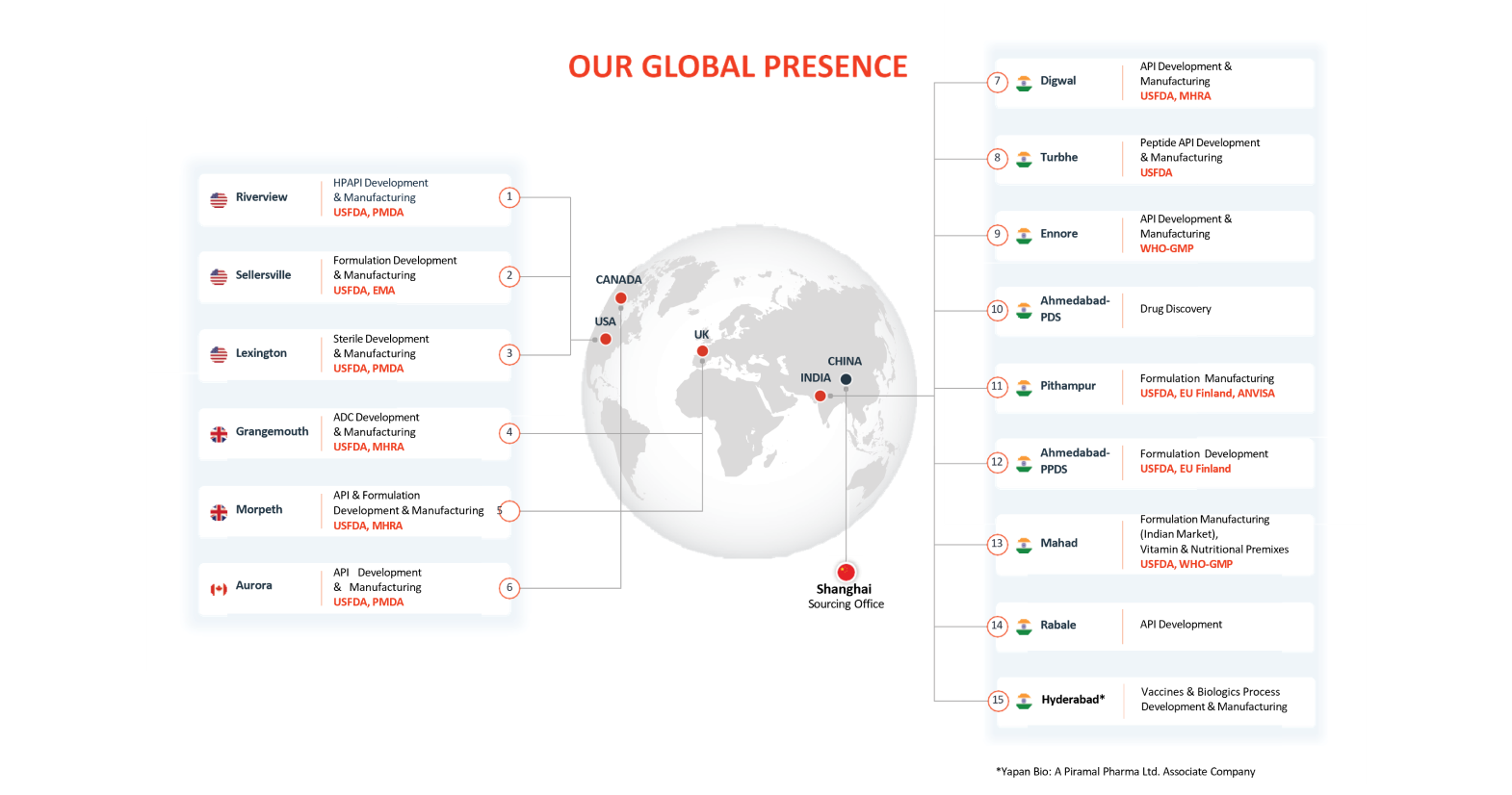
Piramal';s facility in Lexington, Kentucky is a rare example of a site with the full set of capabilities needed to produce liposomes and a strong track record of working with the delivery vehicles. At the site, a team with extensive experience of developing complex, multi-step lipid based formulations uses leading-edge technologies to make liposomes that meet quality standards and client expectations.
The facility uses in-process control testing to ensure each batch has the right particle size, concentration, bioburden, endotoxin limit and other product specific attributes. Working at batch sizes from 5 liters to more than 500 liters, Piramal has the capability to run extended campaign-style batches on a commercial scale in its integrated Steriline filling line.

In addition to complete in-house analytical testing capabilities, including lipid quantitation, the site has experience with large-scale extrusion and microfluidization, tangential flow filtration and complex filtration processes that reduce the bioburden and assure the sterility of the drug product. Across those liposome drug development programs, Piramal and its biopharma partners have advanced patient-centric formulations that may be safer and more effective than existing treatments and unlocked the therapeutic potential of molecules with poor drug-like properties.
Piramal Pharma Solutions is a contract development and manufacturing organization (CDMO), where everything we do, we do for the patient. The company specializes in integrated services and end-to-end development and manufacturing solutions across the drug life cycle. We serve our clients through a globally integrated network of facilities in North America, Europe, and Asia. This enables us to offer a comprehensive range of services including drug discovery solutions, process and pharmaceutical development services, clinical trial supplies, and commercial supply of APIs and finished dosage forms. We also offer specialized services like the development and manufacture of highly potent APIs, antibody drug conjugations, and manufacturing of hormonal drugs. Our capability as an integrated service provider and experience with various technologies enables us to serve innovator and generic companies worldwide. Our development centers and manufacturing sites have accreditations from regulatory bodies in the U.S., Europe, and Japan. With a pool of 700+ scientists including 150 Ph.D.s across the globe, we are committed to research and development programs.