

-1.png "flawless project delivery image")
CDMOs are defined by project execution and delivery. Clients and patients alike need service providers to complete projects as quickly and efficiently as possible, adapting nimbly to unforeseen developments to consistently come in on time and on budget. At Piramal Pharma Solutions, recognition of the value of project management spurs teams to continually ask: How can we improve this process? The leadership team at Piramal's facility in Aurora, Canada has come up with a novel, effective answer.
Piramal has an industry-leading project management model built on a system for monitoring and acting on key performance indicators across the company. The model reflects Piramal's commitment to finding and fixing issues before they escalate, mitigating the risk of complex projects and applying a continuous improvement mindset to every area of its operations.
That mindset led the leadership team at Aurora to evaluate opportunities to build on the platform provided by the company-wide model. Seeking to further enhance the execution of complex cross-functional projects, the Aurora site has developed and validated a complementary system that integrates with Piramal's existing project management processes.
The resulting POD project execution system is an innovative, integrated approach designed to answer a key question: What would it take to deliver every project flawlessly? In formulating an answer, the team established an approach that brought greater structure, ownership and adaptability to support a growing pipeline rich in demanding projects at Aurora.
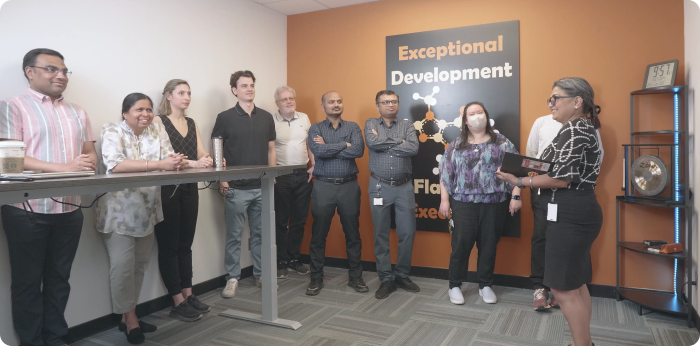
A POD is a cross-functional integrated team with eight to ten members dedicated to the end-to-end execution of development projects. PODs bring together experts from various departments, fostering broad collaboration and leadership skills, to manage an assigned portfolio of projects simultaneously. Each POD is built on a strong foundation in patient centricity, safety, quality, and collaboration.
Weekly planning and priority-setting sessions align POD activities with the deliverables of each project. In between the weekly sessions, POD members meet every day to track metrics, ensure their actions remain aligned with project goals, and solve problems in real-time.
The daily accountability meetings maintain momentum and proactively address potential barriers to the successful delivery of projects. Built-in risk management and escalation protocols support the focus on the proactive and timely resolution of potential problems.
Aurora's decision to put daily and weekly meetings at the center of the POD model reflects the facility's prioritization of face-to-face interactions. Believing in-person exchanges are faster than email exchanges, PODs make decisions and assign tasks in the daily and weekly meetings. POD members leave meetings with clear goals that can be tracked because of Piramal's existing key performance indicator capabilities.
In-person interactions are supported by a task board. After starting with a whiteboard-based method, the Aurora site adopted a digital POD board for micro-task tracking. Moving to the digital board gave the PODs more visibility of members activities, enhanced real-time communication and provided data trails for safety, quality, delivery, competitiveness, and people metrics.
While technology is a powerful enabler, PODs are ultimately about people. The POD model promotes a “team-above-self” mindset, emphasizing collective success over individual contributions. Successes are marked by the ringing of a gong to celebrate achievements, fostering a positive environment and lifting morale across the site.
Strong leadership from the project manager is a critical success factor. Piramal has made significant investments in the development of its POD team members, delivering targeted leadership training and team-building initiatives. The activities are designed to enhance confidence, communication, and decision-making, empowering teams to perform at their best.
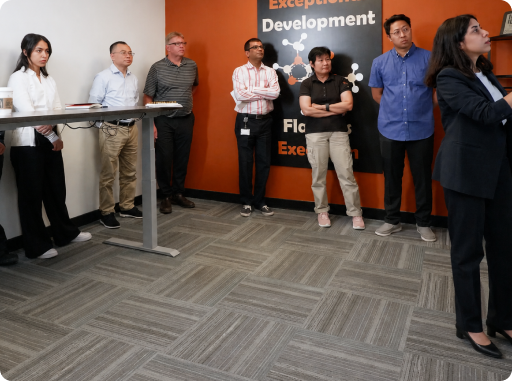
The POD model has been successful, with 85% of team members reporting increased collaboration and 70% noting improved speed of decision-making. Teams are identifying and resolving issues even faster and more proactively than in the past. Communication with clients is more responsive and transparent than ever. Moving to the model reduced quality events and associated costs.
Aurora found the streamlined meeting structures used in the POD model allowed leaders to spend more time on higher-value business functions. Before adopting the model, 16 functional and project managers collectively spent 172 hours per week in meetings. The figure fell to 147 hours per week under the POD model, a 14.2% reduction that means the leaders spend 1,263 fewer hours in meetings annually.
Piramal leaders are using those hours to focus on functions that drive operational and commercial value. Focusing on higher-value business functions could accelerate project execution by speeding up cross-functional coordination and reducing development cycle times, while optimizing processes through lean operations and workflow redesign. Talent development and coaching could also benefit.
The successful piloting of the POD model is supporting a wider rollout of the approach. Aurora expanded quickly, going from one to three PODs and moving 18 projects to the new system in under four months. The site is now working to redesign its entire organization around PODs, establishing the model as its core operating system for cross-functional collaboration and delivery.
Aurora is adding a delivery-focused POD in operations as part of a push to scale the system across all the site's functions. The team has identified an opportunity to get PODs to take on more root cause analysis, even proactively, and involve the teams in quotes for work. Having PODs own the process from quotes through to project delivery and execution could further enhance Piramal's strategic advantage.
The implementation of PODs at Aurora exemplifies Piramal's proactive and innovative approach to the execution of projects. By integrating the POD model with its existing project management processes, Piramal has created a structured yet flexible framework that builds on the success of the company-wide approach.
PODs have fostered empowered teams, enhanced collaboration, and leveraged structured processes. The results are quantifiable, with Piramal tracking improvements in efficiency, quality, and the overall culture of the organization.
Those benefits have spread beyond Aurora. Clients have benefited from the operational excellence at the heart of the POD model. As Piramal's PODs enhance client projects, the model could support faster, more efficient drug development programs, accelerating patient access to life-changing therapies.
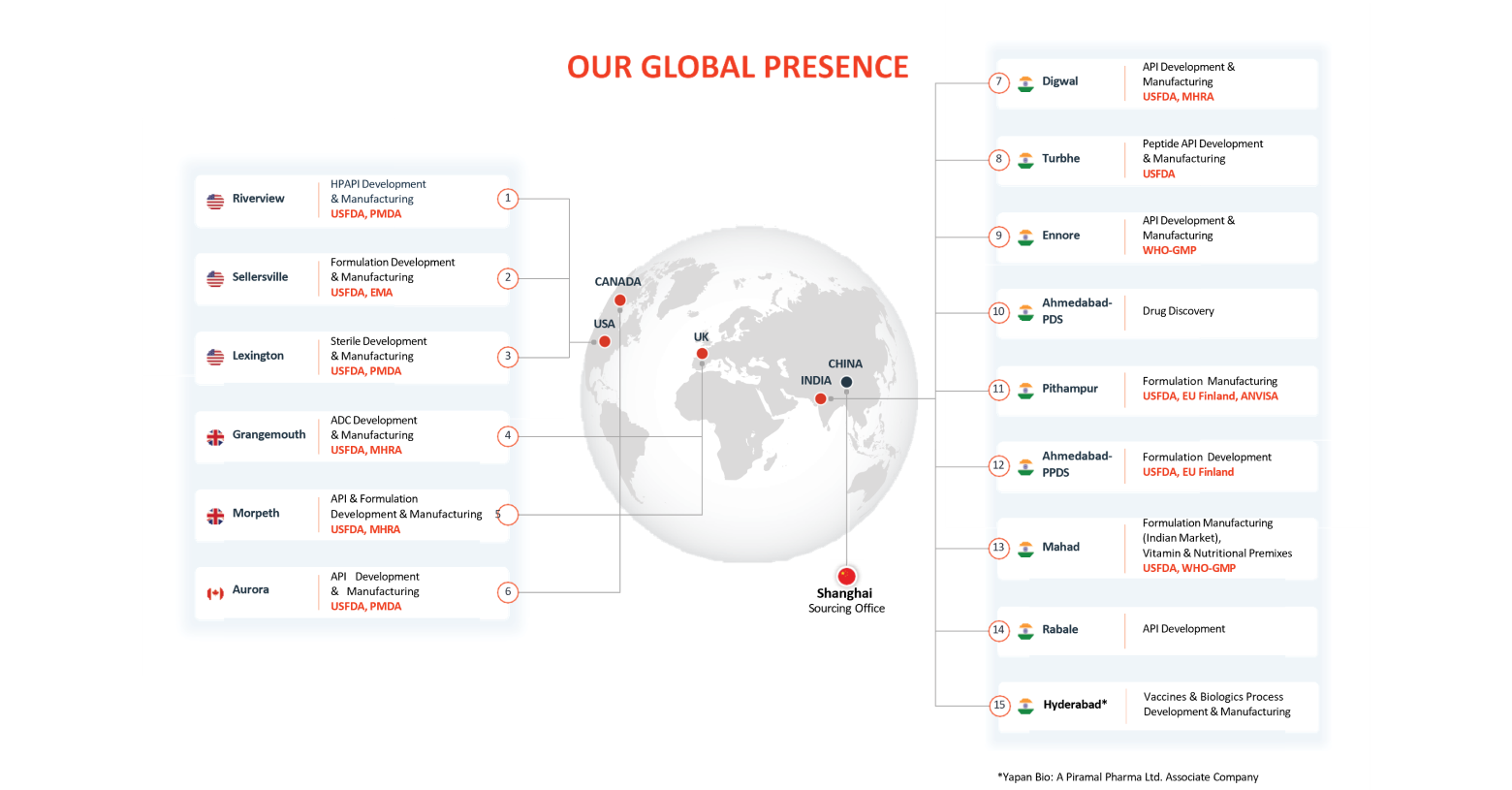
Piramal Pharma Solutions (PPS) is a Contract Development and Manufacturing Organization (CDMO) offering end-to-end development and manufacturing solutions across the drug life cycle. We serve our customers through a globally integrated network of facilities in North America, Europe, and Asia. This enables us to offer a comprehensive range of services including drug discovery solutions, process and pharmaceutical development services, clinical trial supplies, commercial supply of APIs, and finished dosage forms. We also offer specialized services such as the development and manufacture of highly potent APIs, antibody-drug conjugations, sterile fill/ finish, peptide products and services, and potent solid oral drug products. PPS also offers development and manufacturing services for biologics including vaccines and gene therapies, made possible through Piramal Pharma Limited's associate company, Yapan Bio Private Limited.