

-1.png "Cryogenic reactions")
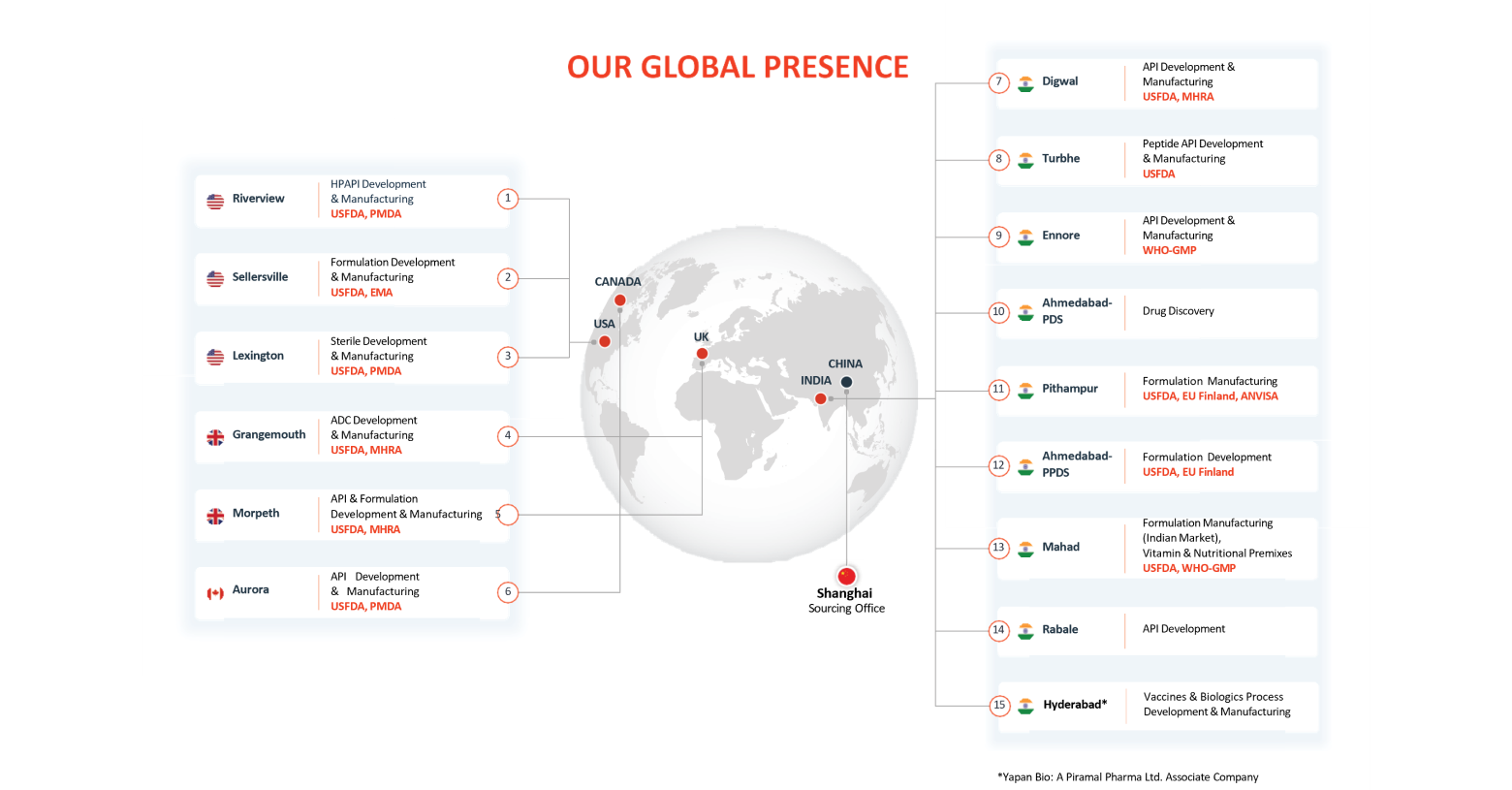
Cryogenic reactions are essential for synthesizing some active pharmaceutical ingredients (APIs). By working in cryogenic conditions, chemists can reduce impurities, ensure safety, improve selectivity, and facilitate reactions that are impossible at higher temperatures. The advantages make cryogenic conditions a key enabler of the development and production of life-changing medicines.
To bring such medicines to patients, companies must identify and counter the economic, technical, and environmental challenges posed by cryogenic reactions. Facilities need both the specialized equipment to perform reactions under cryogenic conditions and the deep process expertise to know when and how to avoid low temperatures.
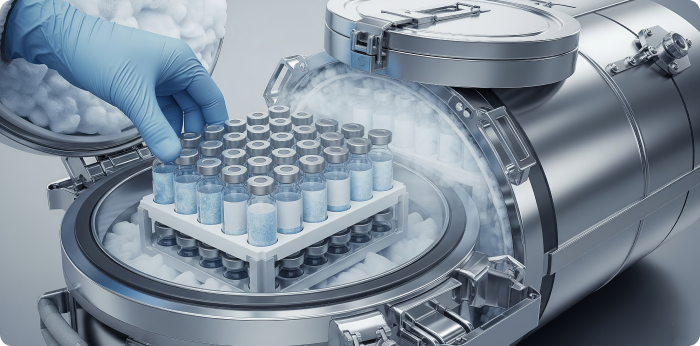
While there is no single, standard definition for “cryogenic” in the pharma industry, chemists typically use the term to refer to reactions that occur in the -20°C to -90°C range. The range includes -78°C, the temperature that medicinal chemists often default to because it is easily accessible in the lab using dry ice and acetone. Companies need to be able to perform reactions in the cryogenic range because some common chemical transformations benefit from the cold conditions.
Organometallics and strong bases including n-butyllithium (n-BuLi), lithium diisopropylamide (LDA), and Grignard reagents are typically used at low temperatures. Chemists use the compounds in reactions such as lithium-halogen exchange, which happens quickly even at low temperatures. Because cryogenic conditions have a greater effect on competing side reactions such as deprotonation and nucleophilic addition, low temperatures enable chemists to select for the desired lithium-halogen exchange reaction. Other key reaction classes include transmetalation and directed ortho-metalation.
Chemists also use cryogenic conditions to control stereochemistry and prevent side reactions in aldol reactions and to overcome challenges created by unstable reagents or intermediates. Swern oxidation requires low temperatures to control the highly reactive species involved. Other specialized reactions such as certain carboxylations, Diels-Alder reactions, and benzyne reactions are performed cryogenically to control reactivity and final product formation.
As the examples show, there are three main benefits to using cryogenic conditions: reducing impurities, improving selectivity, and ensuring safety. For reactions such as lithium-halogen exchange, reducing the temperature ensures that the desired reaction can occur much faster than competing side reactions. The kinetic control provided by low temperatures prevents the formation of impurities, such as those from elimination reactions, which might be difficult to remove later.
Similarly, cryogenic conditions support the formation of kinetically favored products. In that context, the conditions are a key enabler of the synthesis and use of reactive intermediates that would decompose at higher temperatures.
Finally, many of the reactions performed at cryogenic conditions, such as those that use BuLi, are highly exothermic and involve energetic reagents. Cryogenic conditions make such exothermic reactions safer by providing a “heat sink” that allows the system to dissipate heat quickly and prevent thermal runaway. Cryogenic conditions can also enhance safety by helping to control the volatility of certain reactants and products.
The benefits of cryogenic conditions are offset by the challenges of working at low temperatures. While -78°C is an easily achievable lab temperature for medicinal chemists, it is difficult to translate reactions that happen at such cryogenic conditions to the large-scale reactors that are needed as drug candidates move through clinical development and onto the market.
Achieving and maintaining very low temperatures at large scales requires significant energy. Working at cryogenic conditions, heat loss and chiller performance become major operational hurdles. Equipment must be thoroughly checked to ensure it can perform reliably, and the challenges intensify at each step up in scale. For example, 50 vessels can be easier to cool than 100L vessels because of better insulation.
Cryogenic conditions also complicate process control. Sampling a large-scale, low-temperature reaction involving hazardous reagents such as BuLi can pose significant safety risks, often preventing the use of in-process controls that companies establish to monitor reactions.
The environmental impact of cryogenic conditions becomes a bigger problem at scale. As well as rising energy use, companies must contend with the environmental consequences of THF and other solvents that are often used in cryogenic reactions. THF production has a very high carbon footprint, with plants emitting 6.17kg of carbon dioxide for every kilogram of solvent they manufacture. THF is also problematic for workups, as it is water-miscible and often requires a co-solvent for phase separation.
Raising the temperature of a reaction, for example from -78°C to -20°C or -30°C, can overcome many of the scale up and solvent issues. Working at higher temperatures can improve the solubility of reagents. This allows companies to replace THF with greener, more sustainable solvents like 2-MeTHF, MTBE, or CPME that are less carbon-intensive and phase-separate easily from water. Equally, working above -30°C mitigates challenges associated with hitting and maintaining low temperatures and cryogenic sampling.
The benefits of running reactions at higher temperatures have informed the development of a range of techniques for resetting the optimum conditions. Using alternative reagents is one common strategy. By replacing BuLi with “Turbo-Grignard” reagents, companies can raise the operational temperature from -78°C to a more manageable
-20°C or -30°C. Turbo-Grignard refers to Grignard reagents with a lithium salt additive. The reagent switch has the additional benefit of improving the safety profile by eliminating the use of high-energy organolithium bases.
Process parameter optimizations offer another route to higher-temperature reactions. Specifically, the careful control of addition strategies, such as the order of addition, slow addition, and dilution, can help manage exotherms. Better exotherm management can make higher temperatures safe and viable.
While reagent and process parameter choices offer alternatives to cryogenic conditions for companies with advanced projects, teams working on early-stage programs have a third option. By re-evaluating the entire synthetic route, companies can design out the need for a cryogenic step altogether and enter the clinic with a safe, selective, and scalable production process that runs at higher temperatures.
Companies need extensive capabilities and expertise to carry out cryogenic reactions or adapt processes to work at higher temperatures. CDMO partners such as Piramal address that need by providing access to specialized cryogenic equipment and, crucially, the experience to optimize and scale these challenging processes.
Piramal has global cryogenic capabilities. In Aurora, Canada, the company performs early phase and pilot work under cryogenic conditions. The Aurora kilo-lab houses 50L and 100L vessels that are rated for use at -40°C to -50°C for development work. As projects scale, the team moves to the Aurora pilot plants, which feature R600 and R100B reactors.
With a 795L maximum volume, the R600 is the largest cryogenic reactor at Aurora and equips Piramal to reliably run processes of 15kg to 30kg scale at -40°C to -50°C.
Two sites in India support projects that require larger-scale reactors. At Ennore, Piramal has 500L and 1000L reactors to assist clients that are moving beyond pilot scale. Piramal's Digwal facility can support larger scales and lower temperatures.
The site has extensive capacity for commercial scales, including one 1500L reactor and four 3000L reactors.
The equipment includes glass-lined and stainless steel reactors. Piramal has installed dedicated liquid nitrogen skids to support temperatures as low as -90°C.
The teams at the three sites have extensive experience designing and running cryogenic reactions, as is illustrated by three case studies that show Piramal's ability to find solutions to synthesis and scale-up challenges.
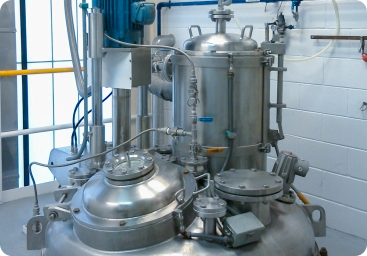
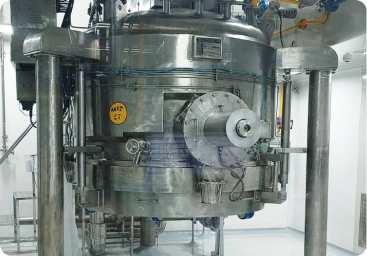
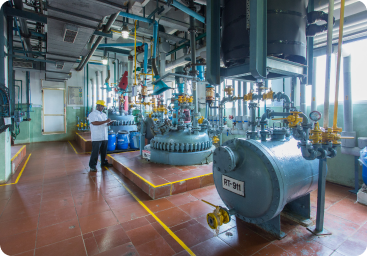
The first step of a linear synthesis was a deprotonation that required cryogenic conditions. The Aurora team initially tried to raise the temperature of the reaction to -20°C or -30°C to avoid the challenges of running cryogenic reactions at scale. However, working at such temperatures resulted in a poor impurity profile and reaction gelling.
Having identified -40°C to -45°C as the optimum temperature range, the team tried to address problems created by a lithiated intermediate that was unstable, even at low temperatures. Holding the reaction at low temperatures for the two to six hours needed to collect, process, and report samples resulted in an unacceptable impurity profile. The instability of the reaction made in process controls impractical.
Rather than perform in-process testing, Piramal's experts used their deep understanding of the reaction to develop a process that worked without that check. The team still sampled the batch after one hour, but proceeded immediately with quench and workup without waiting for the results.
The process was successfully run in the R600 reactor in two 15kg batches. By blending the two iterations during the aqueous workup stage, the team produced 22.3kg at a 69% yield, in line with R&D trials. The project is testament to the challenges some reactions pose even at low temperatures and to the ability of experienced chemists to find unconventional solutions to the hurdles.
A client had previously developed a synthesis involving a magnesium-iodine exchange followed by a quench with trimethylborate. The original laboratory procedure specified a reaction temperature of -40°C to -45°C to prevent potential side reactions. Because the preferred temperature was too low for standard reactor cooling systems, the synthesis required specialized cryogenic equipment.
Piramal challenged the need to run the reaction at -40°C to -45°C. While there was a theoretical risk of side reactions at higher temperatures, the team hypothesized that the exchange and quench may remain selective in the -20°C to -25°C range supported by standard reactor cooling systems.
Experimentation validated the hypothesis. The process chemistry team at Aurora ran the reaction at -25°C with no observed increase in degradation or side reactions. Piramal then successfully scaled the reaction to the 10kg to 20kg range, giving the client a solid foundation for further development of the molecule.
By confirming that the reaction worked at -25°C, the team avoided the costs and technical complexity of cryogenic reactions and established a simpler, more scalable process for the client. The project showed the value of questioning the assumptions that can lead to the use of cryogenic conditions.
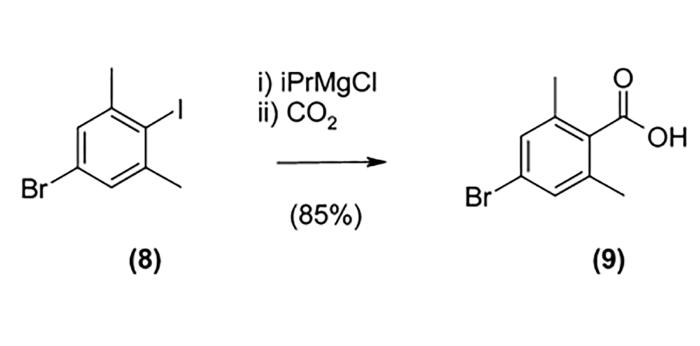
A client approached Piramal with a synthesis that was chemically inefficient and hazardous. Burdened with a multi-step process that involved Sandmeyer and cyanide chemistry, the client wanted to redesign the synthesis to establish a shorter, simpler, and safer route to a high-purity API.
In response, the scientists at Aurora designed a new route starting from a commercially available precursor that eliminated the Sandmeyer chemistry and other challenging aspects of the original synthesis. The redesigned process used a magnesium-iodine exchange and trapped the resulting intermediate Grignard species with CO2 to generate the corresponding carboxylic acid.1
One of the primary risks with the new route involved the potential for “halogen dancing,” where, in this case, metal exchange could equilibrate between the iodine and bromine atoms on the aromatic ring. This type of exchange can lead to the generation of undesired and challenging to purge impurities. Performing the reaction under cryogenic conditions is a typical strategy that chemists implement to prevent halogen dancing.
Yet Piramal opted against this standard solution, choosing instead to investigate how the reaction performed at -20°C. The investigation showed that this temperature was low enough to maintain kinetic control and only generated negligible quantities of positional isomers that were easily purged through downstream processing.
Piramal achieved a 87% yield for this transformation at 100kg scale, and achieved the client's goal of designing a new, viable route that avoided the dangerous chemistries performed in the original scheme. The chemists compounded the benefits by showing that high yields, selectivity and impurity control were possible at -20°C, avoiding the challenges associated with working at lower temperatures.
The Aurora and Digwal case studies show skilled teams can overcome the diverse problems posed by the scale up of cryogenic reactions. Yet there remains a need for technological solutions to some persistent challenges, including the barriers to achieving precise temperature control at scale.
Facilities that use liquid nitrogen to chill batch reactors to temperatures such as -40°C risk over-cooling the system. As the reactor approaches a suboptimal temperature such as -60°C, the reaction can slow or stop. This causes the reagent to accumulate. When the temperature rises, the accumulated reagent can react all at once, causing a dangerous exotherm and generating a burst of impurities.
Piramal has identified flow chemistry as a potential solution. Flow reactors have a smaller footprint than batch reactors and require less energy to cool. While cryogenic batch reactions necessitate the cooling of entire multi-hundred-liter vessels, flow processes only need to cool the small volume of reaction mixture passing through the reactor. The design difference could support more precise temperature control.
Flow chemistry can also allow reactions to be run at higher temperatures than batch processes. The superior mixing and heat transfer of flow reactors can stop the back-mixing and delayed reactions that generate impurities in batch, eliminating one reason to use cryogenic conditions.
Piramal's investment in flow chemistry reflects a determination to stay at the leading edge of cryogenic chemistry. By scaling low-temperature reactions from lab to launch, Piramal is empowering its partners to overcome barriers to the development and commercialization of life-changing therapies.
For more information contact:
Narendra Ambhaikar, Ph.D.
Head - API R&D
narendra.ambhaikar@piramal.com
John Riley, Ph.D.
Director, North America API Technical Support
john.riley@piramal.com
Continuous Multiphase Flow Nitration and Cryogenic Flow Formylation: Enabling Process Development and Manufacturing of Pharmaceutical Intermediates
Increasing API Complexity Drives Demand for Cryogenic Capabilities
Piramal Pharma Solutions (PPS) is a Contract Development and Manufacturing Organization (CDMO) offering end-to-end development and manufacturing solutions across the drug life cycle. We serve our customers through a globally integrated network of facilities in North America, Europe, and Asia. This enables us to offer a comprehensive range of services including drug discovery solutions, process and pharmaceutical development services, clinical trial supplies, commercial supply of APIs, and finished dosage forms. We also offer specialized services such as the development and manufacture of highly potent APIs, antibody-drug conjugations, sterile fill/ finish, peptide products and services, and potent solid oral drug products. PPS also offers development and manufacturing services for biologics including vaccines and gene therapies, made possible through Piramal Pharma Limited's associate company, Yapan Bio Private Limited.