


Flow chemistry has proven benefits. Compared to batch processing, flow chemistry is faster,safer and more sustainable — advantages that have made the technique an established part of drug development. Yet, few companies are equipped to fully realize the benefits. To maximize the impact of flow chemistry, companies need the infrastructure and expertise to seamlessly scale-up production as a program moves out of the lab and into production.
The emergence of flow chemistry as a preferred option for some synthesis projects makes it critical that drug innovators understand the keys to success, both at the start of a program and as they scale-up production. In this paper, we look at the factors to consider when evaluating whether to use a batch or flow reaction and discuss a case study that shows the value of integrated capabilities
Batch processing entails mixing known amounts of reagents and solvents, exposing the entire lot to the reaction conditions for a set amount of time, and then terminating the synthesis. While batch processing is a well-established approach to chemical synthesis, scale-up and instability can be points of concern. Batch reactors are the best choice for very slow reactions that are hard to accelerate through heating, but flow chemistry has advantages in other situations like instability of reaction mixtures.
Flow chemistry entails continuously pumping reactants through flow channels to the reactor to create a stream of product. Since the reagents are allowed to react stoichiometrically, flow chemistry can handle fast or highly exothermic reactions without degradation and side reaction impurities. Similarly, flow chemistry is better than batch for photochemical reactions because it offers relatively good illumination of the entire reactor volume because of more surface area exposed to light.
With its minimal footprint, limited pollution and lower energy requirements, flow chemistry is a good fit for companies that are seeking to reduce the environmental impact of drug production. Other benefits include the better control of mixing — which is very well characterized and offers — better control over side reactions and the ability to minimize reaction and degradation.
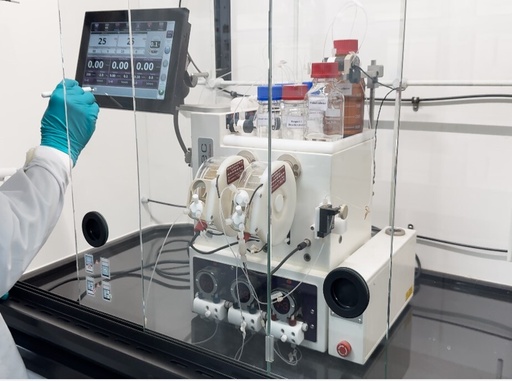
Those features and other advantages led the International Union of Pure and Applied Chemistry (IUPAC) to name flow chemistry as one of 10 chemical innovations that will change our world.1 IUPAC cited Merck & Co.'s 100kg scale synthesis of a precursor and Pfizer's creation of a system for analyzing up to 1,500 reaction conditions a day as evidence of the power of flow chemistry.
The benefits of the flow over batch reactions have been thoroughly discussed in the literature2 with ample evidence.
Companies can lay the foundations for successful scale up by benchmarking batch and flow techniques in early process development. Evaluating after completing the first proof-of-concept experiments for determining a feasible synthetic route allows companies to assess how a process will perform in batch and flow reactions at each step in development, from discovery through commercial production.
Asking questions such as “is selectivity affected by temperature?” and “is the reaction photosensitive?” can help determine the best approach for a particular process. The answer is obvious in some cases, for example when a reaction is unsafe in a batch process, but the best approach can be less clear cut for other synthesis projects.
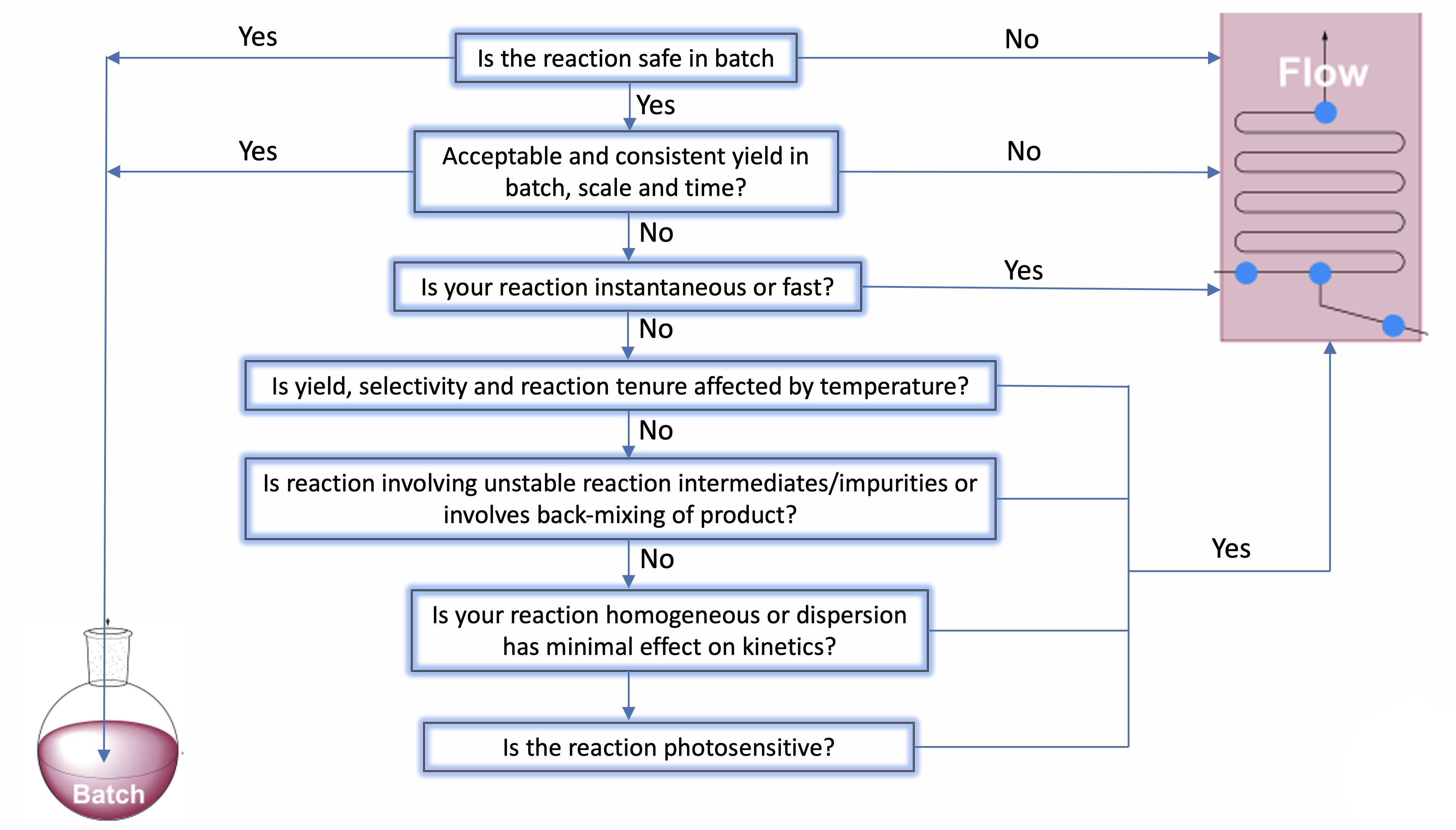
When facing uncertainty, the input of a partner with batch and flow experience and expertise at different scales is beneficial.
Early, far-sighted thinking about the pros and cons of batch and flow approaches supports efficient R&D but requires broad, integrated chemistry capabilities and expertise that few companies have. Ideally, the know-how, equipment, and infrastructure required to make a drug at different scales will be seamlessly linked. Companies need smooth interdisciplinary communication between chemists, chemical engineers, and engineers who understand how scale can dramatically affect processes.
Piramal Pharma Solutions has proven its ability to scale up flow chemistry. A team runs small-scale experiments to generate proof-of-concept for reactions and generate the key flow parameters, and the development team familiarizes itself with this lab-scale flow chemistry, accommodates and develops parameters, and adapts the isolation process prior to scale-up.
Piramal's integrated capabilities equip the company to advance projects efficiently from the discovery stage to the production of kilograms of material using flow chemistry. The company can use its technology with the discovery team to find a development candidate and then move the chemistry to development for scale-up, thereby bridging discovery-scale synthesis and development in an efficient, seamless manner.
Piramal has shown the model works. One client had an advanced chemical intermediate that needed to be made using the flow technique. Piramal generated the key flow parameters in the discovery laboratory. Members of the development team studied the discovery chemistry and transferred the reaction to their larger-scale reactor.
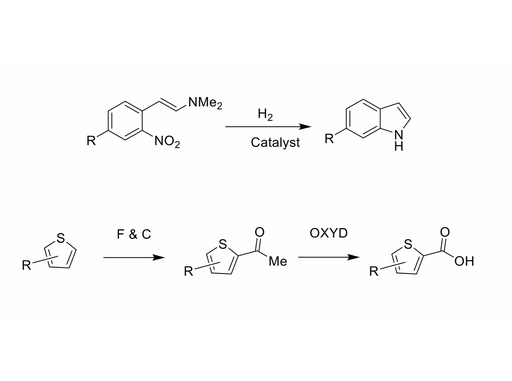
Early experiments showed the suitability of flow chemistry for the process. One of the substrates was volatile and the reaction required pressure. Using a batch process, the whole system would need to be exposed to high pressure of 10 bar and the volatility of the substrate would create safety concerns, particularly at large scales. Flow reactors can tolerate up to 100 bars of pressure, providing flexibility.
Extensive interactions between the discovery and development teams including weekly progress updates, enabled everyone to stay informed about the current status of the project and contribute to the efficient scale-up of the process. A seamless collaboration helped Piramal navigate challenges, such as the formation of an impurity, and deliver around 300g of the material to the client on time, despite a tight timeline
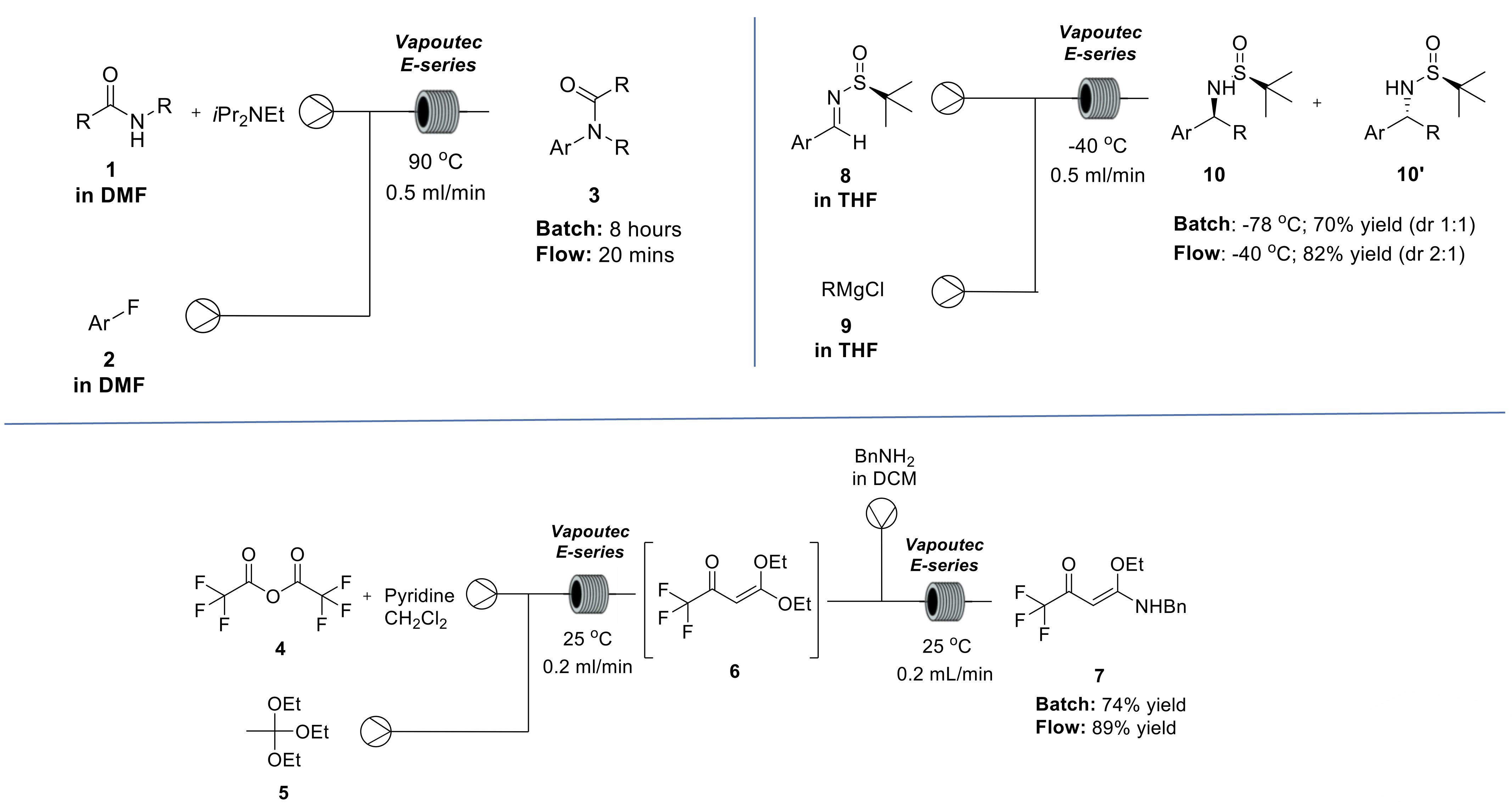
The above discussion demonstrates that a flow process is the preferred mode for certain reactions, as compared to batch. At Piramal, the project validated the power of applying integrated discovery and process development capabilities to flow chemistry. By harnessing expertise and capabilities across the discovery and development stages of R&D, Piramal accelerated the scale-up and production of a chemical to help its client get the drug to patients with unmet medical needs.
Deploying similar approaches for other molecules will empower Piramal and its clients to speed up the development of life-changing therapies using green chemistry techniques, thereby displaying patient centricity.
References
1. Gomollón-Bel, F. Ten Chemical Innovations That Will Change Our World: IUPAC identifies emerging technologies in Chemistry with potential to make our planet more sustainable. Chem. Int. 41, 12–17 (2019).
2. The Hitchhiker';s Guide to Flow Chemistry||; Chem. Rev. 2017, 117, 18, 11796–11893
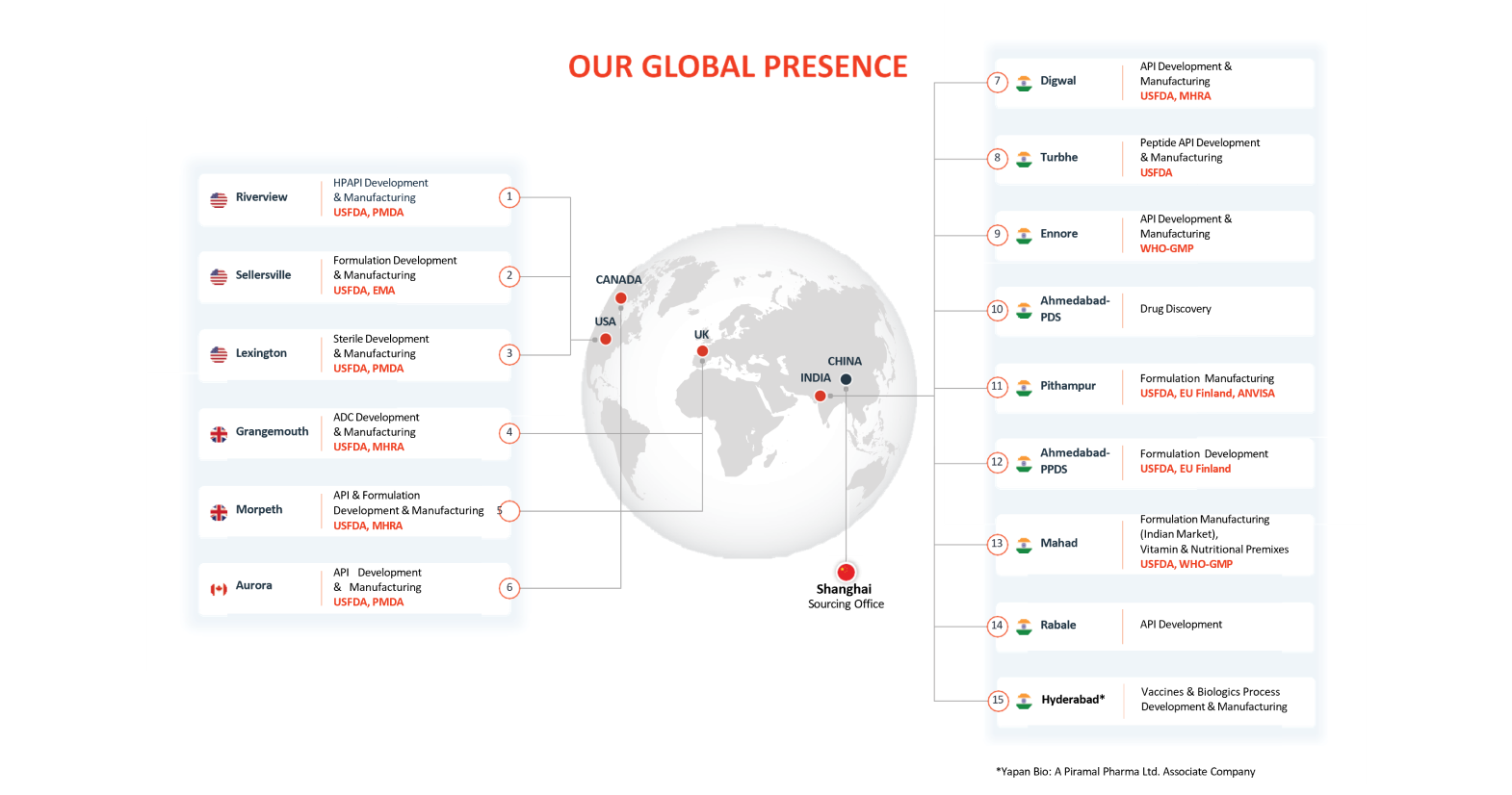
Piramal Pharma Solutions (PPS) is a Contract Development and Manufacturing Organization (CDMO) offering end-to-end development and manufacturing solutions across the drug life cycle. We serve our customers through a globally integrated network of facilities in North America, Europe, and Asia. This enables us to offer a comprehensive range of services including drug discovery solutions, process and pharmaceutical development services, clinical trial supplies, commercial supply of APIs, and finished dosage forms. We also offer specialized services such as the development and manufacture of highly potent APIs, antibody-drug conjugations, sterile fill/finish, peptide products and services, and potent solid oral drug products. PPS also offers development and manufacturing services for biologics including vaccines and gene therapies, made possible through Piramal Pharma Limited';s associate company, Yapan Bio Private Limited.