

Piramal Pharma Solutions (PPS) maintains its position as an international leader in the development of antibodydrug conjugates (ADCs) thanks to its vast technical knowledge, world-class staff, customer-centric approach, and integrated drug development and manufacturing programs. From preclinical development to sterile fill/finish, PPS can support ADC and bioconjugation process development, GMP manufacture, and scale-up to commercial.
The company's Grangemouth, Scotland facility – which boasts a legacy of over 100 years in the chemical manufacturing industry – was one of the first contract development and manufacturing organizations (CDMOs) to enter the ADC category. Over the past 16 years, PPS has manufactured 30+ different ADC products to GMP, developed over 1000 batches for 200 different ADC candidates, and worked with over 60 different toxin/toxinlinker systems. PPS was the 1st CDMO manufacturing commercial ADCs in 2011 and has been continuously manufacturing commercial ADCs since.
As ADC development has grown and evolved, PPS has established new tools and unique skills to benefit its customers. The company's flexibility, breadth of experience, and end-to-end services have secured its role as a top CDMO in this market segment.
The 1980s saw the introduction of antibodies as immunotherapies and the market has continued to grow exponentially. That same growth is now being seen with ADCs.
The primary objective of ADCs in antibody therapy is to target selected antigens expressed on the surface of tumor cells. The antibodies or antibody fragments in ADCs typically contain a highly cytotoxic drug. These cytotoxic drugs are usually too potent to administer as a standalone chemotherapeutic drug, potentially damaging healthy cells. The ADC treatment works by selectively binding to tumor cells. Once bound to a receptor on the tumor cell it is internalized. Inside the cell, the cytotoxic drug is released either through an engineered mechanism or through degradation, typically killing the cell via cell-cycle arrest. This form of immunotherapy is at the forefront of emerging cancer treatment today.
The industry is working to develop new, promising formulas to overcome the challenges facing ADC therapies. A particularly pressing obstacle is balancing the efficacy of the product versus its toxicity. The primary objective of ADCs is widening the therapeutic window for cancer patients.
-(1).jpg "The ABCs of ADCs")
While ADC science is relatively new, PPS';s Grangemouth site has been leading the way in the category since its inception.
The facility initiated its work in peptide conjugation back in 2003 when it was expanding its portfolio beyond oligonucleotide manufacturing. Expertise in conjugation paired with experience in working with highly-potent materials led PPS to make a strategic step toward ADC development. Skill in chemistry and familiarity with health and safety practices made for a smooth transition in this new arena.
Initially, large pharmaceutical companies relied on PPS Grangemouth for transferring conjugation processes and analytical methods. Eventually, the site began supporting clients in a development capacity by assisting scale-up, and ultimately clinical manufacture. Around 2004 – 2005, Auristatin and Maytansine based conjugates were the primary molecules for the majority of ADC drugs and approved products. It was through the development of these drugs and processes that PPS's ADC business flourished. Large pharma and biotech companies relied on PPS as one of the first CDMOs to support the commercialization of ADCs. Today, the company has been manufacturing commercial ADCs for nearly 10 years at the Grangemouth location.
-(2).jpg "Legacy of Success")
The facility has grown in size and staff to support a range of clients, from big pharma to virtual companies to small-and medium-scale biotech. PPS isn't merely offering tech transfers and scale-up – the Grangemouth site is at the heart of its customer's methods, processes, and implementation of full development programs. The company anticipates further expansion at this facility as the demand for full-scale development and manufacturing of ADCs continues to grow.
A wide range of customers are relying on the advanced technology and elite scientific capabilities of PPS Grangemouth, particularly as the demands of this category are evolving.
Virtual and semi-virtual companies turn to this CDMO for help due to limited lab or manufacturing capacity, while large companies are utilizing PPS's experience and capacity in ADC development and handling of cytotoxic materials.
Partners are also turning to PPS for support with new, complex chemistry in ADC manufacturing. Discussing the company's depth of knowledge, Allan Davidson, head of development at the Grangemouth site, explained how molecule conjugations and chemistries have shifted in recent years. “Now we're working on projects where we're going from standard cysteine chemistry, known as stochastic conjugation, where you target a drug to antibody ratio (DAR) of say four, by adding an average of four drugs on to an ADC to site-specific conjugations where the antibodies are engineered. This allows you to only attach two drugs to specific locations in the antibody.” These processes, he noted, can often be more complicated to develop and manufacture.
-(3).jpg "Changing Landscape")
Mr. Davidson also pointed to a wide range of new and novel chemistries, drugs, linkers, and antibodies entering into the market. “Within the past five years, more ADCs are non-cytotoxic,” he observed. As an example, he referenced the use of conjugation antibodies in radioimmunotherapy. “Here we conjugate a chelator to an antibody or antibody fragment. The radionuclide is then added in the hospital immediately before dosing,” he explained. While these types of products are not the standard in ADC development, PPS has the analytical assets, processes, and specialist knowledge to get the job done
PPS Grangemouth offers a variety of capabilities beyond ADC development and manufacturing, serving primarily as a bioconjugation manufacturing facility (of which ADCs are one part). The facility supports the creation of conjugated antibodies, antibody fragments, and proteins to a variety of drugs, linkers, and chelators. The company has leveraged its expertise in ADCs as it overlaps with the chemistry skills needed for bioconjugation. Over the past 15 years, PPS has studied the risks and common challenges in development and learned the ways to avoid them.
The company's processes are robust, scalable, and designed to deliver exceptional product quality. The same is true for the company's well-characterized analytical methods. “We know exactly how to develop those processes without risk because we manufacture one-milligram scale all the way up to over two-kilograms,” explained Mr. Davidson. “We do all of that at one site, from proof of concept to demonstrate our conjugation process, all the way to commercial manufacturing.”
The use of non-cytotoxic conjugates is breaking new ground in the ADC category, with great promise for immune-stimulating antibody conjugates (ISACs). Recently, PPS initiated an integrated development program with San Francisco-based biotech company Bolt Biotherapeutics, in which PPS will supply Bolt's Boltbody™ ISAC, BDC-1001, for use in Bolt's ongoing Phase 1/2 clinical study in cancer patients.
Exclusively licensed from Stanford, Boltbody ISACs are designed to overcome the limitations of existing immunotherapies by triggering both the body's innate and adaptive immune systems through different stages of the cancer immunity cycle to produce long-term anti-tumor activity.
The PPS team is applying its integrated drug development model to Bolt's BDC-1001 for the treatment of patients with HER2-expressed solid tumors. Formulation and ISAC development will be conducted at the Grangemouth facility, and manufacturing of the drug substance into lyophilized, sterile fill-finish vials will occur at the Lexington, Kentucky site.
Thanks to the seamless integration between PPS's Grangemouth and Lexington facilities, the company anticipates a shortened delivery timeline and expedited distribution to the clinic. Efficiency, speed to market, and full ownership of each phase in the ISAC development process allow for a high-quality product that will ultimately reduce the burden of disease in patients
PPS's experience in this field is unmatched. Grangemouth is the preferred partner for ADC and bioconjugation services, thanks to the company';s:
Flexibility
PPS knows each customer has unique needs depending on its formula and background. This is why the company doesn't push a standardized approach. Flexibility in the way programs are designed allows PPS to work hand-inhand with partners for custom-tailored solutions.
Experience
PPS knows the challenges that are typically faced in early development and knows how to navigate around potential setbacks. By ensuring robust processes and methods, PPS can position programs for success. The company also prides itself on creating scalable and efficient manufacturing programs to ensure timeliness and adherence to its partner's bottom line. Grangemouth's GMP certified lab and skillful Quality Assurance team have the experience to deliver optimal results.
Communication
The staff at PPS is what makes its mission of excellence possible. The team's ability to oversee and communicate the intricacies and complexities of each project is what ensures the success of partnerships at PPS. Senior staff, experienced technicians, and adept project managers can guide partners through each step of the process. Currently, the Grangemouth facility consists of over 170 staffers split across development, quality, and manufacturing services functions.
Integration
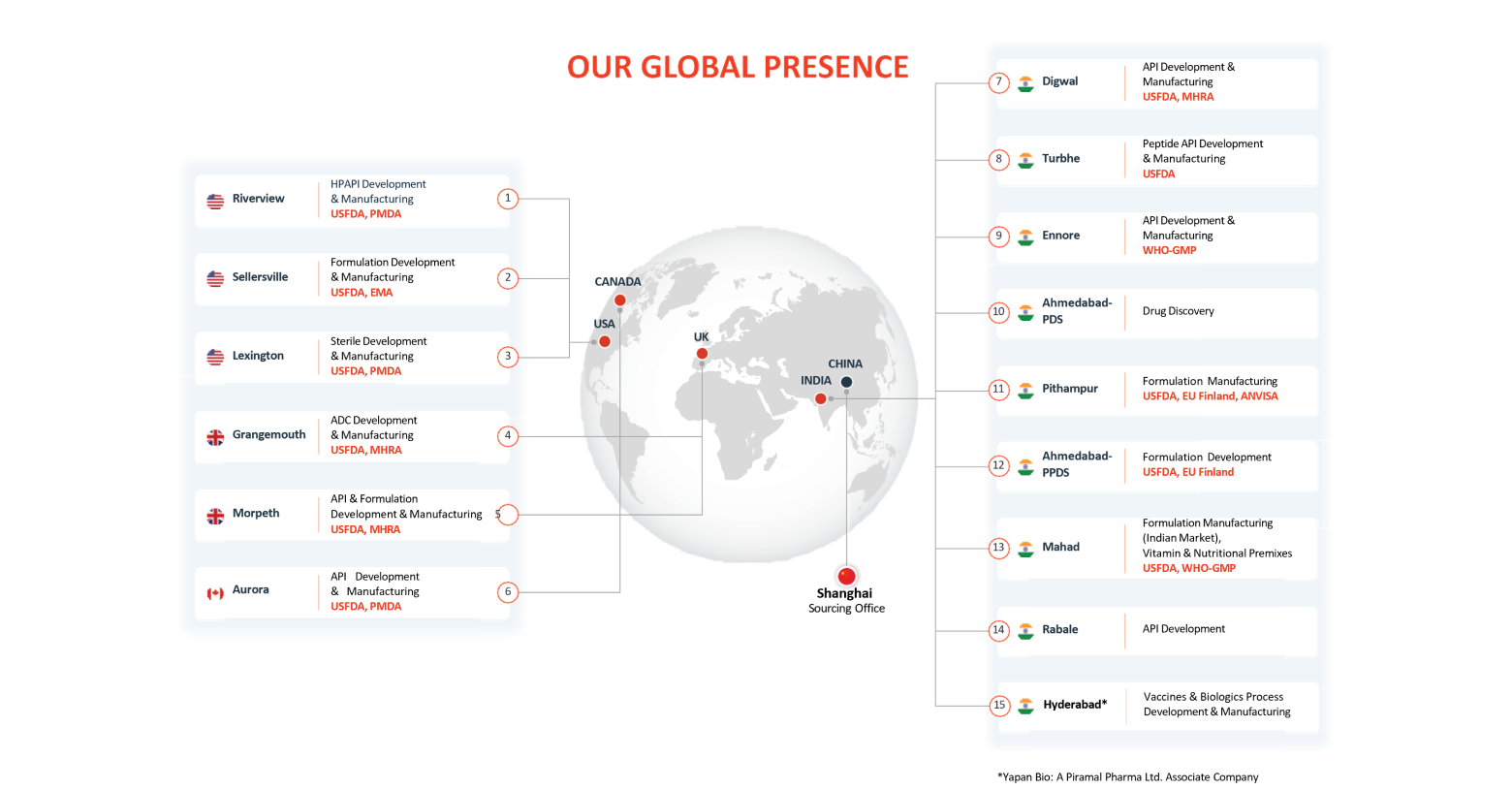
PPS can leverage the unparalleled experience and expertise of each of its sites around the globe. Every branch of the company possesses unique strengths driven by the core mission to serve customers and the patients who rely on its therapies for life-sustaining care. For example, the Grangemouth facility benefits from its access to the Lexington, KY facility, as it can provide aseptic filling of ADC products. The Lexington site provides Grangemouth with a unique advantage, thanks to its state-of-the-art mobile isolator technology, which protects against contamination from potent and cytotoxic materials.
In addition, Grangemouth sits in the middle of a potential three site offering with the Riverview, MI site's capability to manufacture high potent payloads drugs; and PPS's facility in Aurora, Canada having the ability to manufacture non-cytotoxic payloads. As part of this integrated partnership, Grangemouth can take an antibody from its customers, and payloads potentially from Riverview or Aurora. Grangemouth can put the two together, performing the conjugation to make a bulk drug substance. Before it can be administered to patients, fill-finish can be completed by the Lexington site. It is this vast network of partners that supports and elevates its customer's projects.
-(4).jpg "The Piramal Difference")
Case Study 1
Challenge: A company wanted to move its work from a conjugation facility in the U.S. to another facility in Europe for drug substance manufacturing. The company suggested PPS could earn its business if it could accelerate the timeline on manufacturing its drug substance.
Action: PPS reviewed all of its current client's manufacturing processes and leveraged an existing program for the new client. Due to its prior experience, PPS was able to forgo the process development phase, while making minor improvements in an already-developed manufacturing process. With the time saved, PPS qualified and developed analytical methods to support the manufacture, as well as performed all the procurement of raw materials and equipment, including qualification where required to deliver the manufacture.
Results: Manufacturing was completed in record time. PPS's flexibility and experience were key in assessing risk and understanding what processes were needed for safe manufacture. Without doing any process development— other than small conjugations and buffer development— PPS applied its flexibility and experience to complete the manufacture of the drug substance within a short time frame.
Case Study 2:
Challenge: A client made manufacturing changes to a batch of drug-linker leading to the potential risk of impacting product quality attributes of its conjugate.
Action: PPS received the material from the new drug-linker manufacturing process less than a month before manufacture and ran a small scale study in its process development lab. PPS did a range of testing on the conjugate to assess if the change in drug-linker quality would potentially impact clinical manufacture. Through testing, PPS determined that there were enough differences that it would have an impact. The company made adjustments to the manufacturing process very close to the scheduled manufacturing date.
Results: The product was successfully manufactured on time, and the batch perfectly met the intended specifications. PPS helped navigate the manufacturing process to ensure scheduled activities for bulk drug substance manufacturing stayed on track.
Piramal Pharma Solutions is a contract development and manufacturing organization (CDMO), where everything we do, we do for the patient. The company specializes in integrated services and end-to-end development and manufacturing solutions across the drug life cycle. We serve our clients through a globally integrated network of facilities in North America, Europe, and Asia. This enables us to offer a comprehensive range of services including Drug Discovery Solutions, Process and Pharmaceutical Development Services, Clinical Trial Supplies, and Commercial supply of APIs and Finished Dosage Forms. We also offer specialized services like the development and manufacture of Highly Potent APIs, Antibody Drug Conjugation, and manufacturing of hormonal drugs. Our capability as an integrated service provider and experience with various technologies enables us to serve innovator and generic companies worldwide. Our Development centers and Manufacturing sites have accreditations from regulatory bodies in the U.S., Europe, and Japan. With a pool of 700+ scientists including 150 Ph.D.s across the globe, we are committed to Research and Development programs