


Drug developers need to get Phase 1 formulation development right. Without consistent Phase 1 materials, biopharma companies cannot gather reliable data that supports informed decisions about their drug candidates. Rising to that challenge requires extensive technical capabilities and highly experienced teams capable of coping with the time pressures and knowledge gaps inherent in Phase 1 formulation development, leading many biopharma companies to outsource the work.
Phase 1, first-in-human clinical trials of New Chemical Entities are critical assessments of the safety of drug candidates. Through Single Ascending Dose and Multiple Ascending Dose studies, sponsors gain a vital early look at the viability of the safety profile of investigational medicinal products. None of that can happen without a formulation that can be consistently prepared and accurately dosed. Formulation scientists need to create such formulations so the sponsor can interpret clinical results and select the right dose for Phase 2 efficacy studies
Developing consistent Phase 1 formulations poses significant technical challenges. The pharmacology of a drug candidate is impacted by its physico-chemical properties. Low solubility is a perennial problem for compounds entering development. These poorly soluble candidates can be highly effective if formulated properly but their low oral bioavailability gives them a disadvantage versus molecules with better drug like properties. Challenges related to drug substance polymorphism also affect formulation and oral bioavailability.
The team developing Phase 1 formulations needs to overcome those challenges and evaluate the likelihood of drug delivery remaining challenging beyond early-phase development. Exactly how the team addresses those objectives depends on the modality.
Small molecule development typically entails oral delivery of the drug candidate, although injectable formulations are considered in some circumstances. Oral bioavailability is affected by properties that dictate solubility and permeability. For example, permeability differs between compounds that undergo passive and transporter-mediated diffusion, and particle size affects dissolution rate. Some molecules have poor intrinsic solubility that needs to be overcome as well. Solubility and permeability characteristics become even more difficult for molecules that require high doses to be delivered. Large molecules such as peptides and biologics are administered via injectable formulations. The key property for large molecule development is formulation stability, while assuring sterility of the end product is another aspect that needs to be paid attention to during early development of large molecules.
Ideally, formulation scientists will have a clear understanding of the physico-chemical properties of a compound when they start working on the Phase 1 materials. However, some compounds move into Phase 1 without being thoroughly characterized, for reasons including a lack of time and the limited capabilities of the drug discovery organizations.
The targeted therapeutic area also affects formulation design. While many drug candidates are given to healthy volunteers before being studied in patients, experimental cancer medicines are typically trialed first in people suffering from the targeted disease. If tested in a clinical setting, such cancer drugs may be eligible for de minimis approaches such as powder-in-bottle or powder-in-capsule.
Drug developers of all sizes partner with contract development and manufacturing organizations(CDMOs) to manage the challenges of Phase 1 formulation. Interest in outsourcing the work reflects the ability of CDMOs to provide customer-specific services to develop consistent formulations and ensure successful outcomes for Phase 1 clinical candidates.
Leading CDMOs have extensive experience formulating products for early development and the breadth oftechnologies needed to overcome the diverse challenges posed by the work. For example, a CDMO may overcome poor aqueous solubility by developing the compound as a nanosuspension formulation or by using advanced technologies such as spray drying and hot melt extrusion (HME) to create a stabilized amorphous formulation. Lipid-based formulations provide another option for compounds with poor intrinsic solubility.
As formulation specialists, CDMOs can holistically assess all formulation options to identify the best outcome and deliver integrated solutions to Innovator companies. Even the largest, best-resourced pharma companies benefit from partnering to access the breadth and depth of technologies and expertise possessed by leading CDMOs
Big Pharma companies have considerable internal formulation expertise and resources but still turn to CDMOs for specific aspects of development, such as the evaluation of alternative formulations and the thorough assessment of the polymorphism of drug candidates. At other times, Big Pharma companies outsource Phase 1 formulation development to CDMOs to manage short-term spikes in resource requirements. Equally, companies of all sizes are challenged by potent compounds and rely on CDMOs with appropriate facilities and capabilities
Smaller companies make more routine use of CDMOs. A typical mid-sized biopharma company has a few internal experts in formulation development but lacks the bench strength needed to carry out thorough evaluation and experimentation. CDMOs provide such companies with on-demand capacity, plus access to the formulation technologies they need to overcome specific challenges.
Startup biotechs require the most support. These organizations, some of which are virtual, may lack internal formulation development expertise, leading them to partner with CDMOs to access a full suite of services essential to the progress of their clinical candidates.

Companies that partner with CDMOs set themselves up for success. Experienced CDMOs foresee and collaboratively resolve near-term problems, for example by liaising with a CRO to understand if their sites can compound powder-in-bottle formulations, and assess the long-term impact of all decisions made early in development. The program managers at leading CDMOs have extensive experience, equipping them to identify potential challenges and provide appropriate mitigating solutions.
The long-term thinking of leading CDMOs is reflected in their use of Quality by Design (QbD). Many biopharma companies see QbD as a regulatory requirement that is important only in the later stages of development. However, CDMOs know there are benefits to viewing QbD in broader terms.
In that broader view of QbD, quality is inherently designed into the formulation. Specifically, CDMOs consider formulation options in the context of risk assessment frameworks. Quality Target Product Profile (QTPP) is defined specifically to the stage of development. Critical quality attributes, critical process parameters and critical material attributes, known by the acronyms CQA, CPP and CMA, are defined in a systematic manner. Performing these tasks early in development minimizes the chance of nasty surprises as a candidate moves through the clinic, saving time and money in the long run.
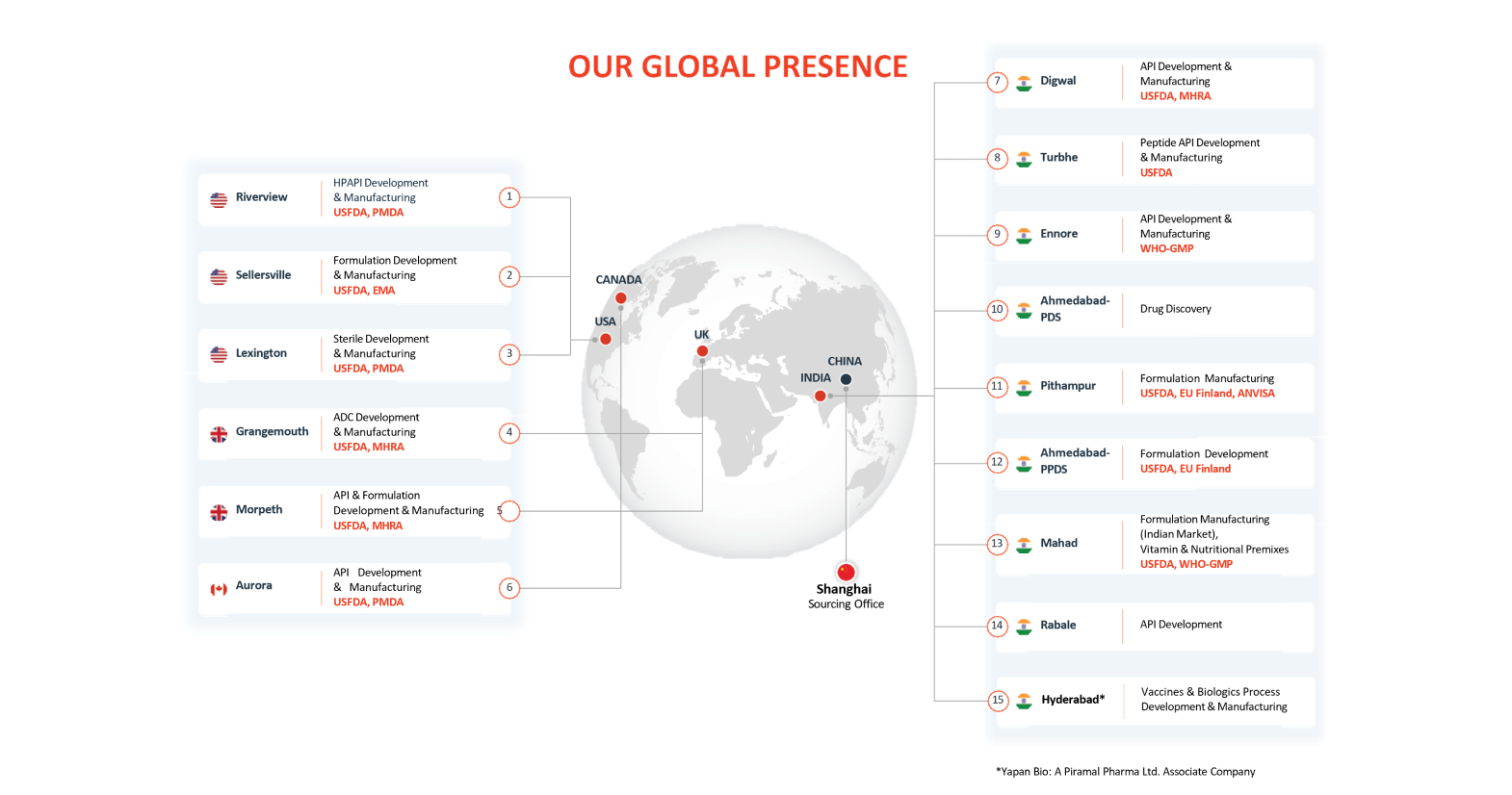
The value CDMOs bring to Phase 1 formulation is illustrated by the capabilities of Piramal Pharma Solutions (PPS). Working out of R&D sites in Ahmedabad in India, Sellersville and Lexington in the US, and Morpeth in the UK, PPS offers support for Phase 1 studies across therapeutic modalities and dosage forms. The sites are equipped to handle small molecules and biologics administered as oral dosage forms, liquids, suspensions, and injectables. At the PPDS drug discovery services site at Ahmedabad, PPS is equipped to fully evaluate early clinical candidates and provide development services for clinical supplies for use in Phase 1 trials. PPS can evaluate drug substance polymorphism and enhance bioavailability using nanosuspension and spray dried dispersion.
PPS designed its Lexington site to serve developers of injectable formulations, peptide therapeutics, and biologics, while its other US facility in Sellersville provides oral and topical dosage form services to companies around the world. The Sellersville site also supports developers of oncology therapies and controlled substances. Finally, PPS' UK site provides integrated services for hormonal medicines, spanning active pharmaceutical ingredients (API) and drug products, as well as services for clinical supply management.
The global footprint enables PPS to cater to the preferences of different customers. Many companies in the West prefer to use local service providers, leading them to work with PPS' facilities in the US and UK. Yet, there are also companies that want to access the skillset and cost-effective development services PPS has built up in Ahmedabad.
Working across multiple sites enables PPS to offer a wide range of services backed by extensive expertise in each area of specialization. PPS offers integrated development services from API to drug product and is uniquely positioned to provide a one-stop solution for Innovator partners for Phase 1 development.
PPS'; discovery services group can provide APIs for physico-chemical characterization and polymorph screening. Once those activities are done, PPS can seamlessly transfer the project to its formulation development groups for early-stage drug product development. The service integration equips PPS to provide early feedback on developability assessment and formulation design for Phase 1 studies.
The process is overseen by project managers with a deep understanding of the development of APIs and drug products. That understanding translates into realistic plans and the delivery of the vast majority of projects on time in full. On the rare occasions a project falls behind schedule, PPS has the humility to accept it and work with its partners to find a solution.
PPS'commitment to delivering projects on time in full is part of its broader culture of customer- and patient-centricity. All decisions are driven by the desire to provide the best services to customers and thereby accelerate access to life-changing therapies. PPS' scientists at all levels understand that the primary purpose of CDMOs is to facilitate therapies that address major unmet medical needs.
Exactly what it takes to deliver those therapies will continue to evolve in line with changes in the R&D pipeline. By remaining at the leading edge of formulation science and staying true to its ethos of customer- and patient-centricity, PPS will position itself to continue delivering the top tier Phase 1 formulation development services companies of all sizes need to maximize their chances of success.

Piramal Pharma Solutions (PPS) is a Contract Development and Manufacturing Organization (CDMO) offering end-to-end development and manufacturing solutions across the drug life cycle. We serve our customers through a globally integrated network of facilities in North America, Europe, and Asia. This enables us to offer a comprehensive range of services including drug discovery solutions, process and pharmaceutical development services, clinical trial supplies, commercial supply of APIs, and finished dosage forms. We also offer specialized services such as the development and manufacture of highly potent APIs, antibody-drug conjugations, sterile fill/ finish, peptide products and services, and potent solid oral drug products. PPS also offers development and manufacturing services for biologics including vaccines and gene therapies, made possible through Piramal Pharma Limited's associate company, Yapan Bio Private Limited.