

Oral bioavailability is a constant challenge for developers of new chemical entities. Low solubility and permeability often reduce the fraction of an orally administered drug absorbed in the bloodstream. Increasing the dose to have adequate circulating drug at the intended site of action may not always be a feasible option. As such, drug developers need ways to improve the bioavailability of their molecules.
Recognizing that improving bioavailability can reduce attrition in clinical development, the industry has developed a range of technologies and processes that are designed to address low dissolution rate and intrinsic solubility. Straightforward changes to the formulation such as the addition of surfactants and the adjustment of the microenvironmental pH of the active pharmaceutical ingredient (API) can quickly and affordably improve the bioavailability of some molecules. Yet, those techniques can fail to yield required improvements when applied to some particularly challenging APIs.
The presence of a set of APIs that remain poorly orally bioavailable despite the application of classical approaches has led Piramal Pharma Solutions (PPS) to expand its toolkit. The result is the Bioavailability Enhancement Platform
The Bioavailability Enhancement Platform has a two-pronged strategy. First, PPS seeks to improve the dissolution rate by reducing the particle size of the drug substance, thereby increasing the surface area. As dissolution rate is directly proportional to the surface area of an API, reducing the particle size is a direct way to boost dissolution in early formulation development.
Multiple particle size reduction technologies are available. The Bioavailability Enhancement Platform includes dry-milling and wet-milling, approaches that use nano-sizing to increase the surface area of an API and thereby improve its dissolution rate. Both approaches retain the crystal form of the API and, for the right molecule, are effective ways to boost oral bioavailability. Researchers can confirm the improvement in bioavailability by testing selected dosage forms in small in-vivo studies in animals or human subjects.
.jpg "Building a Bioavailability Enhancement Platform")
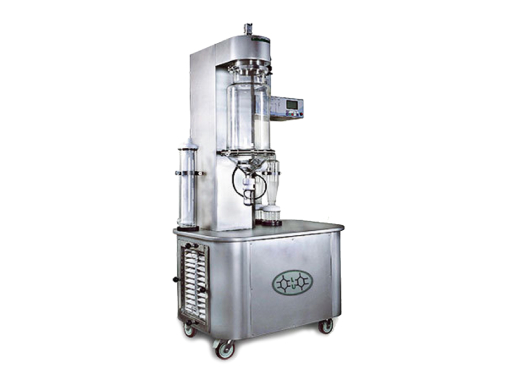
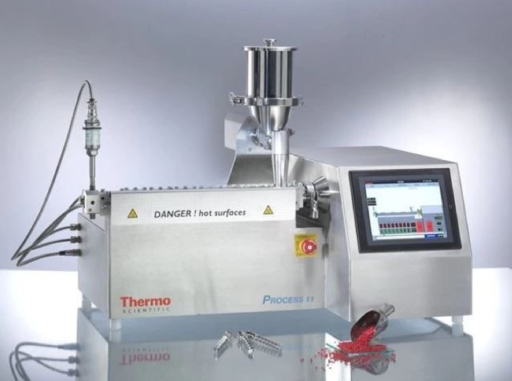
The second prong of the PPS Bioavailability Enhancement Platform covers stabilized amorphous formulation through two complementary technologies, namely hot melt extrusion (HME) and spray drying. PPS uses the technologies to increase the kinetic solubility of the drug substance and enhance oral bioavailability.
Spray drying entails dissolving the drug and polymer in a solvent. By spray drying the solution, drug developers can create amorphous molecular dispersion of their APIs in polymer matrices. In addition to enhancing the bioavailability of poorly soluble compounds, spray drying can improve the consistency of particle size distribution, support long-term stability in the presence of stabilizing polymers, and affect the controlled release of the drug substance. When utilized with other formulation processing, it can also enable taste masking. The effectiveness of the approach depends on the solubility of the API in organic solvents that are amenable for processing.
The solid dispersion technology known as hot melt extrusion is another way to increase the oral bioavailability of a molecule. The approach entails melting the drug substance with polymeric excipients in an extruder. After extrusion and cooling, the combination becomes a single-phase matrix that can be further milled and processed into a solid dosage form.
Spray drying and hot melt extrusion are complementary. Preparation of spray dried intermediate can be done on a very small scale in a material sparing manner for early stage development candidates. As a solvent-free technology, hot melt extrusion provides options for preparing stabilized amorphous formulations in an effective way. However, thermal stability of the API plays a critical role in choice of HME as a preferred approach. The complementary characteristics of the two approaches mean drug developers may evaluate both spray drying and HME approaches in parallel.
None of the approaches to bioavailability is a panacea. Hot melt extrusion is only applicable to thermally stable APIs, limiting the situations in which it can be used, while spray drying and hot melt extrusion can add to the time and cost of developing and manufacturing drugs, they may be the only approaches for enabling bioavailability of otherwise well-designed, therapeutically active molecules. The skill is to find the approach, or mix of approaches, that is the perfect fit for the unique properties of each API.
Formulators can choose from a range of other approaches beyond nano-sizing, spray drying and hot melt extrusion when selecting the best approach for their API. The full bioavailability toolkit includes additional technologies such as complexation with cyclodextrins. Complexation entails binding the API into the cavity of a host molecule to increase water solubility.
Other bioavailability enhancement options include gastroretentive dosage forms, and parenteral forms, liquid-filled capsules and lipid-based formulations. All the approaches have pros and cons.
PPS follows a decision-tree approach to identify the technology that is most suited to the specific drug candidate. The approach is the result of years of experience of applying the technologies to the formulation of drug candidates with wide-ranging physico-chemical properties. Expertise and experience in applying the approaches to innovator molecules is required to make rational formulation development options for Phase 1 and beyond.
The PPS team at the Bioavailability Enhancement Platform Center of Excellence in Ahmedabad, India has the deep expertise and experience needed to effectively deploy the technologies.
Integration with Discovery Chemistry teams is critical to the successful application of the technologies to improve bioavailability. The experts at Piramal Discovery Solution perform early evaluations of the physico-chemical properties of the drug candidates. Those insights reveal the need for bioavailability enhancement and the extent of the challenges that the PPS team needs to overcome. By defining the scope of the work that is done at PPS, the integration makes the whole process work better.
.jpg "Improving Patients' Lives")
At its core, the Bioavailability Enhancement Platform is an enabling technology for the advancement of promising drug candidates into clinical development and beyond. As such, the platform is a key part of Piramal Pharma Solutions'; focus on patient centricity.
The benefits of bioavailability enhancement to patients are demonstrated at all stages of drug development. Pharmacokinetics and bioavailability are collectively two of the most common reasons for the termination of programs in Phase 1 clinical trials. Each time a program is terminated, a compound that showed promise is prevented from improving the lives of patients, potentially for reasons that could have been resolved through the use of bioavailability enhancement technologies. Likewise, the concept of “failing early” – in effect, recognition that it is impossible to sufficiently improve the oral bioavailability of a compound before it enters human testing – can allow the sponsor to divert resources to other drug candidates that could make a difference to the lives of patients.
The use of bioavailability enhancement technologies can also reduce the burdens drug regimens put on patients. Enhancing the bioavailability of an API can limit how frequently a medicine needs to be taken and how many dosage units the patient needs to swallow each time, both of which can be major barriers to a patient';s compliance with the prescribed drug treatment.
Multiple studies have found compliance with treatment regimens deteriorates the more times a day a patient needs to take a medicine. The link between dose frequency and compliance is seen across clinical trials of antibiotics, cardiovascular drugs, and therapies for other acute and chronic diseases. By reducing dose frequency, ideally to just once a day, bioavailability enhancement technologies can make it easier for patients to comply with the drug regimen, thereby improving health outcomes and reducing waste.
Piramal Pharma Solutions (PPS) is a Contract Development and Manufacturing Organization (CDMO) offering end-to-end development and manufacturing solutions across the drug life cycle. We serve our customers through a globally integrated network of facilities in North America, Europe, and Asia. This enables us to offer a comprehensive range of services including drug discovery solutions, process and pharmaceutical development services, clinical trial supplies, commercial supply of APIs, and finished dosage forms. We also offer specialized services such as the development and manufacture of highly potent APIs, antibody-drug conjugations, sterile fill/finish, peptide products and services, and potent solid oral drug products. PPS also offers development and manufacturing services for biologics including vaccines and gene therapies, made possible through Piramal Pharma Limited';s associate company, Yapan Bio Private Limited.