

Although other purification techniques such as crystallization are more scalable, chromatography remains an essential tool in pharmaceutical product development. It's speed, effectiveness at resolving closely related compounds, and suitability for certain applications means companies continue to rely on this technique, either as an interim tool or an instrument of last resort. In this paper, we look at areas where chromatography can be employed effectively and explain the steps in developing robust, scalable chromatographic processes.
Small-scale, fast-paced programs: speed is paramount in drug discovery and early development as investigators need enough purified material to make informed go/nogo decisions. Under these circumstances, chromatography can be a better fit than crystallization. Rather than using precious time and resources developing a crystallization process, project teams can leverage chromatography to rapidly isolate small quantities of compounds they need for bioassay testing.
The advantages of chromatography over crystallization can persist for material requirements up to 2kg. In some cases, chromatography's lower upfront investment may outweigh the intermediate and long-term benefits of establishing a crystallization process, which are likely to materialize as a program advances, and more material is needed.
Removing unexpected impurities: chromatography is an important fallback option due to its efficiency at removing impurities that are closely related to the target compound and may be impossible to eliminate via crystallization. The presence of structurally similar impurities is foreseeable in areas such as payload-linker work, where chromatography is almost always employed.
Purifying challenging compounds: crystallization is unsuited for purifying certain classes of compounds. Due to their inherent nature, lipids and other oily compounds can be difficult or impossible to crystallize effectively, making chromatography the preferred option for purification. Crystallization challenges also extend to compounds that form amorphous solids, which tend to precipitate instead of forming an ordered crystal lattice during isolation. In these instances, chromatography may be more viable as impurities can be trapped in an amorphous solid during precipitation versus being rejected during a controlled crystallization process.
Chromatography is also favored for the purification of materials isolated from fermentation broths. The complex mixes of metabolites produced by bacteria, some of which differ only by the presence an extra carbon or methyl group, are difficult to purify using crystallization alone. Frequently, chromatography is an invaluable tool for isolating an intermediate or API from the other compounds in the broth.
Normal phase: normal phase chromatography uses a polar stationary phase, typically silica, to separate compounds based on their differing polarities. Compounds with higher polarity move through the column more slowly, facilitating their separation from less polar compounds.
This approach is more economical than reverse phase chromatography but is also less effective at purifying certain classes of compounds, such as materials that are readily soluble in polar solvents or exhibit highly hydrophobic properties.
Reverse phase: reverse phase chromatography has been shown to purify a diverse array of compounds. The approach uses a non-polar stationary phase and a polar mobile phase to separate compounds with a wide range of polarities. Reverse phase chromatography can be performed at medium or high pressure, with the latter approach typically reserved for the most challenging separations.
Chiral chromatography: chiral chromatography can enable the separation of enantiomers and diastereomers, molecules that contain one or more chiral centers and are sometimes the mirror image of the target compound. In the case of enantiomers, the physical properties that typically allow for the purification of compounds, such as polarity and solubility, are identical and standard separation media are ineffective. Using a chiral stationary phase allows for the separation of enantiomers based on their differing interactions with the stationary phase.
Optimizing a chromatographic separation for a specific mixture requires extensive experience and know-how. At Piramal Pharma Solutions, the first step upon receiving a synthetic procedure that includes chromatography is to familiarize with the process in the lab and track reaction kinetics along with impurity formation. This knowledge then informs process development decisions aimed at improving the purity and/or controlling impurities that are difficult to remove by chromatography.
The next step involves thin-layer chromatography screening of various mobile phase combinations and additives, such as bases and acids. At this stage, the goal is to find an optimal mobile phase that separates the product from close eluting impurities to the greatest extent.
Once an ideal mobile phase is selected, the development of scalable elution conditions becomes the focus. In some cases, a continuous gradient of the mobile phases is optimized while in others, studies involving incrementally increasing the proportion of the stronger eluting solvent over time (a step gradient) is pursued, with the number and proportion of the increase being examined.
Throughput, a key driver of efficient chromatography, is directly linked to column loading. Conducting small-scale studies enables researchers to determine the optimal loading capacity for a specific purification while, when needed, conserving valuable material. Optimally loaded columns balance tradeoffs between throughput, purity, and other variables to ensure the efficient, effective execution of the purification at production scale
Researchers must also evaluate the stability of the target compound during elution, extended hold periods during fraction analysis, and concentration/isolation. Degradation can reduce yield and generate new impurities and must be well understood. When required, close coordination of manufacturing staff with quality control for timely fraction analysis may also be critical to success at larger scales.
The final step is pooling of factions that meet predetermined criteria and isolation of the compound from the elution solvents. Choosing the appropriate technique, again, requires skill and expertise. Knowledge gained about the physical properties of the compound, the scale of the process, timelines, and other factors inform the use of techniques such as rotary evaporation, precipitation, or crystallization.
Teams should also be to opportunities to make chromatographic processes more cost-effective. If deemed possible through experimentation, columns can sometimes be reused to reduce both cost and waste. The use of guard columns or silica plugs can also extend the lifespan of preparative columns by cleaning up crude materials before loading onto the main column. Minimizing the amount of solvent used during the elution process can also provide dividends.
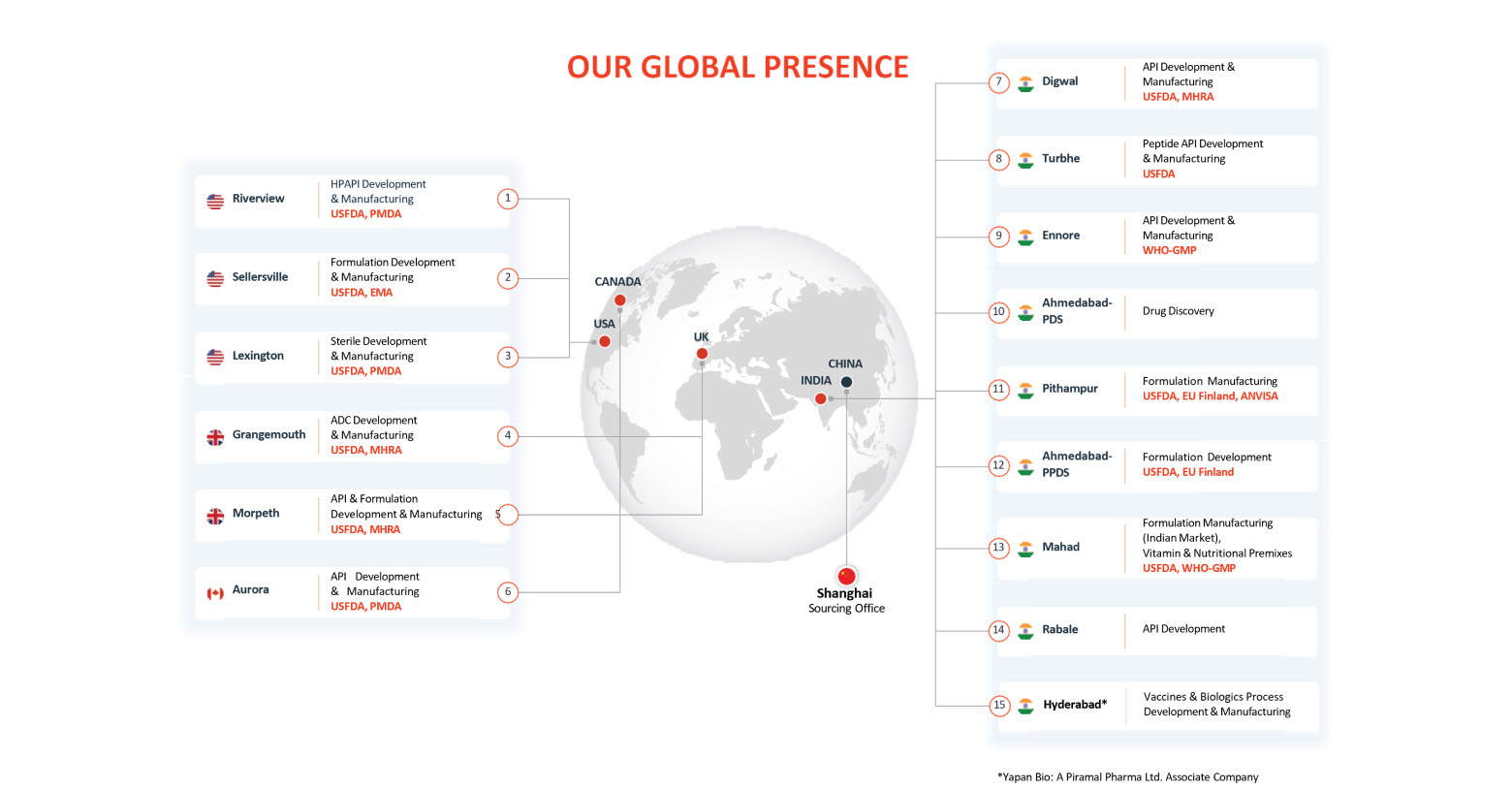
Piramal Pharma Solutions provides chromatography services from its facilities in Aurora, Canada, Riverview, USA, and Ahmedabad, India.
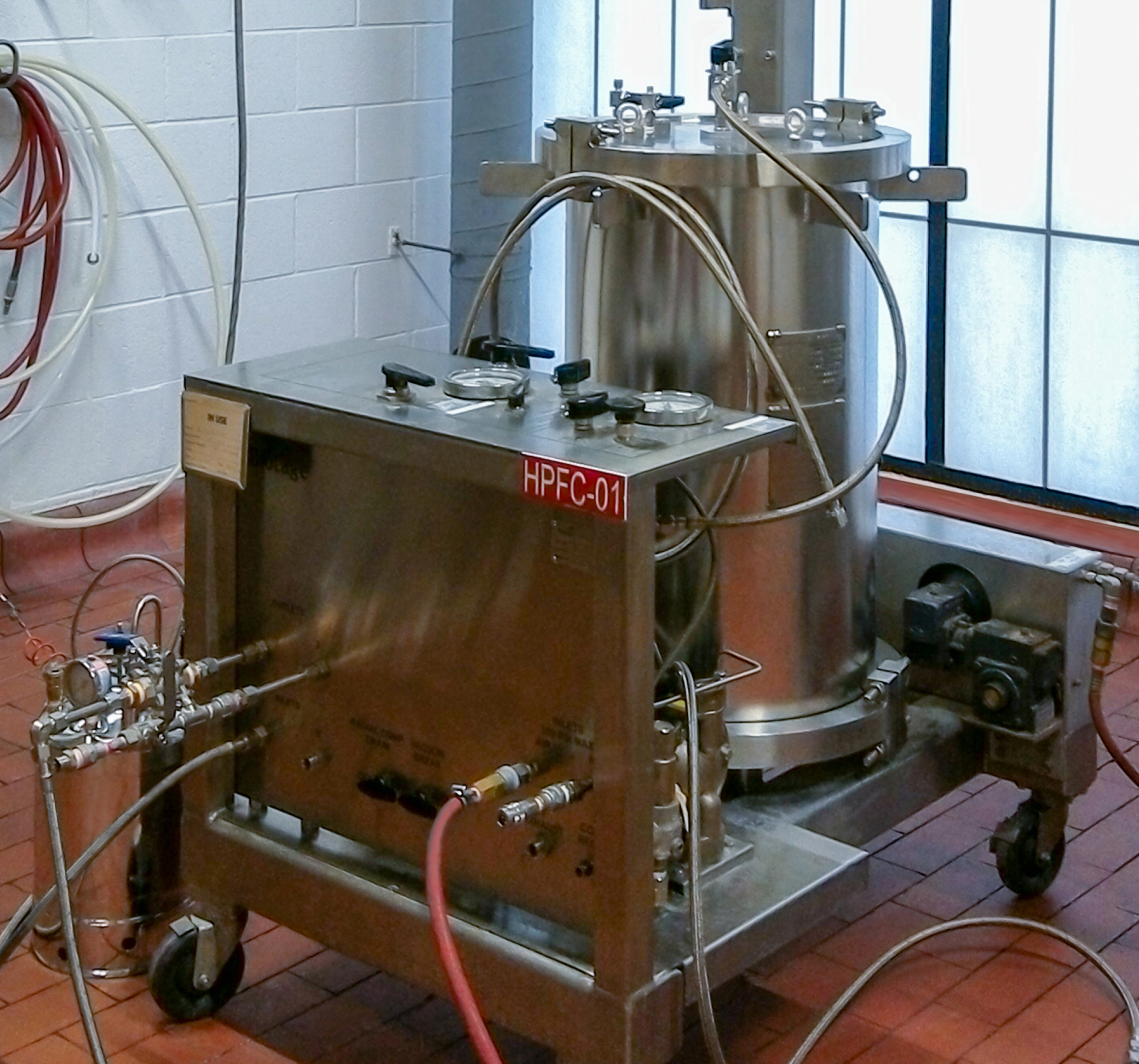
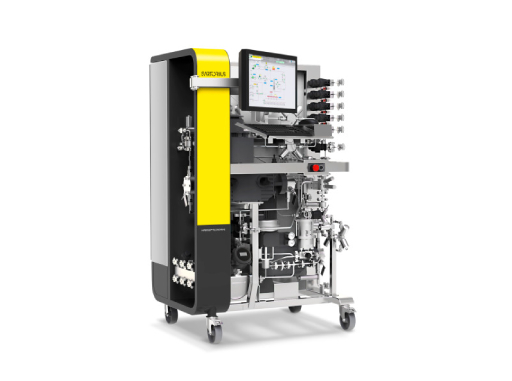
Aurora primarily performs medium pressure, normal and reverse phase chromatography separations at manufacturing scales using Biotage Flash 400 systems. This equipment can support kilogram-scale purifications using 40kg columns employing standard silica columns and custom stationary phases.
Riverview performs similar medium pressure, normal and reverse phase chromatography at up to 5kg columns. The site can also execute high pressure, reverse phase and chiral chromatographic separations in columns up to 15cm in diameter.
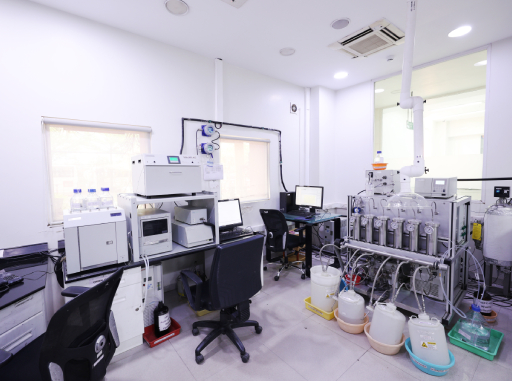
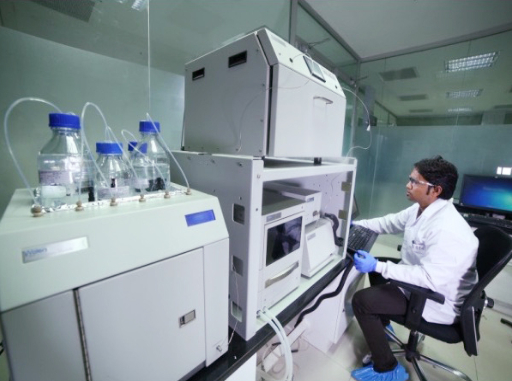
Our Ahmedabad site is equipped with Prep-HPLC equipment to isolate and purify compounds at a large scale, supporting the site's drug discovery capabilities.
Optimizing Chromatographic Purification
Strategy for Preparative LC Purification
Principles and Practical Aspects of Preparative Liquid Chromatography
Preparative Chromatography: A Holistic Approach
Piramal Pharma Solutions (PPS) is a Contract Development and Manufacturing Organization (CDMO) offering end-to-end development and manufacturing solutions across the drug life cycle. We serve our customers through a globally integrated network of facilities in North America, Europe, and Asia. This enables us to offer a comprehensive range of services including drug discovery solutions, process and pharmaceutical development services, clinical trial supplies, commercial supply of APIs, and finished dosage forms. We also offer specialized services such as the development and manufacture of highly potent APIs, antibody-drug conjugations, sterile fill/ finish, peptide products and services, and potent solid oral drug products. PPS also offers development and manufacturing services for biologics including vaccines and gene therapies, made possible through Piramal Pharma Limited's associate company, Yapan Bio Private Limited.