

Aseptic fill/finish is a crucial step in biopharmaceutical manufacturing, as it refers to the last step before a parenteral drug is packaged and ultimately delivered to the patient. More specifically, it is the process by which biopharmaceutical manufacturing companies transfer a filtered sterile drug product through a filling needle into an aseptic vial. If the drug is not sufficiently stable as a liquid formulation, lyophilization can be an important part of this process to keep the drug product as a lyophile and enhance shelf life.
The need for reliable, sterile pharmaceutical manufacturing processes for parenteral drug products is paramount to deliver much-needed vaccines and other injected, infused, and implanted drugs to people worldwide. Indeed, market research suggests that the global sterile injectables market will grow 11% annually through 2024 (Zion Market Research, Jan. 2020).
The global vaccines market was forecast to boom even before the COVID-19 pandemic, estimated to reach a value of $100 billion by 2025 (Research & Markets, 2019). To help sustain this expansion, experienced contract development and manufacturing organizations (CDMOs) with strong regulatory and technological expertise will be critical.
Maintaining sterility during processing is a huge challenge for the parenteral drug industry. Aseptic processing ensures that the packaged drug is a sterile product, free from living organisms or contamination, high in quality and safe for patients. Exceptional skill and knowledge in the areas of product formats and properties, containment and filling systems, and more, is essential for the proper execution of this complex process.
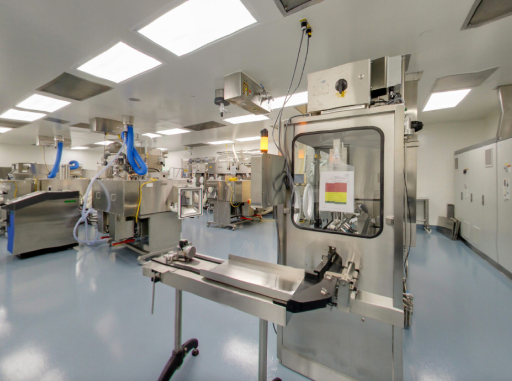
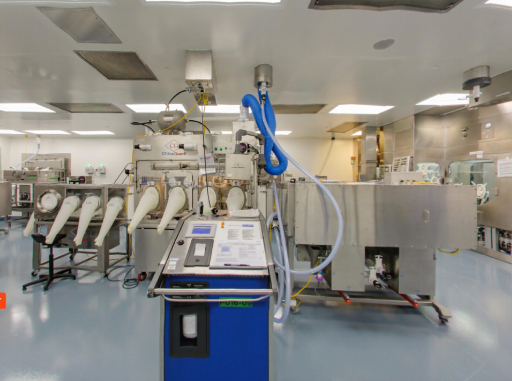
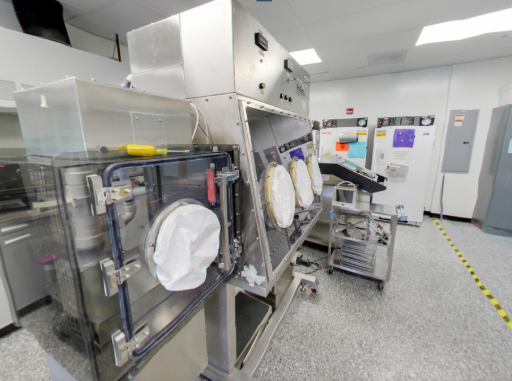
Cross contamination is a huge concern in sterile processing of Highly Potent Active Pharmaceutical Ingredient (HPAPI) drug products. To avoid contamination when working with HPAPIs, our facility employs isolator based technology. Using isolator technology, PPS ensures a sterile environment and prevents cross-contamination during manufacturing. Also, use of product-dedicated equipment and single-use disposable systems ensures that crosscontamination is avoided.
Certain APIs have limited solution stability and are not stable in liquid state. Such drugs are lyophilized, kept in a solid state and reconstituted with suitable diluent at the time of use. Lyophilization is the process of sublimating the water or water/co-solvent system from the formulation at sub-zero temperatures under vacuum. Once the water is completely removed, the active ingredient remains in a freeze-dried state and is more stable, with an extended shelf life.
The majority of CDMOs can only perform lyophilization on aqueous-based formulations. PPS has the ability to use a co-solvent based approach to lyophilization, which improves both solubility (more drug in each vial), shortens the lyo cycle time, and enhances the stability of the drug product. PPS has successfully employed tert-Butanol, Dimethyl sulfoxide, Acetonitrile, Acetic acid and Ethanol in lyophilized drug products.
Because of the complex nature of this process, many companies prefer to outsource their lyophilization needs to a qualified CDMO. Whether the customer is looking to reduce its supply chain risk or capitalize on PPS's unique capabilities, we';re able to support them with unparalleled scientific insight and oversight.
Piramal Pharma Solutions' (PPS) facility in Lexington, Kentucky, USA, is a state-of-the-art manufacturing facility that utilizes isolator technology for aseptic fill/finish processing for parenteral drugs. The fully-integrated, FDA compliant laboratory specializes in the formulation, development, and manufacturing of sterile fill/finish pharmaceuticals, with a strong legacy of experience in liquid and lyophilized parenterals and injectables.
This 22,000 square foot site was expertly designed to bring cutting-edge support to the research and development and manufacturing processes. The site has the capability to handle and process a wide variety of active components ranging from small molecules to peptides, proteins, and biologics that are HPAPIs, as well as Generally Recognized as Safe (GRAS) compounds.
PPS offers elite services and unmatched know-how to deliver safe and effective formulas for its customers via aseptic fill/finish services. The company's aseptic isolator-based technology is unique in its ability to handle HPAPIs that cannot be filled in a conventional cleanroom environment. Because of the high concentration of active ingredients, HPAPIs have a very low occupational exposure limit (OEL) of 0.1 µg/m3 . Manufacturing personnel cannot be exposed to greater than 0.1 micrograms of highly potent material over the course of a normal eight-hour work period. Aseptic isolators allow manufacturing personnel to handle these materials safely and efficiently, without the risks of prolonged exposure to these active compounds.
PPS can support its partners with:
• Fill/finish for antibody drug conjugates
• Pre-formulation/lead optimization
• Formulation development of complex formulations
• Lyophilization development of small molecules, peptides and biologics
• Aqueous and co-solvent based lyo cycle development
• Complex formulation like micelles, mixed micelles, and liposomal formulations
• Oil-in-water emulsions
• Suspensions and micro-suspensions (lyophilized)
• Phase-based approach for clinical trials
• QbD based generic formulation development and commercialization
• Operations of high-pressure homogenizer (micro-fluidizers) in liposomes, emulsions and micro-suspensions
Clean rooms are classified according to the level of sterile environment they can provide. The most stringent standards for sterile environments are provided by a Class 100 (US FED STD 209E) or Grade A (EU GMP) environment. The graded clean room guidelines are stringent in their requirement of particle counts both during operation and at rest, not specifically during the manufacturing process.
The way separation barriers and manufacturing suites are built and fabricated is very specific – especially when it comes to sterile parenterals. Grade A areas can be used as a way to isolate the decontaminated area from the external production environment, which is usually a Grade C or D environment. For sterile parenteral manufacturing, a Grade D environment is the minimum required, while Grade C is preferred. Typically, most companies in the industry use Grade D as a minimum, where PPS uses a minimum Grade C requirement. Grade C allows for stricter regulatory control within the formulation room utilizing the mobile isolators. An important feature of PPS's Lexington facility is that it has two Grade C formulation suites, inside which the mobile compounding isolator – a Grade A environment – is located. This allows for stricter particulate control and sterility assurance.
Previously, the industry relied on rapid access barrier (RAB) systems, with the downside of this being the airflow through the open RAB system that could lead to potential contamination and risk of exposure. With isolators, there is a unique unidirectional airflow system. Furthermore, the use of mobile isolator technology adds flexibility within the manufacturing environment. Our isolator technology provides a movable Grade A environment within the formulation suite, and can be customdocked based on the compounding and process needs. Mobile isolators allow greater flexibility in manufacturing as each isolator is functionally different. Since the role of each mobile isolator is different and operates independently, this allows the facility personnel to perform multiple tasks at the same time. This, for example, can allow operators to prepare for the next production batch while the current batch is still in manufacture.
Efficient decontamination of the isolators is required to provide a clean, sterile environment. For sanitation of the isolators, vaporized hydrogen peroxide (VHP) is disbursed via misting or fogging to eliminate microbial contamination. PPS's technology, along with its mobile isolator systems, allows for decontamination of production isolators within two to four hours. While oxidation is a threat posed by residual VHP, proteins and peptides containing oxidation-sensitive cysteine or methionine residues are difficult to manufacture. PPS understands this constraint caused by residual VHP and has developed and implemented a validated process to minimize the residual levels of VHP inside the insulators. By employing validated extended aeration cycles, the residual hydrogen peroxide levels can be brought to below one part per million levels.
PPS is particularly sensitive to the challenges of disinfecting residues left behind by certain peptides, proteins, and amino acids that require special attention and cleaning protocols. Apart from the primary product surfaces in the equipment, secondary surfaces in the mobile isolator are pharmaceutical grade stainless steel plus other materials like glass, Lexan, and Delrin. The cleaning of secondary surfaces within the filling isolators post batch manufacturing and release of isolators for the next batch manufacturing is critical. PPS performs coupon spiking recovery studies of secondary surfaces and utilizes a product-specific cleaning method based on Surface Action Limit (SAL). The cleaning methods are usually performed by Total Organic Carbon (TOC) or by HPLC.
The mobile isolators are also outfitted with rapid transfer ports (RTPs). Most of the vial closures (stoppers & seals) come in a ready-to-use format that does not require autoclaving, which allows for faster processing. The stoppers and seals are available sterile gamma irradiated by the vendor in RTP bags, which allows them to be directly connected to the RTP ports of the isolators quickly without breaching the sterility.
At PPS, we employ single-use disposable systems when the drug product formulation is compatible with bioprocessing bags. The advantage of using a single-use disposable bag is that it drastically reduces the cost and significantly reduces the readiness time. There is no need to buy expensive stainless steel vessels, as the drug product can be compounded in a sterile bag that is readily available off the shelf and can be sterile-filtered, all at once, into another bag. In this system, the entire manufacturing process can be accomplished with disposable items. A disposable process reduces the post-production cleaning of equipment and also the maintenance of the vessels if stainless steel vessels are used.
If the product is liquid, PPS has the capability to provide pre-fill nitrogen sparge and post-fill nitrogen head space. If the product is lyophilized, the vials are filled and partially stoppered, held in a tray until one tray is completely filled, then it is loaded into the lyophilizer. The lyophilized vials can be back filled with nitrogen and stoppered inside the lyophilizer.
If the process is not compatible with a single-use system, PPS can use surge vessels inside the filling isolator – a Grade A environment. This allows for a continuous filtration and fill process. The formulation is filtered into a surge vessel inside the filling isolator which is then filled into the vials.
Our staff of expertly-trained scientists follows a proven set of protocols to deliver best-in-class aseptic lyophilization.
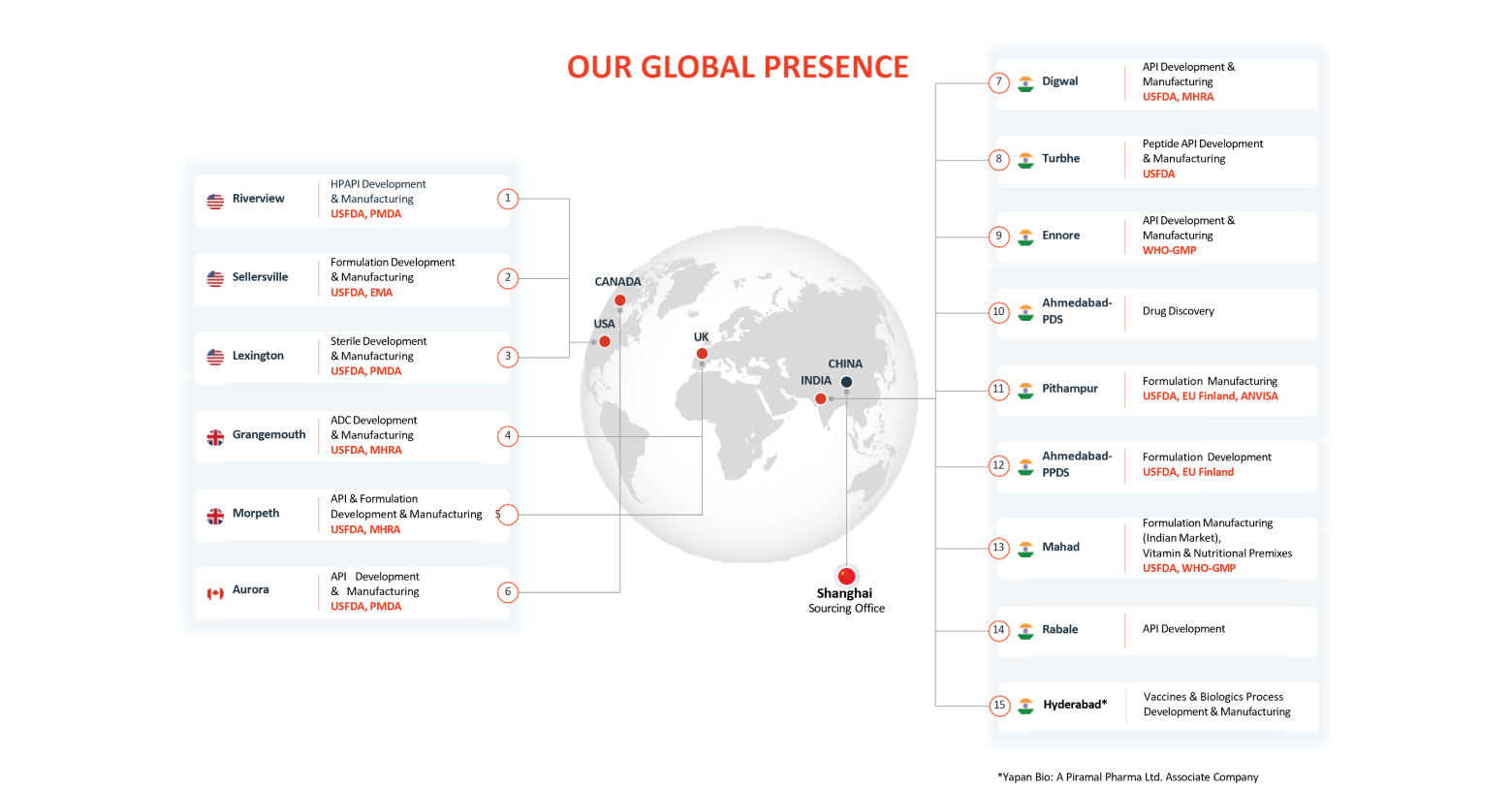
Piramal Pharma Solutions is a contract development and manufacturing organization (CDMO), where everything we do, we do for the patient. The company specializes in integrated services and end-to-end development and manufacturing solutions across the drug life cycle. We serve our clients through a globally integrated network of facilities in North America, Europe, and Asia. This enables us to offer a comprehensive range of services including drug discovery solutions, process and pharmaceutical development services, clinical trial supplies, and commercial supply of APIs and finished dosage forms. We also offer specialized services like the development and manufacture of highly potent APIs, antibody drug conjugations, and manufacturing of hormonal drugs. Our capability as an integrated service provider and experience with various technologies enables us to serve innovator and generic companies worldwide. Our development centers and manufacturing sites have accreditations from regulatory bodies in the U.S., Europe, and Japan. With a pool of 700+ scientists including 150 Ph.D.s across the globe, we are committed to research and development programs.