


-2.png "A modern approach to stability, efficiency, and quality")
Spray drying is a versatile pharmaceutical manufacturing technique that transforms liquid formulations into dry powders in a single step. It has become a key enabling technology for drug development and manufacturing due to its ability to enhance bioavailability, engineer particle properties, and gently handle sensitive molecules. This white paper provides an overview of spray drying and its applications especially in improving drug solubility and discusses its relevance to peptide Active Pharmaceutical Ingredients (APIs).
Solubility & Bioavailability Boost
Spray drying creates amorphous solid dispersions (ASDs), converting poorly soluble drugs into a molecularly dispersed form in a carrier matrix. This significantly improves dissolution rates and bioavailability for BCS Class II/IV compounds.
Particle Engineering & Delivery
The process allows precise control of particle size, morphology, and density, enabling optimized powders for inhalation, nasal delivery, controlled release oral doses, and taste-masked formulations.
Gentle Drying for Sensitive APIs
Spray drying is a rapid, gentle drying method. Exposure to heat is brief (seconds), often at temperatures far below typical oven drying or melt processes, which helps preserve the stability of heat-sensitive actives like peptides.
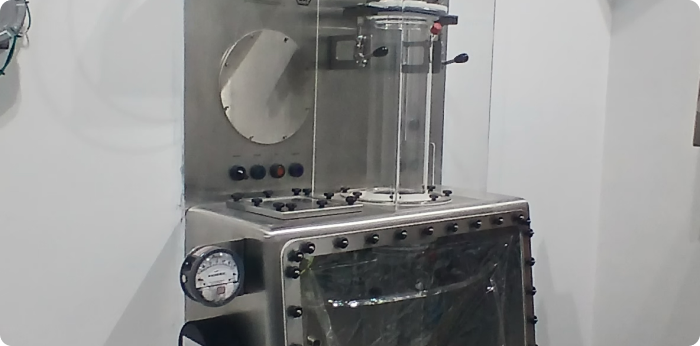
Process Basics: In spray drying, a solution or suspension of the API (often with excipients) is atomized into fine droplets and introduced into a hot drying chamber (using air or an inert gas). The droplets rapidly lose solvent and form solid particles, which are then separated and collected (usually via cyclones or filters). The entire process atomization, solvent evaporation, and particle formation happens in seconds, yielding a dry powder.
Bioavailability Enhancement: A major application of spray drying is to improve the solubility of poorly water-soluble drugs by producing amorphous solid dispersions (ASDs). The API is embedded in a polymer or matrix at the molecular level, avoiding crystallization. This amorphous form typically dissolves faster and to a higher extent in bodily fluids, boosting the drug's apparent solubility and absorption. Many new chemical entities benefit from this approach spray drying is reported to be one of the most widely used methods for marketed ASD-based products (approximately 22 out of 48 such products, compared to 11 by hot-melt extrusion as of 2020). In practice, spray drying is especially useful for compounds unstable at high temperatures or those requiring specific particle characteristics.
Particle Design and Applications: By adjusting the feed composition and process parameters, scientists can tailor particle properties:
• Size and Morphology: The choice of atomizer (e.g. two-fluid nozzle vs. rotary) and drying rate influences particle size distribution and shape. Spray drying can produce micro-particles with uniform size, which is advantageous for inhalation aerosols or injectable suspensions. Spray-dried particles are often porous and low-density, which can aid downstream processing and fast dissolution.
• Encapsulation: APIs can be co-processed with excipients to encapsulate or coat the drug. This is useful for taste masking or protecting sensitive drugs from degradation. The polymer or matrix shields the drug from moisture or light, enhancing stability.Modified Release: Spray drying can also produce controlled-release or targeted delivery powders. By embedding drugs in release-controlling matrices or forming specific particle structures, one can achieve sustained release profiles or target drug deposition to certain regions (e.g. the lungs or nasal cavity).
• Modified Release: Spray drying can also produce controlled-release or targeted delivery powders. By embedding drugs in release-controlling matrices or forming specific particle structures, one can achieve sustained release profiles or target drug deposition to certain regions (e.g. the lungs or nasal cavity).
Thermal and Chemical Considerations: A key advantage of spray drying is the short thermal exposure. Droplets experience evaporative cooling the surface temperature of evaporating droplets stays at or near the solvent's wet-bulb temperature (often well below the inlet air temperature). For example, while inlet air might be 100–150°C, the actual droplet may remain under ~60°C during most of the drying. This makes spray drying amenable to thermolabile compounds (like peptides, proteins, and certain antibiotics) that would degrade under prolonged heat. By choosing volatile solvents (e.g. dichloromethane, ethanol, acetone) with low boiling points, drying can be achieved at even milder conditions. The process does involve organic solvents in many cases, so solvent handling and residual solvent removal are important considerations. Modern pharmaceutical spray dryers often use inert gas loops and solvent recovery systems to safely handle flammable solvents and reduce residuals to acceptable levels.
Continuous Manufacturing: Spray drying is inherently continuous solution is continuously fed and powder continuously collected which aligns with the industry's move toward continuous manufacturing for improved efficiency and consistency. Equipment is available from lab scale (producing grams) to commercial production (hundreds of kilograms), and processes scale by extending run time or using larger spray chambers. Compared to batch techniques like lyophilization (freeze-drying), spray drying can be faster for large volumes and offers scale-up reliability, though it requires careful optimization of parameters to maintain product quality at larger scale.
Advantages Summary: In summary, spray drying provides multiple benefits for pharmaceutical production: it enhances bioavailability of poorly soluble APIs by forming amorphous dispersions, improves stability through encapsulation, allows particle engineering for specific delivery routes, and protects sensitive molecules via gentle processing. It is a flexible platform that has seen broad use in oral solids, as well as niche uses in inhalation powders, injectables, and even alternative to lyophilization for some biomolecules. (For example, instead of freeze-drying a peptide from aqueous solution, spray drying that peptide from a suitable solvent can yield a comparable powder in one step.)
Challenges: The main challenges include the need to handle organic solvents (calling for explosion-proof equipment and solvent recovery), controlling residual solvent content in the final product, and dealing with sometimes low batch density (fluffy powders). Also, not every API/polymer is easily soluble in volatile solvents some molecules may require extensive solvent screening to find a spray-dryable formulation. Despite these challenges, the technique's strengths have made it a go-to solution in many drug development programs.
Peptides are biologically active molecules often used as drugs in oncology, endocrinology, and veterinary medicine. They tend to be heat-sensitive and can degrade or undergo unwanted reactions if subjected to high temperatures or shear. Traditionally, isolating a peptide in solid form is done by lyophilization (freeze-drying) to avoid heat. However, spray drying has emerged as a viable alternative for peptides under the right conditions, offering faster processing and potentially different particle features (like smaller size or better flow).
For peptides, spray drying proved to be an attractive option and stable dry powder forms of peptides are needed for formulation into final dosage forms. Key reasons spray drying is relevant for peptides include:
• Gentle Drying: Peptides could be susceptible to degradation if heated for long durations. Spray drying's rapid solvent evaporation at moderate temperatures preserves such molecules. (In fact, the process developed uses a solvent mixture to keep drying temperatures low more on this in the project details below.)
• Particle Size Control: The target product is a powdered form of peptide. Spray drying produces a fine, uniform powder directly from solution, which is advantageous for blending into implant formulations or filling into delivery devices. Specifications calling for a white to off-white powder with controlled particle size distribution are more readily achieved with spray drying than with milling a lyophilized cake.
• Avoiding Crystallization: Some peptides can crystallize or aggregate in certain conditions, affecting their bioavailability or stability. Spray drying can trap the peptide in an amorphous or partially amorphous state depending on conditions, and with proper handling (low moisture, etc.), this can yield a stable form.
• Production Efficiency: Compared to freeze-drying (which is a slower, batch-wise process requiring freezing and high vacuum drying over many hours), spray drying can process the solution continuously and rapidly. For multi-kilogram quantities of peptides, spray drying can be scaled to be more time-efficient.
• Handling Potency and Safety: Potent peptides with a low occupational exposure limit (OEL) are placed in a high containment band. This means any manufacturing process must protect operators from exposure. Spray drying of potent compounds requires special precautions notably enclosed processing and isolators to contain the powder.
In summary, spray drying aligns well with the needs of peptide APIs by providing a mild yet efficient drying method that yields a directly usable powder and maintains the molecule's integrity.
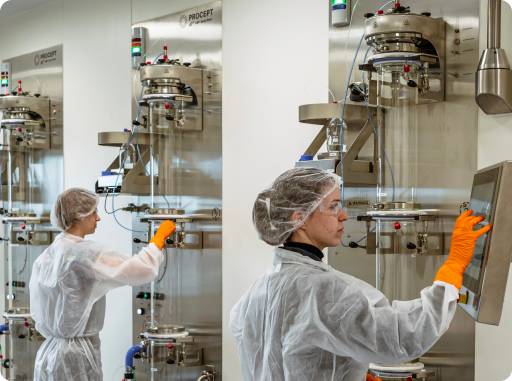
A new spray drying unit at Piramal Pharma Solutions Turbhe plant has been procured from a European process equipment manufacturer. The closed-loop spray dryer system operates in a sealed system using an inert gas (nitrogen) for drying, which is crucial for safety and for protecting the potent product and operators.
Equipment Specifications:
• Capacity: The dryer is sized for a feed rate up to about 1 l/hour of liquid (approximately 0.01–1 l/hour range), which is suitable for continuous spray drying of peptide.
• Spray Nozzle: A bi-fluid nozzle is used, which mixes liquid and atomizing gas to create fine droplets. The nozzle comes with interchangeable tip sizes, and can produce the required droplet size to meet the particle size specs.
• Inert Atmosphere and ATEX Compliance: The system is an explosion-proof (ATEX-rated) design, with all electrical and mechanical components suitable for solvent-rich environment. It operates under a nitrogen blanket, and an oxygen monitor is built in to ensure O₂ levels remain below the flammability threshold at all times. This closed-loop N₂ system allows safe handling of the solvent.
• Containment Features: The spray dryer is equipped with a flexible wall isolator around the drying chamber/cyclone discharge to contain the product. This ensures that when the dry powder is collected (e.g., from the collection vessel or filter), operators are not directly exposed. It's a GMP design with clean-in-place (CIP) provisions and 21 CFR Part 11 compliant controls (for data logging and process control security).
• Utilities: An integrated chilling unit is used to cool the solvent condenser in the closed loop, and connections for site utilities (compressed air, nitrogen supply, etc.) are part of the installation. The equipment acquisition also included factory acceptance testing (FAT) and on-site training.
At Piramal's Turbhe site, a new facility area has been established. Key aspects of the facility design include:
• Cleanroom Classification: The processing area is maintained at ISO Class 8 (Class 100,000) cleanliness, which is appropriate for API handling and is standard for many pharmaceutical intermediate processes. This includes smooth surfaces and HEPA-filtered air handling.
• Room Layout: The suite includes a spray dryer room where the equipment sits, an equipment wash area for cleaning, a solution preparation/dispensing room for making the feed solution under containment, and airlock entries/exits (gowning rooms). There are also material airlocks or a designated storage area for raw material and finished goods, under controlled access.
• Containment and Safety: Stringent containment protocols are implemented:
- Bag-In/Bag-Out Filters: The HVAC exhaust from the spray dryer room is filtered through safe-change HEPA filters to prevent any particulate release to the environment.
- Airlocks with Pressure Cascades: The rooms are kept at negative pressure relative to adjoining areas to ensure any leakage is inward. The entry/exit has a two-stage airlock upon exiting, personnel pass through a mist shower decontamination station to remove any residual potent dust on suits.
- Operator Isolation: During operation, the spray dryer's isolator and glove ports allow operators to feed material and collect product without direct exposure. The solution prep area also has contained charging systems.
- Utilities & Waste Handling: A dedicated nitrogen supply manifold is installed for the inert gas needs. Solvent vapors from the process are condensed and collected in an insulated tank any solvent wastes are handled via a solvent recovery system or disposed as hazardous waste. Liquid efluents (like cleaning solutions) are directed to neutralization as needed.
The facility is essentially a “standalone” module it has its own air handling units, nitrogen supply, and control systems, so that it does not interfere with other manufacturing areas on site. This was an intentional design, allowing the suite to be used for other potent compound projects with minimal risk to the rest of the plant.
Spray drying technology has proven to be a powerful tool in the pharmaceutical toolkit, offering solutions for formulating challenging molecules. Spray drying was chosen to meet the dual challenge of enhancing bioavailability (by producing an amorphous dispersion) and handling a potent peptide API in a safe, efficient manner. The establishment of a state-of-the-art closed-loop spray drying capability at Piramal's Turbhe site includes specialized equipment and facilities to handle flammable solvents and high-potency compounds.
Through careful planning and execution from designing process parameters, to engineering controls that ensure containment showcases how spray drying can be successfully scaled from concept to commercialization for a peptide product. Once fully validated, this process will deliver peptide in a form that can be readily formulated into its final dosage (likely a long-acting implant), with improved consistency and quality over prior methods.
Finally, spray drying is especially suited for molecules like peptides that cannot endure high temperatures or require delicate handling, underlining the value seen in this technology for delivering a robust manufacturing process and an optimized therapeutic product.
For more information contact:
Dr. Satyajit V. Tillu
Senior General Manager and Technical Services Head-Peptides
Piramal Pharma Solutions (PPS) is a Contract Development and Manufacturing Organization (CDMO) offering end-to-end development and manufacturing solutions across the drug life cycle. We serve our customers through a globally integrated network of facilities in North America, Europe, and Asia. This enables us to offer a comprehensive range of services including drug discovery solutions, process and pharmaceutical development services, clinical trial supplies, commercial supply of APIs, and finished dosage forms. We also offer specialized services such as the development and manufacture of highly potent APIs, antibody-drug conjugations, sterile fill/ finish, peptide products and services, and potent solid oral drug products. PPS also offers development and manufacturing services for biologics including vaccines and gene therapies, made possible through Piramal Pharma Limited's associate company, Yapan Bio Private Limited.