

-1.png "Lyophilization is a vital process employed image")
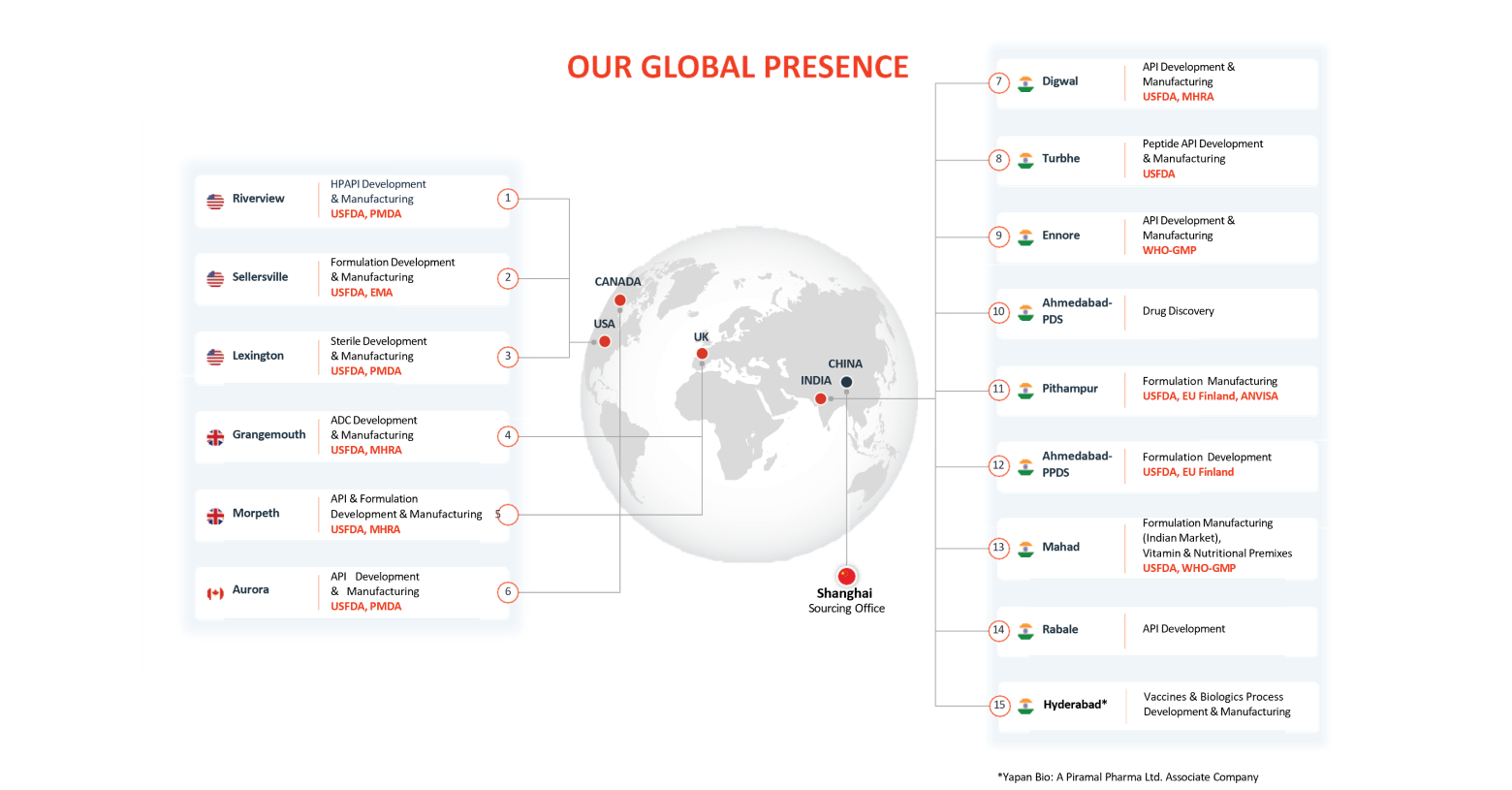
Lyophilization is a vital process employed to enhance the stability and extend the shelf life of drug products particularly Biologics and other complex modalities. Having these complex modalities in a lyophilized form completely eliminates the complex logistics associated with a frozen drug product. The crucial role lyophilization plays in life-changing drug products means that CDMOs need to have a thorough understanding of the drug substance and the processes to deliver a safe and effective injectable drug product to the patient.
Also known as freeze drying, lyophilization is a sublimation process that entails drying a frozen block of ice under vacuum. During lyophilization, the ice transitions directly from a solid phase to a vapor phase (Sublimation) without going through an intermediate liquid phase.
Majority of the times, drug substances that exhibit good biological activity often fail to reach the market because of limited solution stability. Even drug substances that are relatively stable cannot afford a stable drug product with a 24 months shelf-life typically expected for commercial viability.
Biologics, though stable when stored frozen at sub-zero temperatures, have shipping and storage requirements that create logistical challenges, particularly in parts of the world with limited access to ultra-low-temperature freezers. Lyophilization can extend the shelf life of products at refrigerated conditions (2-8°C), making it possible to ship and store the drug product in standard refrigerators.
Several terms are fundamental to understanding lyophilization:
Pressure Measurement
● Capacitance Manometer: A direct-reading pressure gauge that measures pressure by detecting the physical deflection of a diaphragm. The measurement is independent of gas composition and the gauge can control chamber pressure in all phases of lyophilization.
● Thermal Conductivity Gauges (Pirani / Hasting): Indirect-reading pressure gauges that measure heat loss from a heated filament, which varies with gas density and composition. The gauges are used to determine the end of primary drying by monitoring the change in gas composition from water vapor to non-condensable gases.
Critical Temperatures
● Glass Transition Temperature (Tg′): A critical temperature threshold during primary drying. If the product temperature rises above Tg′, the rigid amorphous structure softens, leading to potential cake collapse.
● Eutectic Temperature (Te): The temperature at which a crystalline mixture melts. For crystalline formulations, product temperature must remain below Te during primary drying to avoid melting and collapse.
● Collapse Temperature (Tc): The critical product temperature during primary drying above which the formulation can no longer support its own structure. For amorphous products, the collapse temperature is typically 1°C to 2°C above the glass transition temperature. For crystalline products, it is the eutectic temperature.
Product Structure and Appearance
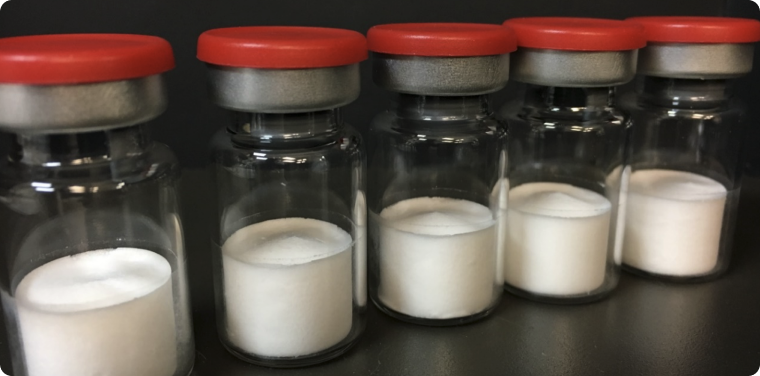
● Cake: The porous, solid and structurally intact material that remains at the end of the lyophilization process. A good cake should be uniform in appearance, have sufficient strength to prevent breakage during handling and allow for rapid and complete reconstitutio.
● Cake Collapse: A failure that occurs when the dried porous structure gives way above the collapse temperature. This can range from a partial loss of structure (onset of collapse) to the formation of a shrunken, glassy plug or a sticky, dense residue (complete collapse). Collapse affects appearance, reconstitution time and overall stability.
● Micro Collapse: Localized, small-scale structural collapse within the lyophilized cake that may not be visible to the naked eye. Micro collapse occurs when the product temperature transiently or locally exceeds the collapse temperature. While not a catastrophic failure, it can harm long-term product stability, increase reconstitution time, and affect residual moisture levels.
● Metastable State: An unstable intermediate state, often observed with bulking agents, such as mannitol. Left uncorrected, the state can cause batch variability or stability issues.
Process Control Techniques
● Controlled Nucleation: A technique used to ensure uniform ice crystal formation across all vials in a large-scale freeze dryer. This is achieved through various techniques, such as sudden pressure drops.
● Annealing: A heat treatment step performed after freezing and before primary drying. The product is warmed and then re-cooled to convert the formulation to a uniform, stable form and remove the metastable state.
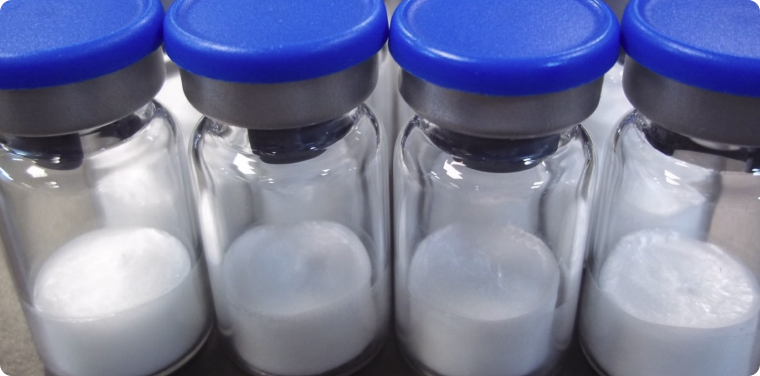
The lyophilization cycle has three main phases: thermal treatment, primary drying, and secondary drying. In the thermal treatment phase, the formulation is frozen and undergoes thermodynamic arrangement. Before starting the process, companies need to make decisions about the formulation, starting with the choice of solvent system.
The choice is determined by the modality. Biologics are typically processed in aqueous systems. Aqueous systems are preferred for small molecules too, but pharmaceutically acceptable lyo compatible cosolvent
systems are needed for drug substances that are poorly soluble in water. Piramal Pharma Solutions (PPS) is one of the few service providers who can perform cosolvent based lyophilization in the US.
At PPS, we have the appropriate safety controls in place and successful in using tertiary butanol (TBA), acetic acid, DMSO, ethanol and acetonitrile in lyophilized products and bringing them below the ICH guidelines for residual solvent levels. The site limits ethanol to 10% to 15% aqueous ethanol for safety reasons.
Solubility studies in aqueous and cosolvent systems are critical for the initial formulation development. The pH of the solution influences the solubility and stability of the drug substance. Trying to maximize solubility can negatively affect stability, making it important for researchers to strike a balance between the aqueous / organic ratio and determine the sweet spot for maximum solubility and stability of the drug substance.
The outcome of assessments of a drug substance's pH-based solubility profile plays a vital role in determining the choice of buffer system. As an example, if the pH-based solubility profile suggests a pH of 5.5 offers maximum solubility and good stability, citrate and acetate buffers may be suitable for the product. Short term accelerated stability screen can provide early insights into the viability of the proposed buffer system.
Lyophilization also requires the use of a bulking agent that gives the cake a robust structure. Examples of bulking agents include mannitol, povidone, cyclodextrin, glycine, lactose, and human serum albumin. The choice is informed by assessments of whether the bulking agent interacts with the drug substance.
The quantity of the bulking agent is critical. Increasing the amount of the bulking agent extends the time it takes to complete the lyophilization process. As such, it is best practice to only use as much bulking agent as is needed enough to give the cake a good structure.
For example, if mannitol is used as bulking agent, it can form meta-stable state during thermal treatment phase. Annealing can eliminate metastable states to ensure
structurally uniform cake. The propensity for vials to crack due to expansion during crystallization with higher amounts of mannitol causing product loss, is another reason to minimize the use of the bulking agent.
Regulators accept a phase-based approach to the development of the lyophilization process but it is still important to keep the commercial requirements in mind from day one. That means it is possible to defer extensive robustness and validation studies but the foundational science should be in place from early in the R&D process.
Box design space experiments can evaluate the robustness of lyophilization parameters such as the freezing rate, ramp rates, vacuum and primary / secondary drying temperature by assessing the lyo cycle under extreme conditions. In keeping with the acceptance of a phase-based approach, companies can perform design space studies in R&D freeze dryers, rather than the commercial-sized equipment that is used once product becomes commercial.
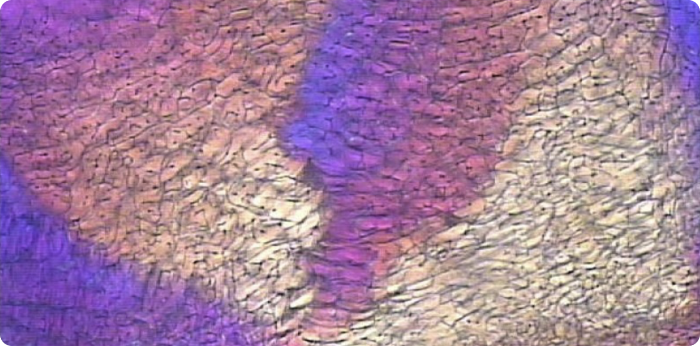
Companies should characterize a formulation's thermal properties before starting lyophilization. Researchers can determine the thermal properties of a formulation through differential scanning calorimetry (DSC) and freeze-dry microscopy (FDM).
DSC determines the glass transition temperature, (Tg′), crystallization events, eutectic temperature, and metastable states. FDM identifies the onset of collapse and complete collapse temperatures by observing a frozen droplet of the formulation under vacuum while slowly warming it. The temperatures for the onset of collapse, complete collapse, and glass transition inform the primary-drying phase.
Formulations with an exceptionally low Tg′, such as -50°C or below, are less commercially viable (than those with a higher Tg′) because they need lower shelf temperatures and longer primary drying times. While a low Tg′ has the biggest impact during commercial production, it is best practice to consider ways to modify the glass transition temperature early in the development stage.
Companies can use appropriate excipients to modify the glass transition temperature. Other excipients such as trehalose and sucrose are used as cryoprotectants during freezing.
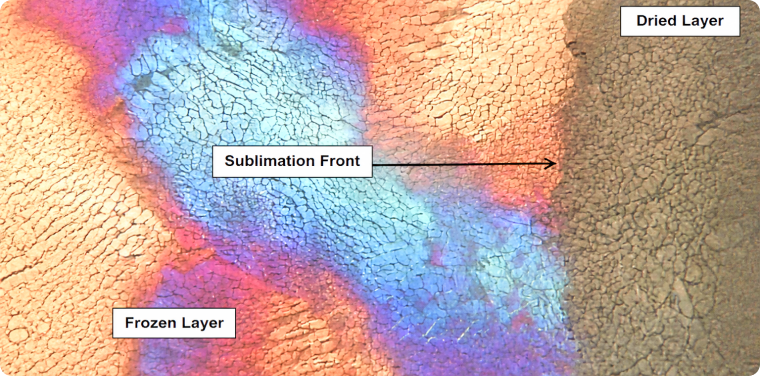
After completing thermal characterization, one is ready to start the lyophilization process by freezing the formulation. The thermal treatment phase entails freezing the product well below its Tg′. Holding the product at that temperature for several hours ensures a solid frozen block.
The freezing rate determines the formation of ice crystals. Annealing may be performed at this phase to address metastable states. The goal is to ensure the full nucleation of the solvent and produce a uniform frozen matrix.
After thermal treatment, the product undergoes primary drying to remove most of the unbound water or cosolvent. The temperature chosen for the primary drying stage depends on the FDM data. If thermal characterization data shows the onset of collapse is at -20°C, the product must be kept below that temperature throughout the primary drying stage.
Researchers need to factor in sublimation-induced cooling when setting the temperature for the primary drying phase. The cooling effect can reduce the shelf temperature significantly and keep the product colder. As such, companies can choose a temperature that is slightly warmer than the onset of collapse and then rely on sublimation-induced cooling to maintain the target temperature.
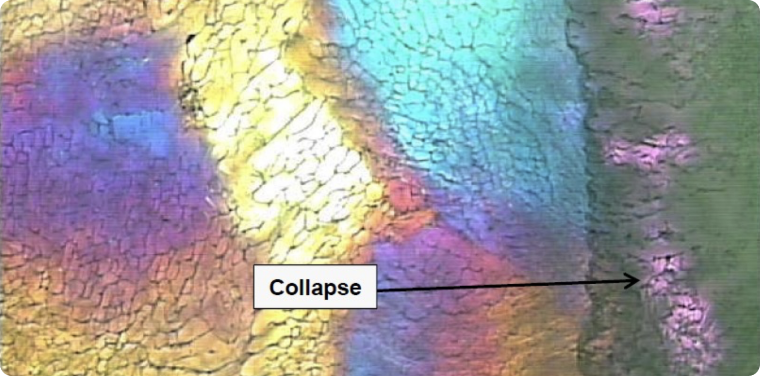
Piramal incorporates safety factors in the lyophilization recipe, especially when a full lyophilization load cannot be run during development because of drug substance availability constraint. Other factors to consider include vacuum settings, which can accelerate the lyophilization cycle, and the ramp rate for the shelf temperature. The optimum temperature ramp rate depends on the formulation.
The final main stage of the lyophilization process is secondary drying, which is performed to remove residual bound moisture from the cake. One should not rush this final step. While the formulation is largely dried, warming the formulation too quickly to complete drying raises the risk of micro collapse. Piramal uses sample thieves to remove vials during lyophilization without breaking the vacuum. Removing the vials supports real-time testing of residual moisture / residual solvent levels and generates insights to optimize secondary drying.
Optimizing the residual moisture and organic solvent is critical. Residual solvent levels must be below the thresholds established in regulatory guidelines. The target moisture level depends on the product. Some biologics require more moisture than small molecules to improve stability. The cake should be cosmetically elegant and intact. Ideally, the product will reconstitute in one minute, at most.
Lyophilization is a critical enabling technology that transforms drug substances with limited stability into commercially viable products with an extended shelf life. Successful freeze-drying projects are built on deep knowledge of the drug substance and a meticulous approach that begins with strategic formulation decisions, including the selection of appropriate solvent systems buffers, and bulking agents.
By carefully managing each step in the process, companies can consistently deliver the intact, elegant, and rapidly reconstitutable cakes that are the hallmark of successful lyophilization cycles. Mastering the process empowers companies to better serve patients by making unstable drug substances commercially viable and expanding access beyond regions with ultra-low-temperature freezers.
To learn more about Piramal's capabilities in this area, contact sundar.neelakantan@piramal.com.
Lyophilization Process Design and Development: A Single-Step Drying Approach
Practical advice in the development of a lyophilized protein drug product
Piramal Pharma Solutions (PPS) is a Contract Development and Manufacturing Organization (CDMO) offering end-to-end development and manufacturing solutions across the drug life cycle. We serve our customers through a globally integrated network of facilities in North America, Europe, and Asia. This enables us to offer a comprehensive range of services including drug discovery solutions, process and pharmaceutical development services, clinical trial supplies, commercial supply of APIs, and finished dosage forms. We also offer specialized services such as the development and manufacture of highly potent APIs, antibody-drug conjugations, sterile fill/ finish, peptide products and services, and potent solid oral drug products. PPS also offers development and manufacturing services for biologics including vaccines and gene therapies, made possible through Piramal Pharma Limited's associate company, Yapan Bio Private Limited.