


Aug 07, 2026
.webp "integrated drug discovery piramal pharma")
Developing a new therapy from a validated molecule offers a major advantage: researchers can build on existing pharmacological and safety knowledge instead of starting from scratch. This approach can reduce scientific uncertainty and shorten development timelines. However, moving quickly isn't always enough. Without a strong intellectual property (IP) strategy, a promising molecule may struggle to achieve long-term commercial value.
That's why many drug developers are looking beyond traditional repurposing strategies. By combining medicinal chemistry, biology, ADME expertise, and project management into a single integrated drug discovery (IDD) model, it's possible to transform validated molecules into novel chemical entities (NCEs) with stronger patent protection and improved biological performance.
Repurposing an existing molecule for a new indication can accelerate early development, but counting solely on method-of-use patents may leave a program vulnerable. Existing compounds commonly have well-established prior art, making it more difficult to build a durable IP position.
Instead, many drug discovery programs seek to create entirely new molecules that retain the desirable characteristics of the existing compound while introducing structural changes that support new composition-of-matter patents.
This strategy allows companies to preserve the scientific advantages of a validated starting point while creating a more defensible commercial asset.
Medicinal chemists have several approaches for creating new chemical matter while maintaining biological activity.
Two common strategies are scaffold hopping and bioisosteric replacement. Scaffold hopping replaces the core structure of a molecule, while bioisosteric replacement substitutes specific atoms or functional groups with chemically similar alternatives. Although these changes may appear small, they can have a significant impact on potency, pharmacokinetics, and patentability.
Successful molecule design also requires careful evaluation of drug-like properties. Parameters like Lipinski's Rule of Five and other ADME considerations help ensure that structural modifications retain the characteristics needed for future development.
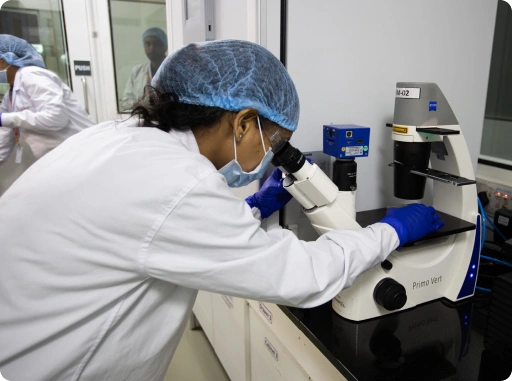
Creating optimized analogs requires continuous design-make-test-analyze (DMTA) cycles. When chemistry, biology, and ADME teams operate independently, each design iteration can be delayed by lengthy handoffs between functions.
An integrated drug discovery model keeps these disciplines connected throughout the project. As new biological data becomes available, medicinal chemists can immediately incorporate those findings into the next round of molecule design. Likewise, biological observations quickly guide synthesis priorities and screening strategies.
At Piramal Pharma Solutions, medicinal chemistry, biology, ADME, route scouting, scale-up, and project management operate as an integrated team, supporting faster decision-making and more efficient progression from hit identification to lead optimization.
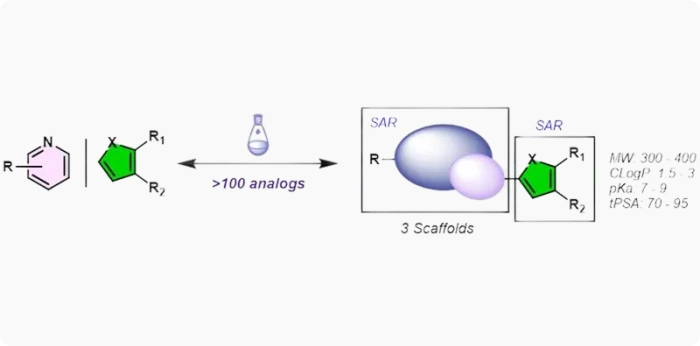
One recent program demonstrates how this integrated approach can accelerate drug discovery.
Working from a client's validated molecule, Piramal designed and synthesized more than 100 focused analogs while conducting biological screening and ADME profiling in parallel. Continuous collaboration among scientific disciplines allowed each round of results to inform the next design cycle without delay.
Within six months, the project delivered more than 20 lead compounds with improved biological activity compared to the original molecule. The team also identified a new chemical series suitable for further scale-up and in vivo studies while creating a portfolio of novel, patentable compounds that strengthened the client's IP position.
Starting with a validated molecule remains one of the most efficient ways to begin a drug discovery program. However, long-term success depends on more than speed alone.
By combining IP-aware medicinal chemistry, integrated scientific collaboration, and rapid DMTA cycles, companies can create differentiated molecules positioned for both scientific and commercial success. Integrated drug discovery helps ensure that promising starting points become valuable, defensible assets capable of advancing confidently toward the clinic.

Integrated drug discovery combines medicinal chemistry, biology, ADME, and project management into a coordinated workflow to accelerate drug discovery and optimize decision-making.
In drug discovery, a validated molecule is a compound with existing biological or safety data that serves as a starting point for developing new drug candidates.
Intellectual property is important in drug discovery because it protects novel discoveries, helps secure investment, supports commercialization, and enables companies to maintain a competitive advantage as drug candidates advance toward development and approval.