


Sep 07, 2026
.png "In Vitro Assays for Miniaturization")
Drug discovery depends on generating high quality biological data quickly enough to guide the next decision. In vitro testing plays a key role by allowing researchers to study how compounds interact with biological targets or cells before programs progress to more advanced stages.
But as discovery programs evaluate more compounds, traditional manual workflows can become increasingly difficult to manage. Assay automation increases throughput, improves consistency, and reduces the amount of material required for testing.
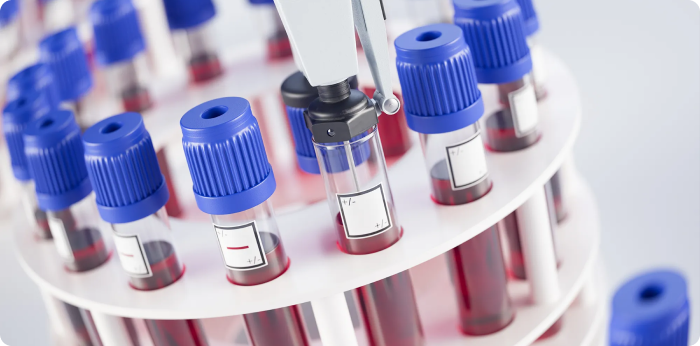
In vitro assays study biological activity outside a whole living organism. Depending on the research question, assays can examine biochemical interactions, cellular responses, target engagement, or other biological effects.
They are valuable throughout early discovery because they can help researchers identify promising compounds, understand mechanisms of action, and compare activity across candidates.
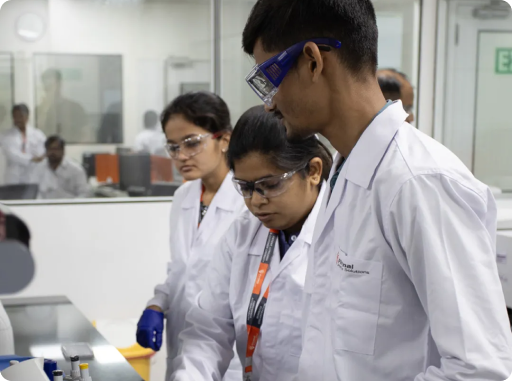
In vitro assay development begins by defining what the assay needs to measure and establishing conditions that generate reliable, reproducible data. Scientists may optimize factors such as concentrations, incubation conditions, detection technologies, and controls.
Quality is critical. Leading CDMOs like Piramal Pharma Solutions use tool compounds and established QC measures, including signal-to-noise ratio, Z'-prime, and reproducibility, to validate their assays.
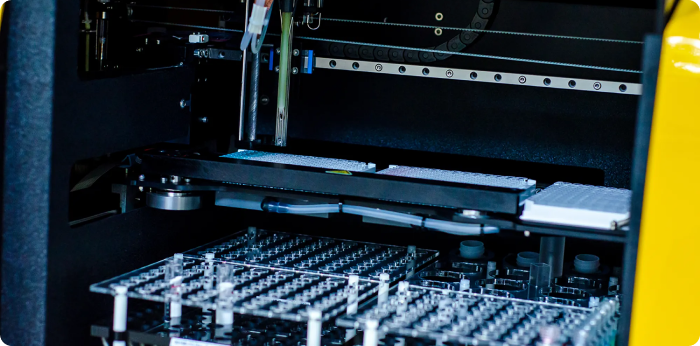
Automation in drug discovery can reduce repetitive manual tasks and allow laboratories to process more samples with greater consistency. Automated liquid handling, plate movement, and detection systems can integrate into workflows to help researchers run assays efficiently.
This becomes especially valuable when screening compound libraries or running repeated assay cycles where even small variations in manual handling can affect results.
One major advantage of automation is its compatibility with miniaturized assay formats. Smaller reaction volumes mean less compound and fewer reagents may be needed per experiment.
Piramal's in vitro biology capabilities include assay miniaturization using 96- and 384-well plates. This can allow researchers to generate more data from limited quantities of valuable compounds while increasing the number of conditions that can be tested within a single workflow.
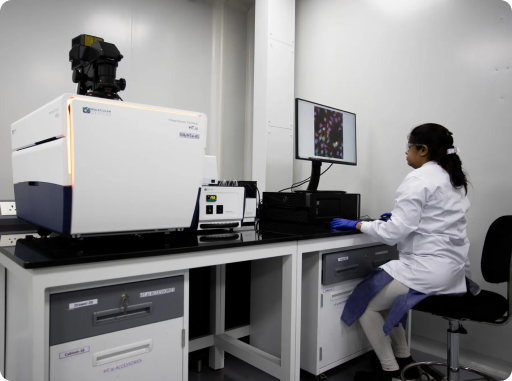
Automated workflows can offer several advantages: increased throughput, improved consistency, reduced manual intervention, more efficient use of compounds and reagents, and greater scalability. Together, these benefits can help discovery teams move through screening and optimization cycles more efficiently.
Automation does not replace scientific decision-making. Instead, it lets scientists spend more time interpreting results and designing the next experiment.
Automated in vitro testing can support multiple stages of discovery, including hit identification, hit-to-lead, lead optimization, target engagement, and other biological evaluations.
As drug discovery programs become more data-intensive, automation and miniaturization are likely to remain important tools for generating reliable information efficiently. Combining robust assay design with automated workflows can help researchers make faster, better-informed decisions while using scarce compounds more efficiently.

In vitro assay development involves designing and optimizing a laboratory test to measure a specific biological activity or response reliably.
Assay automation uses automated instruments and integrated workflows to perform repetitive testing activities with less manual intervention.
Automation accelerates drug discovery by increasing testing throughput and consistency while reducing manual effort and the amount of compound and reagents needed for individual experiments. This can help discovery teams generate and evaluate biological data more efficiently.
The following Piramal facility conducts automated in vitro assays: